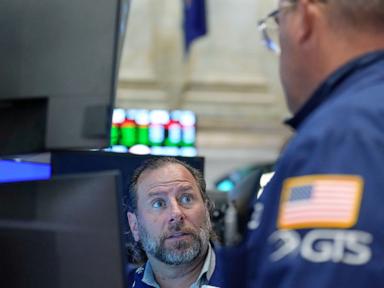
Wall Street just wrapped up its first winning week in three, but the rest of the world isn't popping champagne. Instead, international indices are dragging their feet. Why? Because traders outside the United States are staring down volatile oil markets, lingering inflation fears, and the messy geopolitical fallout from the ongoing conflict with Iran.
If you're wondering why a strong Friday finish in New York didn't spark a worldwide buying spree, you have to look past the domestic headlines. Markets are jittery. Let's break down what's actually happening on trading floors from Tokyo to Frankfurt.
The Oil Price Whiplash
Crude oil remains the ultimate market mood ring. Last week, energy markets went on a wild ride when Brent crude briefly dipped to the $97 range, offering a temporary breather to inflation-weary economies. That relief didn't last. By Monday morning trading, benchmark U.S. crude bounced back 3.41 percent to $95.56 a barrel, while international standard Brent crude climbed 3.73 percent to $108.21 a barrel.
Why the sudden rebound? Uncertainty rules the energy sector. Traders are panicking over when oil will flow freely again from the Middle East, particularly concerning access to the critical Strait of Hormuz amid the conflict with Iran. When energy costs swing like a pendulum, global manufacturing and transport sectors suffer. Investors know it, which explains why Asian and European markets hesitated to follow Wall Street's green wave blindly.
Mixed Signals Across Global Boards
The tug-of-war is obvious when you scan regional scoreboards. In Europe, early trading showed modest green numbers. France's CAC 40 edged up 0.3 percent to 8,097.99, Germany's DAX added 0.2 percent to 25,464.53, and Britain's FTSE 100 ticked up 0.3 percent to 10,725.57.
Asia told a different, more fractured story. Japan's benchmark Nikkei 225 dropped 0.7 percent to finish at 65,877.62. South Korea's Kospi took a heavy beating, sliding 2.7 percent to 6,889.74. China's Shanghai Composite lost 1.7 percent to settle at 3,823.62, while Hong Kong's Hang Seng managed a mild 0.5 percent gain to reach 24,642.51. Australia's S&P/ASX 200 squeezed out a 0.2 percent gain to 8,679.70.
These numbers prove one clear reality. Local economic pressures, regional supply chains, and currency fluctuations matter far more to international investors than a single good week on the S&P 500.
Inflation Fears and Central Bank Stances
Bond yields have been wild cards since the conflict started. The 10-year Treasury yield surged from 3.97 percent before dropping back to around 5.15 percent as oil prices cooled late last week. That stabilization gave U.S. stocks room to breathe, pushing the S&P 500 up 39.28 points to 7,743.41, the Dow Jones Industrial Average up 478.64 to 51,828.62, and the Nasdaq composite up 129.34 to 27,068.72.
Yet, foreign central banks aren't out of the woods. Analysts point out that market players are nervously eyeing upcoming inflation indicators. If consumer price prints stay hot, central banks across the globe will keep their hawkish stances intact. High interest rates hurt growth, and foreign investors are pricing in that exact pain.
The AI Earnings Paradox
Tech stocks continue to dominate conversations, but the sentiment feels increasingly conflicted. Major artificial intelligence firms keep posting massive earnings reports, driving massive capital inflows. At the same time, prominent tech leaders and public figures keep sounding alarms about the existential and operational risks of unchecked AI development.
Traders are caught in the middle. They want the short-term gains that AI chipmakers and infrastructure providers deliver, but they fear a sudden valuation bubble burst.
What You Should Do Now
If you're managing a portfolio right now, don't chase headline optimism. Global benchmarks prove that regional volatility is the baseline, not the exception.
- Watch the energy sector closely. Any escalation in Middle Eastern shipping lanes will send oil spikes rippling through your equity holdings.
- Diversify beyond U.S. mega-caps. When domestic tech rallies stall, international exposure cushions your downside risk.
- Prepare for sticky interest rates. Assume central banks will keep borrowing costs elevated until inflation metrics show true, sustained cooling.