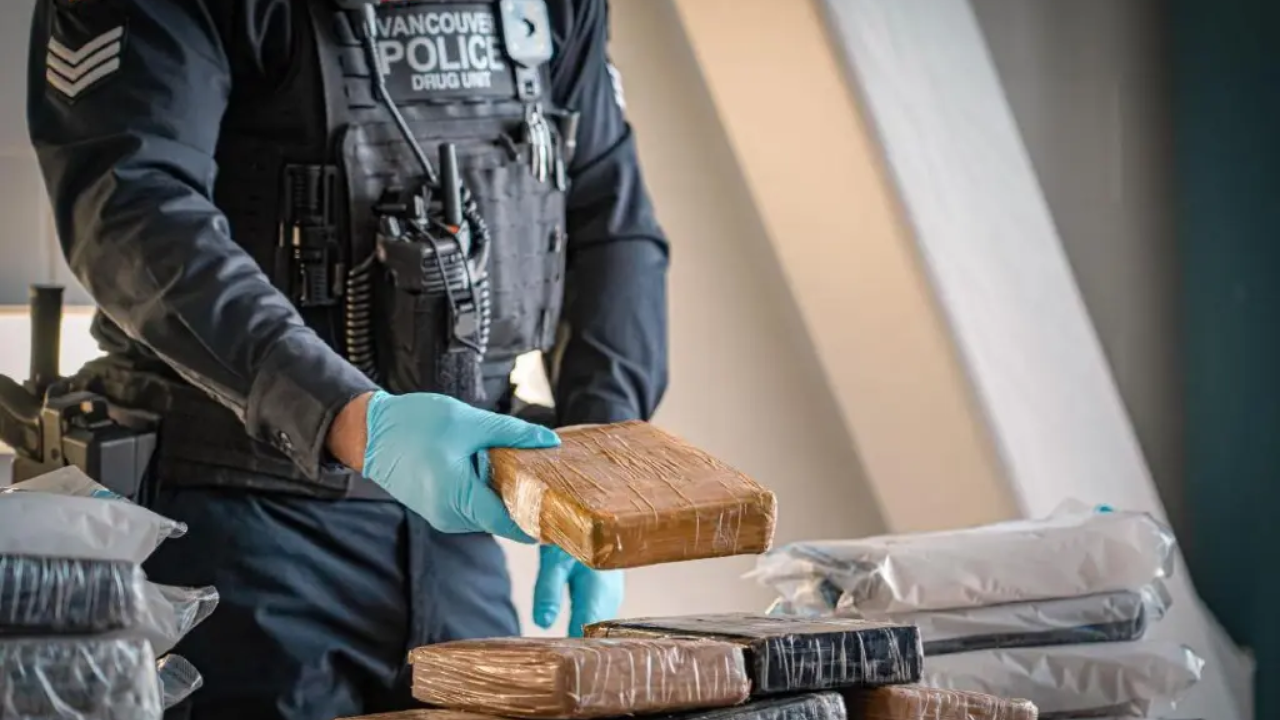
Picture the scene. Workers at a regular commercial business in Vancouver walk out onto the floor, expecting standard commercial cargo. They pry open a shipping container filled with ordinary T-shirts, ready for sorting. Instead, they find fourteen heavy duffle bags stuffed tight with illegal narcotics. That unexpected discovery turned out to be 328.55 kilograms of cocaine, valued at roughly C$5.8 million. It wasn't just a heavy haul. Police later confirmed it stands as the largest single cocaine seizure in the history of the Vancouver Police Department.
The Anatomy of a Flawed Smuggling Route
Smuggling networks rely on complex logistics chains, massive global shipping lanes, and plausible deniability. When investigators mapped out the path of this specific container, a fascinating picture of international transit vulnerability emerged.
According to law enforcement briefings led by Sgt. Travis Fraser, the container didn't originate in Canada. It started its journey in Honduras on May 18. From there, it traveled via cargo vessel, making a documented stop in Jamaica on June 6. Next, it crossed the Atlantic and landed in Montreal on July 5 before finishing its cross-country rail or truck transit to Vancouver, where it was finally opened on July 21.
Here is the kicker that exposes how modern cartels use legitimate supply chains. Police believe the business that ordered the T-shirts had zero connection to the cartel. They were completely legitimate victims of circumstance. The drugs weren't actually meant for Vancouver at all. Investigators strongly suspect that corruption or logistical failures prevented the smugglers from pulling the duffle bags out of the container at an earlier transit port.
Why Global Supply Chains Make Easy Targets
If you've ever looked at how global shipping works, you know absolute security is a myth. Millions of containers move across oceans every single week. Customs agencies simply cannot physically inspect every single box. Cartels exploit this exact operational bottleneck through a method known as rip-on, rip-off or supply chain piggybacking.
In these schemes, traffickers break into a container or compromise it at the loading port, pack illegal goods inside, and apply fake seals or authentic-looking security tags. They track the container digitally. The receiving company becomes an unwitting mule. If the container slips through customs unnoticed, corrupt insiders or criminal associates meet the truck or break into the yard before the company workers even touch the cargo.
In this Vancouver case, something broke down in the criminal playbook. The drop point was missed. The container made it all the way across an entire continent, past multiple international customs checkpoints, right onto a warehouse floor in British Columbia.
The International Investigation Unfolds
When the terrified employees found fourteen duffle bags instead of simple clothing blanks, they did the right thing. They dialed emergency services instantly. That immediate phone call triggered a sprawling international cooperative effort.
Because the container bounced through multiple jurisdictions, local authorities are now forced to coordinate across borders. Canadian investigators are actively communicating with law enforcement agencies in Honduras, Jamaica, and the United States. They want to answer a few burning questions. Who packed the container in Central America? Who had access keys during the Jamaican stop? Which port security personnel looked the other way?
As of the latest police updates, no arrests have been made. Cartel logistics cells are notoriously compartmentalized. The people loading the drugs in Honduras rarely know who is supposed to pick them up in North America.
What This Bust Tells Us About Modern Organized Crime
Law enforcement agencies usually catch drug shipments through targeted intelligence, wiretaps, or border scans. Finding a multi-million-dollar stash purely by accident because warehouse staff wanted to unpack morning inventory is exceptionally rare.
It proves that billions of dollars in illegal cargo move through everyday commercial channels with frightening regularity. When a pipeline this massive fails, it leaves behind a trail of digital manifests, shipping logs, and international shipping markers that investigators can pull apart.
If you work in logistics, freight forwarding, or international trade, cases like this serve as a stark reminder. Vet your shipping partners carefully, inspect container seals meticulously upon arrival, and never hesitate to call authorities the second something feels off.
The investigation remains wide open. Police continue sifting through shipping manifests and international transit logs to find the architects behind the historic Vancouver haul.