Big headlines rarely tell the whole story. Behind every major diplomatic clash lies a quiet buildup of pressure, failed negotiations, and high-stakes maneuvering that routine news feeds completely miss.
Recent weeks brought a flurry of unexpected developments across Asia and global diplomacy. Beijing gave criminal syndicates in northern Myanmar multiple warnings before sweeping police actions dismantled scam hubs. Donald Trump pressed Xi Jinping to engage with Japanese leadership and drop export curbs. Meanwhile, European heavyweights sought aggressive new trade weapons, and military drills brought cutting-edge American stealth fighters right up to the subcontinent.
These events aren't isolated incidents. They form a connected web of shifting power dynamics. Let's look at what's actually happening beneath the surface.
Breaking Up Cross-Border Scam Networks
Fraud factories in northern Myanmar have operated with impunity for years. Cyber scams netted billions of dollars while trapping thousands of foreign workers in conditions akin to modern slavery.
Beijing's state broadcaster CCTV recently revealed that Chinese authorities tried three separate times to negotiate with powerful local crime families. They wanted these syndicates to shut down the operations voluntarily. The syndicates refused. They bet that local instability and regional friction would shield them.
They guessed wrong.
When diplomatic warnings failed, coordination kicked into high gear. Myanmar police launched large-scale arrests backed by intense pressure from Beijing. It's a stark reminder that modern transnational crime faces a shrinking map. When syndicates cross paths with economic stability and national security interests of major states, enforcement is swift and brutal.
The Trilateral Pressure Point Between Washington, Beijing, and Tokyo
Diplomacy behind closed doors rarely follows public rhetoric. Sources indicate that Donald Trump pushed Xi Jinping during a meeting in the United States to reconsider strict export curbs on Japan. Trump urged Xi to open a direct dialogue with Japanese leaders, specifically pointing toward engagement with figures like Sanae Takaichi as Tokyo faces intense strategic pressure from Beijing.
At the same time, Beijing's leadership raised concerns regarding regional militarism and Tokyo's shifting defense posture.
This creates a tense diplomatic triangle. Japan wants to secure critical supply chains and maintain defensive autonomy. China wants to check perceived encirclement. Washington wants to keep trade open while reassuring allies. Expect these tensions to dictate tech supply chains and semiconductor policies for the rest of the year.
Europe Takes Off the Gloves on Trade
Brussels is tired of playing nice. The political heavyweights in France and Germany are championing a brand new trade instrument designed to counter external market distortions instantly.
If approved, this mechanism will give the European Union a sledgehammer. Instead of waiting years for protracted WTO dispute resolutions, Brussels could cut off third-country access to the internal EU market almost overnight if market rules or unfair subsidies cause severe economic disruption.
European leaders see defensive economic policy as an absolute necessity. Supply chain weaponization is no longer theoretical. Companies relying on global trade routes need to prepare for sudden regulatory shocks.
Skies and Tombs
Military alignments are shifting just as fast as economic ones. In a striking show of interoperability, American F-35 Lightning II stealth fighters recently joined Indian warplanes during Exercise Tarang Shakti near the Pakistan border. It marks the first time Washington's premier multirole combat aircraft has participated in joint drills on Indian soil. It sends an unmistakable signal about Indo-Pacific security cooperation.
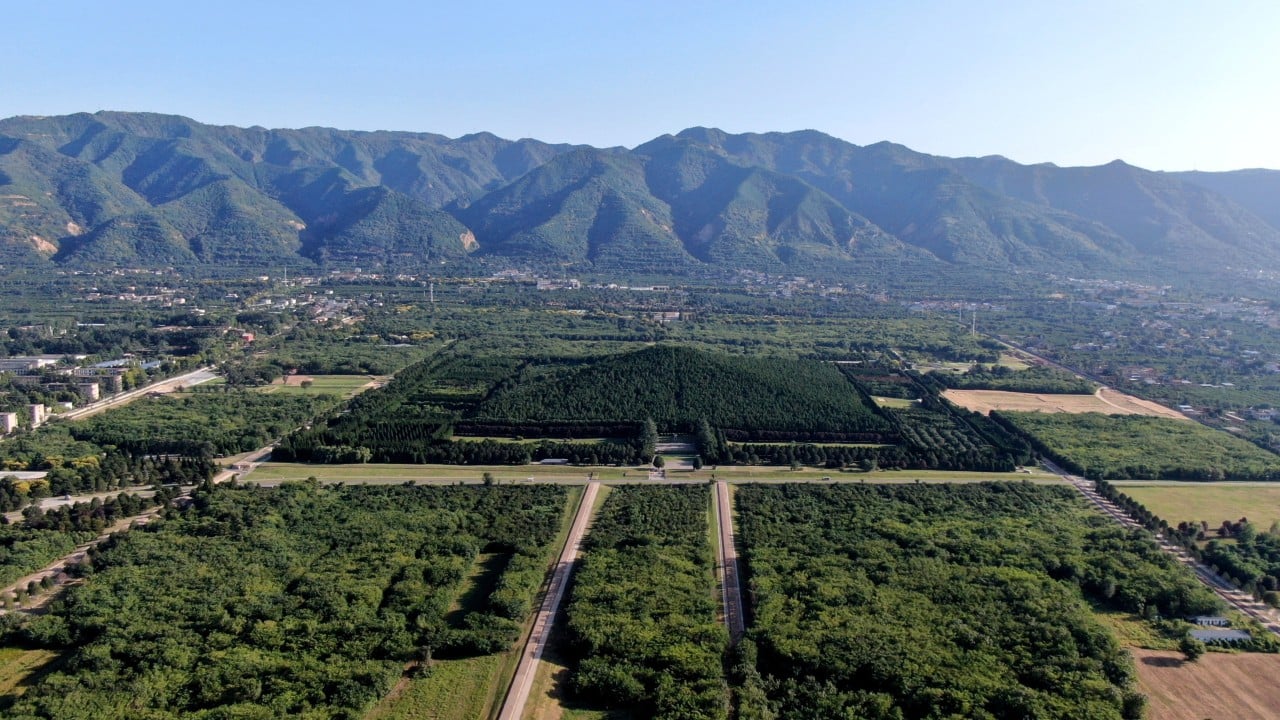
History also continues to make headlines in unexpected ways. Online speculation recently surged around the legendary tomb of Qin Shi Huang, China's first emperor. People wondered if modern archaeology finally located the source of massive ancient mercury deposits buried within the unexcavated mausoleum near Xi'an. While sensational internet claims often outpace actual scientific updates, public fascination with the terracotta warriors and ancient imperial secrets remains entirely unmatched.
Grand geopolitical strategy often overshadows ordinary human stories, but individuals feel the ripples first. Consider the 71-year-old man in central China who spent 21 years working as a scavenger, completely unaware that a forgotten pension fund held over 420,000 yuan—roughly $63,000—owed to him all along.
Bureaucracy delays justice, crime networks crumble under coordinated pressure, and world leaders bargain over the future of global trade. Keep your eyes on the underlying mechanics, not just the noise on your screen.