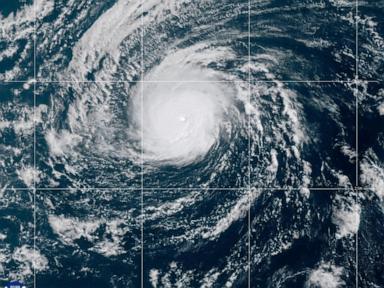
Far away from major population centers, Hurricane Nolo has intensified into a powerful Category 3 storm in the open waters of the Pacific Ocean. While it is not threatening any heavily populated landmasses right now, meteorologists are tracking its movement closely as it heads toward remote island chains.
The storm's journey hasn't been a straight line. Nolo originally skirted past Hawaii roughly a week ago, dumping heavy rain and packing strong winds that knocked out power and fueled brush fires on Maui. After that initial close encounter, the system temporarily lost some of its punch and drifted downward to tropical storm status.
Stubborn warm waters and favorable atmospheric conditions allowed Nolo to turn the tables. By Friday, the system regained hurricane strength, and by Saturday afternoon, it punched through to Category 3 status on the Saffir-Simpson Hurricane Wind Scale, boasting maximum sustained winds near 115 mph.
Where Is Nolo Headed Now?
As of the latest updates from the Central Pacific Hurricane Center, Nolo sits roughly 210 miles south-southwest of Maro Reef, tracking westward at around 17 mph.
Forecasters expect the storm to cross the international date line soon, altering its trajectory toward the northwest by Sunday night. This path keeps the core of the hurricane well clear of the main Hawaiian Islands, but it puts other vulnerable locations directly in the crosshairs.
A tropical storm warning is currently active for the Papahānaumokuākea Marine National Monument. This federally protected marine area spans thousands of square miles and contains fragile ecosystems, low-lying atolls, reefs, and seamounts.
Risks to Remote Ecosystems
Even though no cities or major population hubs face direct danger, Category 3 winds and waves carry serious consequences for isolated regions.
Forecasters warn that large surf generated by Nolo will likely inundate several low-lying atolls within the marine monument, ranging from French Frigate Shoals down to Nihoa. These remote islands serve as critical habitats for endangered Hawaiian monk seals and threatened green sea turtles. Storm surges and heavy coastal flooding pose real threats to these fragile populations.
Meanwhile, meteorologists are watching other systems across the basin. In the Eastern Pacific, Category 1 Hurricane Rachel continues tracking westward away from the Mexican coast, generating dangerous swells along the Baja California Peninsula.
Nolo's resurgence highlights the volatile nature of Pacific storm tracks during active seasonal patterns. While residents on the main islands can breathe a sigh of relief as the hurricane pushes further into the open ocean, the storm's powerful outer bands continue to demand respect from scientists and mariners alike. Keep an eye on local advisories if you operate vessels or research stations in the northwestern Pacific sectors.