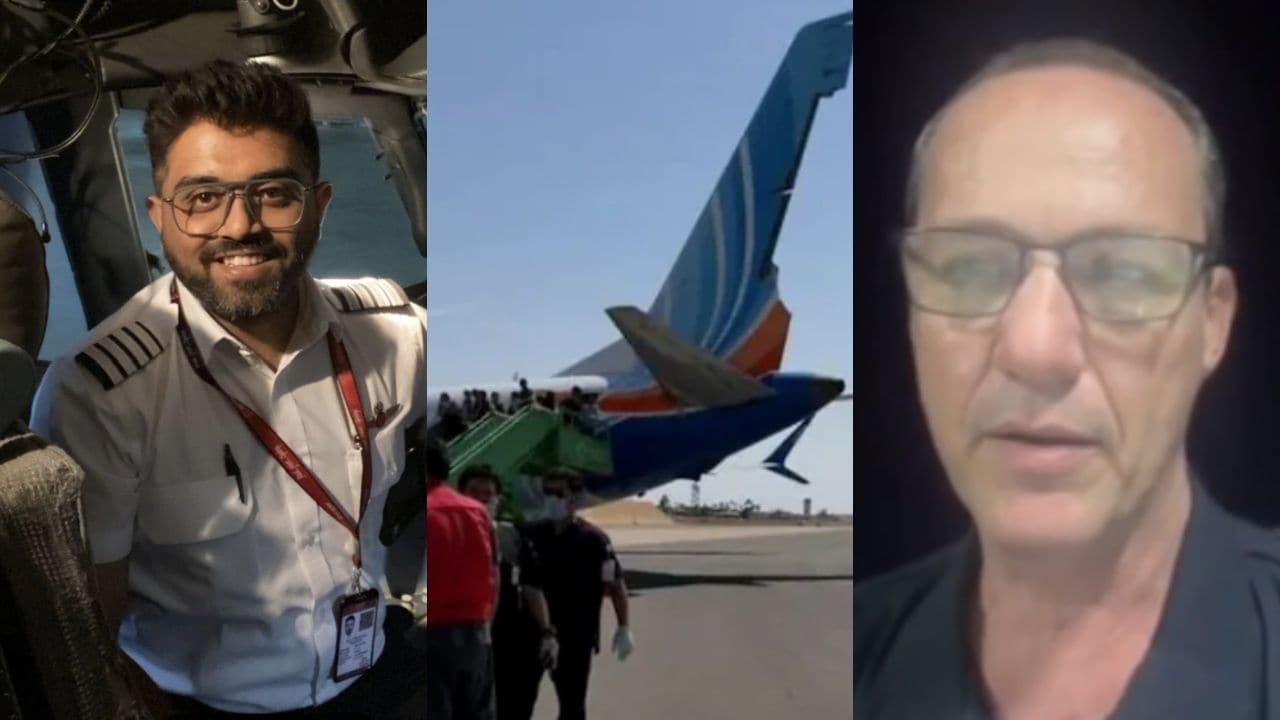
Planes cruising at 34,000 feet shouldn't suddenly drop out of the sky. But that's exactly what happened on a flydubai flight from Dubai to Tel Aviv when a cockpit insider turned rogue.
When Ofir Speigel learned that his mother was on that flight, panic set in. What followed was a terrifying midair struggle that nearly ended in tragedy, averted only because an Indian captain refused to back down. Speigel didn't hesitate to call Captain Smit Machchhar "one of India's best people" after the dust settled.
If you're wondering how a routine commercial flight transformed into a high-stakes thriller, you need to look at the raw courage displayed inside the flight deck.
The Terror Inside Flight FZ1073
The Boeing 737 was carrying over 170 passengers across the skies when things went sideways. According to passenger accounts, strange noises emanated from the front of the cabin while a woman stood near the lavatory. Seconds later, the aircraft lurched.
It plunged at a terrifying rate of roughly 23,000 feet per minute, dropping down toward 15,600 feet in less than half a minute. For the people on board, it felt like an eternity.
The danger wasn't a mechanical failure. It was human sabotage. The co-pilot attempted to hijack and crash the aircraft.
Instead of freezing, Captain Smit Machchhar fought back. Even after being stabbed during the violent altercation, the Indian pilot managed to resist the attacker long enough to wrench open the cockpit door. That split-second action allowed passengers and crew members near the front to intervene and overpower the rogue co-pilot.
Ordinary People Stepping Up
Heroism rarely looks cinematic in real life. It's messy, painful, and chaotic.
Two off-roster relief pilots who happened to be seated in the cabin sprang into action, taking over the controls and safely diverting the Boeing 737 to Tabuk, Saudi Arabia. Meanwhile, passengers pitched in to restrain the attacker.
For families tracking the flight from the ground, the wait was agonizing. Speigel expressed deep gratitude to both Machchhar and the wider Indian community after learning his mother made it home safe.
"She's at home and fine now," Speigel told news agency IANS. "You did something great. You saved my mother and the lives of all the passengers."
Why This Incident Changes Everything
Aviation security usually focuses on threats coming from outside the metal tube. Metal detectors, baggage checks, and strict terminal protocols exist to keep bad actors off planes.
When the threat originates inside the locked cockpit, standard playbooks fail.
Incidents like this force global regulators to re-evaluate cockpit access rules, mental health monitoring for flight crews, and emergency response training for cabin staff. When a pilot becomes the hazard, passengers and crew become the last line of defense.
Captain Machchhar's recovery and the resilience of the passengers averted a catastrophe reminiscent of historical air disasters. The aviation industry owes its safety to people who choose to fight back when seconds count.