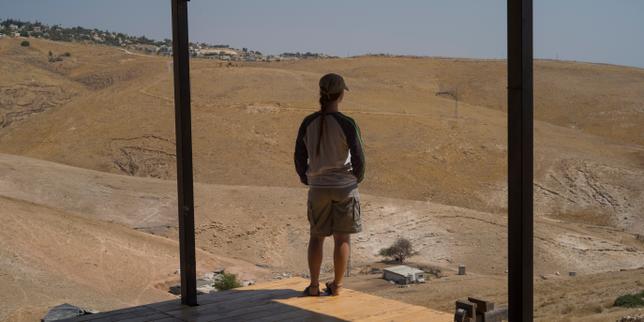
The headlines are almost entirely fixed on Gaza. But away from the cameras, a different kind of territorial annexation is accelerating across the hills of the West Bank. It is not happening through official government decrees or parliamentary votes. It is happening through makeshift wooden sheds, small herds of sheep, and an expanding network of pastoral outposts managed by ideological settler activists.
If you want to understand how modern land grabs actually work, look at the strategy of the West Bank farm outposts. They don't need thousands of people to seize a valley. They just need a few young men, a handful of livestock, and a quiet understanding that official oversight won't stand in their way.
The Strategy of the Pastoral Outpost
Traditional settlements required massive planning, concrete foundations, and millions of dollars in state infrastructure. Pastoral outposts changed the math entirely. A single shepherd with a pick-up truck and a tent can occupy a strategic hill overnight. Within weeks, the tent becomes a wooden shack. Within months, access roads are carved into the hillside, and Palestinian shepherds who have grazed those exact pastures for generations find themselves barred at gunpoint.
Data compiled by organizations monitoring the region shows that these small farms occupy vast swathes of land relative to their actual population. A handful of settlers can effectively sterilize thousands of dunams of surrounding agricultural land. Palestinians attempting to reach their olive groves or grazing grounds face systematic harassment, physical assault, and restricted military zones enforced by the army.
What makes this tactic so effective is its low profile. It looks disorganized to the untrained eye, almost spontaneous. In reality, investigators and human rights monitors have traced these outposts to well-funded networks backed by prominent figures within the broader settler movement. They act as the sharp edge of a wedge, driving local communities off their land without requiring a massive military deployment for every single acre.
Exploiting the Fog of Conflict
The wider regional war served as an immediate accelerator for this land-grabbing strategy. When large-scale conflict broke out, international media attention narrowed down to a single focal point. Reservists who previously might have monitored or restrained radical settler activities were either deployed elsewhere or integrated into regional defense units.
Local shepherds and farmers in rural areas quickly realized they were entirely on their own. Impunity surged. According to reports from the United Nations and local monitors, attacks and forced displacement of entire Bedouin and agrarian communities spiked dramatically. Villages like Khirbet Zanuta were completely emptied after residents faced relentless pressure, intimidation, and the destruction of essential community infrastructure.
The math is brutal and straightforward. When safety collapses, staying means risking your children's lives. Leaving means surrendering land that your family has held for generations. Once a community flees, the outpost expands instantly to fill the vacuum.
The Human Cost on the Ground
Walk through any affected rural pocket in the southern Hebron hills or near Nablus, and the reality is stark. You see abandoned stone houses, caved-in cisterns, and school buildings vandalized beyond recognition. You also hear the testimonies of families who spent their entire lives farming wheat or harvesting olives, only to be told they are trespassing on state land.
The institutional backing is rarely hidden anymore. Eyewitness accounts regularly place soldiers alongside masked settlers during land takeovers, either actively clearing Palestinian landowners or standing by while intimidation takes place. Legal recourses are slow, expensive, and almost universally futile for rural villagers whose title deeds are routinely dismissed by administrative bodies.
What Comes Next for the Region
The expansion of these pastoral networks is creating facts on the ground that will be virtually impossible to reverse. Every hill captured by a sheep farm cuts another vital artery of a future contiguous Palestinian state.
Diplomatic statements from foreign capitals condemning settler violence rarely translate into ground-level deterrence. The outposts stay. The flocks grow. The map redraws itself line by line, pasture by pasture, while the world looks away at larger fires.