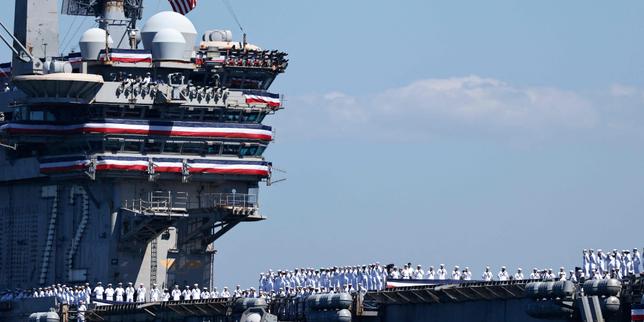
The heavy metal hulls of America’s nuclear-powered warships usually slide back into port to a chorus of uncritical applause. Families wave flags, children hold homemade banners, and politicians praise the unbreakable spirit of the armed forces. But when the aircraft carrier USS Abraham Lincoln finally docked in San Diego, California, the atmosphere on the piers was thick with a very different kind of tension. This wasn't just a standard homecoming. It marked the end of a grueling tour that exposed deep fractures in how modern military deployments are managed, pushing thousands of sailors to the brink.
If you followed the headlines over the summer, you know this deployment became a political lightning rod. Left behind were nearly twelve months of continuous high-tempo operations that tested human endurance far beyond standard naval limits. Let's break down what actually happened on that carrier, why families raised the alarm, and what this messy episode means for the future of naval power projection.
The Deployment That Wouldn't End
The USS Abraham Lincoln originally left its base in November 2025, initially slated for routine patrols in the South China Sea. But geopolitical flashpoints shift quickly. As tensions flared in the Middle East and the U.S. launched operations targeting Iran, the ship received new orders. It was redirected into the Gulf of Oman and the Arabian Sea, turning a predictable tour into an open-ended maritime blockade and combat support mission.
Month after month ticked by with no relief in sight. Originally expected to rotate home in the spring, the carrier stayed on station. Sailors found themselves trapped in a relentless cycle of flight operations, missile defense readiness, and maintenance under punishing desert heat. By the time the ship made a port call in Thailand in early September before the final stretch home, the crew had spent close to a year away from home, much of it under intense combat stress.
Behind the Seams: Penzance, Plumbing, and Panic
For families back on land, communication channels became lifelines built on frustration. Spouses reported that phone calls were nearly impossible due to technical blackouts, leaving them dependent on sporadic emails or glitchy text messages.
Worse news leaked out via family networks and specialized military reporting. Reports surfaced detailing severe strains aboard the floating city: fresh water contamination, failing plumbing systems, and dwindling supplies of basic provisions. When thousands of people live in tight quarters at sea for months longer than planned, logistical chains break down.
The human cost was severe. Advocacy groups and family members sounded the alarm over plummeting mental health standards, citing instances where overwhelmed sailors attempted to jump overboard. While political leaders rushed to manage the PR fallout—with administration figures dismissing criticisms as overblown or caricatured—lawmakers from both sides of the aisle demanded immediate oversight. Senator Richard Blumenthal and other congressional critics highlighted a crumbling quality of life that turned a strategic asset into a floating crisis.
The Homecoming Reality Check
As the crew finally walked down the gangway in San Diego, the embraces with loved ones were emotional and overdue. Alba Solano, speaking to reporters on the docks while waiting for her partner, captured the collective exhaustion of the families, noting how hard it was just to maintain a fragile connection across thousands of miles of ocean.
Yet, the return of the Lincoln does not wipe the slate clean. The Navy is facing an institutional reckoning over deployment lengths. You cannot stretch personnel past their breaking point indefinitely without facing severe attrition, retention problems, and, most importantly, risks to operational safety.
The carrier is slated to be replaced in rotation by vessels like the USS George Washington, but the systemic pressures on American naval crews remain entirely unresolved. Keeping multi-billion-dollar hulls at sea to send political signals has a human price tag that families and veterans are no longer willing to keep quiet about.
Expect tougher questions from Congress and military unions regarding max deployment thresholds in the coming months. If the Pentagon wants to maintain dominance across multiple global theaters, it needs to figure out how to take care of the sailors keeping those ships afloat before the next crisis hits home.