When the USS Abraham Lincoln finally sliced through the waters of San Diego Bay, thousands of families let out a breath they had been holding for nearly a year. This wasn't your standard naval homecoming. The nuclear-powered aircraft carrier pulled into Naval Air Station North Island after a brutal, extended deployment that lasted more than ten months, pushing sailors and equipment to absolute physical and mental limits.
If you've followed naval operations lately, you know deployments have grown longer and more punishing. But the Lincoln's stint in the Middle East supporting operations related to Iran took endurance to another level. We are talking about over 260 consecutive days at sea without a single port call, stretching crew resilience right to the breaking point.
Let's break down what actually happened on this historic voyage, why it ignited intense public debate, and what it reveals about the heavy toll modern naval power exacts on the fleet.
A Record Breaking Stretch at Sea
The numbers behind the Lincoln's deployment are staggering. Personnel spent more than 260 days straight out on the water without pulling into port, marking one of the longest continuous stretches at sea for a U.S. aircraft carrier since the Vietnam War.
For the roughly 4,500 sailors and Marines aboard, life became an endless loop of watch rotations, flight deck operations, and maintenance tasks. Galley teams served up millions of meals, while aviators and support staff managed round-the-clock combat readiness in a high-threat region.
Long stretches at sea take a massive psychological toll. When you can't step off the ship, clear your head, or touch dry land for months on end, morale naturally starts to fray. Supplies run low, equipment gets battered by relentless salt spray, and minor annoyances turn into major friction points. Capt. Daniel Keeler, the ship's commander, noted that everyday maintenance challenges like clogged toilets are inevitable in what amounts to a floating city with thousands of residents. Still, managing those issues while locked in a high-stakes operational theater is a different beast entirely.
The Cost of Extended Operations
You can't talk about the Lincoln's return without addressing the intense scrutiny that dogged the final months of its mission. Reports of plummeting morale, difficult living conditions, and mental health strain leaked out, capturing national headlines.
The pressure cooker environment sparked serious concern among military leadership and families back home. Lawmakers and defense officials confronted tough questions regarding how long service members can remain deployed before the human cost outweighs the strategic gain. Defense Secretary Pete Hegseth flew out to the carrier just before its return to present the crew with the Presidential Unit Citation—the highest honor a unit can receive for significant achievement.
Hegseth pushed back hard against critics who painted the ship as a symbol of dysfunction. He argued that the public and media often mistake the difficulties of hard-fought military success for failure, praising the crew for adapting and finishing the mission despite grueling obstacles.
Yet, the strain was real. Military leadership acknowledged severe stress indicators within the strike group during congressional hearings, highlighting a broader challenge facing the Navy as it tries to project global power with a strained fleet.
Relief and Reunion in San Diego
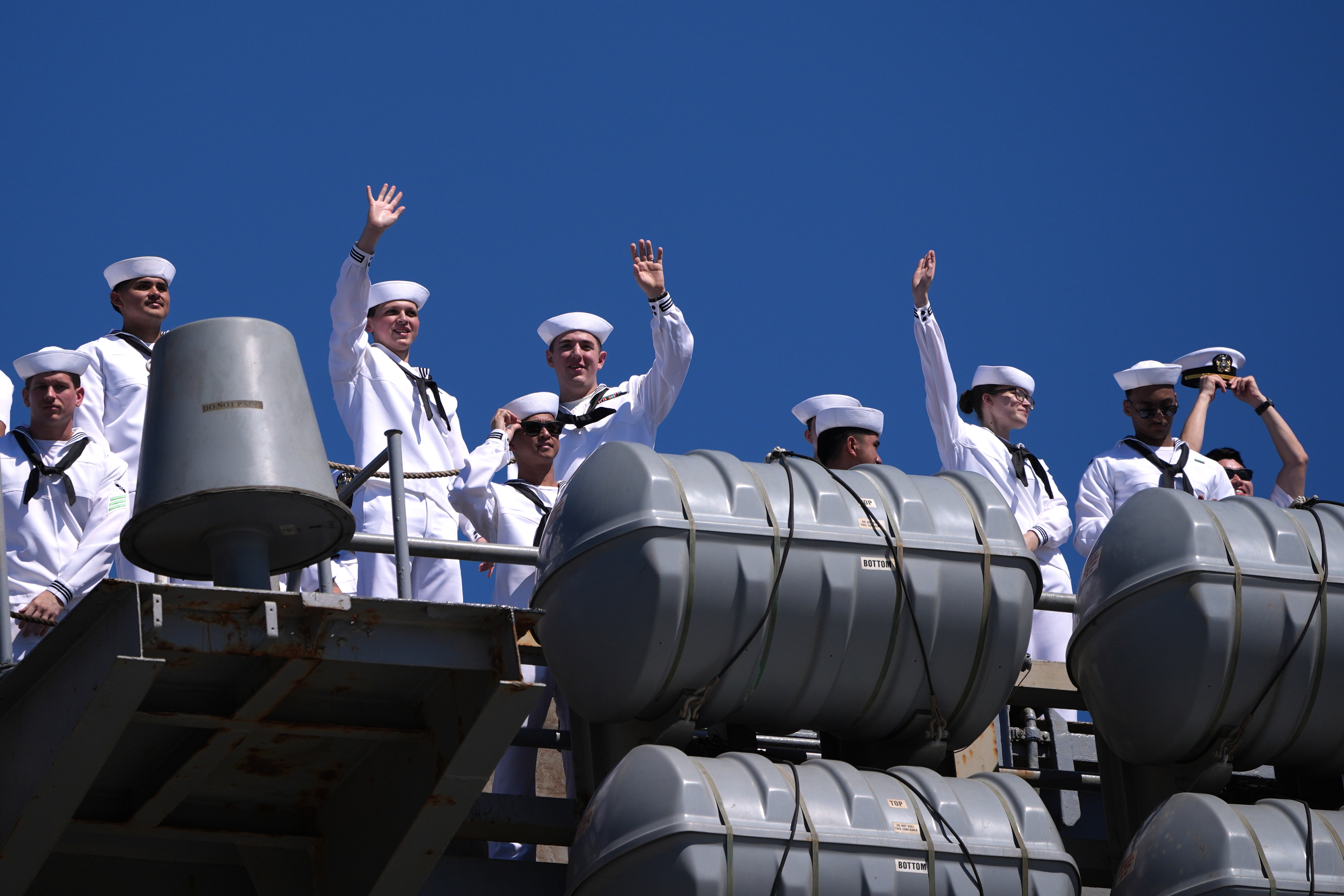
Despite the controversy and exhaustion, the atmosphere on the pier at North Island was pure relief. Families holding handmade signs, toddlers meeting parents for the first time, and young sailors stepping off the brow with massive grins defined the homecoming scene.
For junior sailors experiencing their very first deployment, the return to California soil felt surreal. Stories of eating fresh food instead of months of rations, stepping away from constant mechanical hums, and finally hugging loved ones dominated the docks.
The USS George Washington quietly relieved the Lincoln in the Middle East back in August, paving the way for the Lincoln's long-awaited journey home, which included a morale-boosting stop in Thailand on the return transit.
Modern military commitments require immense sacrifice from the individuals wearing the uniform. The Lincoln is finally tied up in San Diego Bay, but the conversations about fleet rotation lengths, sailor welfare, and operational tempo are only heating up.