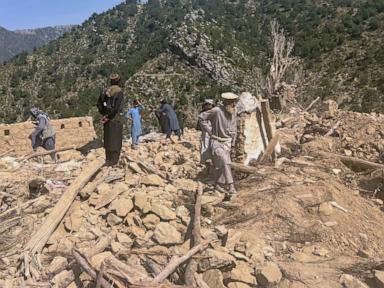
Cross-border violence doesn't always make prime-time television, but when regional tensions boil over, the human cost is immediate. Recent overnight airstrikes conducted by the Pakistani military in eastern Afghanistan have left nine people dead, according to the Afghan Taliban government. Islamabad maintains a completely different narrative, insisting that the aerial operations targeted armed militant hideouts rather than civilian infrastructure.
If you've been following South Asian geopolitics, this tit-for-tat cycle feels painfully familiar. But the friction along the disputed Durand Line is escalating into something much harder to ignore.
The Clashing Narratives on the Ground
According to officials in Kabul, the bombardment struck residential homes across multiple Afghan provinces. The Taliban administration condemned the raids as a violation of national sovereignty, stating that innocent families—including women and children—paid the ultimate price for security failures they had nothing to do with.
On the flip side, security officials in Islamabad tell a starkly different story. Pakistan's military apparatus argues that the strikes were precision actions directed solely at the Tehreek-e-Taliban Pakistan (TTP) and other insurgent factions. Pakistan has repeatedly accused Kabul of offering safe havens to militants who slip across the porous border to orchestrate bloody domestic attacks inside Pakistani cities.
Kabul denies harboring these groups, creating a stubborn diplomatic stalemate where every security operation triggers a fresh wave of civilian casualties and fiery political rhetoric.
Why the Durand Line Remains a Powder Keg
The boundary dividing Pakistan and Afghanistan has never been peaceful, but the current deterioration marks a sharp drop in regional stability. Pakistan spent months constructing a heavy steel-and-wire fence along the roughly 2,600-kilometer border to stem unauthorized crossings. Rather than solving the issue, the barrier has intensified local grievances and fueled border skirmishes.
Militant groups continue to exploit the rugged terrain. When a high-profile attack hits security checkpoints or urban centers inside Pakistan, Islamabad responds with swift kinetic force. Jet fighters and artillery barrages cross the international boundary, treating eastern Afghan provinces as a tactical extension of their counterterrorism zone.
The United Nations Assistance Mission in Afghanistan has documented hundreds of civilian casualties over recent months, driven largely by these escalating cross-border exchanges. International human rights advocates point out that local populations caught in the crossfire have nowhere to run. They live in constant anxiety, waiting for the next midnight raid or mortar exchange.
What Happens Next in the Region
Diplomatic channels between Islamabad and the Taliban administration are practically frozen. Pakistan wants ironclad guarantees that Afghan soil won't be used to stage anti-state terrorism. Meanwhile, Kabul demands that Pakistan respect its territorial integrity and stop unilateral military strikes.
Without a working mechanism for intelligence sharing or joint border management, these aerial bombardments will likely continue. Every strike deepens the animosity, radicalizes a new generation on both sides of the border, and pushes a lasting diplomatic solution further out of reach. The ongoing crisis isn't just a bilateral dispute; it's a simmering humanitarian disaster unfolding in plain sight.