You lose your front door in a second. Then you spend the next months losing everything else that made you who you were.
When bombs force over a million people out of their homes in Lebanon, the headlines usually track the immediate body counts and the displaced populations crowding into makeshift schools. But numbers miss the quiet, grinding erosion happening inside those shelters. For a middle class that spent years watching their life savings evaporate through a historic banking collapse, this war triggered a second, more insidious catastrophe: total social degradation.
When a Living Room Becomes a Canvas Tent
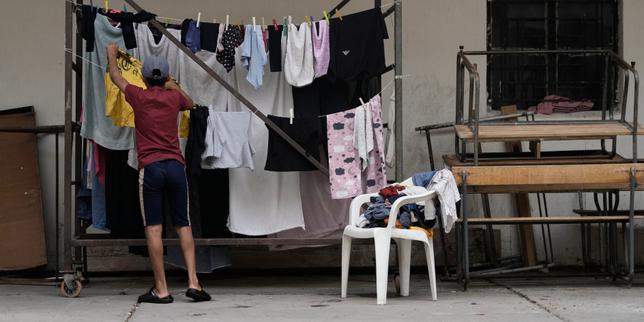
Walking through public shelters or makeshift tent settlements in regions spared from the heaviest strikes, you find engineers, teachers, and small-business owners who now share water points and thin mattresses. They aren't just refugees of an active conflict; they are victims of instantaneous downward mobility.
In places like Sidon or Beirut's makeshift community spaces, families who paid mortgages and planned summer vacations find themselves entirely dependent on aid distributions.
- The loss of autonomy: Standing in lines for basic rations strips away adult dignity faster than any physical hardship.
- The psychological toll: Parents report feeling fundamentally incapable of protecting their children's futures, as schools close and routine vanishes.
- The financial trap: With local currencies heavily devalued and jobs vaporized by infrastructure destruction, returning home isn't an option when the home itself is rubble.
The Double Crisis of Economy and Conflict
You can't separate the current displacement wave from the financial decay that preceded it. Long before the first airstrikes targeted southern villages or the Bekaa Valley, Lebanon's financial sector had already locked citizens out of their bank accounts. People were already trapped in silent poverty.
When the war arrived, it delivered a coup de grâce. Families who managed to scrape by on cash reserves or remittances suddenly had to flee with only what fit in a car trunk. The economic contraction pushed entire strata of society over the edge. Professionals who once hired domestic help now share cramped quarters with strangers, wondering how they will pay for tomorrow's medicine.
What Human Aid Statistics Miss
International organizations track food baskets and medical kits, yet they struggle to quantify the invisible fracture of social standing. When a university professor has to beg for infant formula or old clothes, the damage goes deeper than physical displacement. It alters identity.
Local NGOs and grassroots volunteers do what they can, but resources are stretched thin. Hospitals operate under severe pressure, and municipal services have buckled entirely under the weight of hundreds of thousands of new arrivals. People aren't just surviving day to day; they are managing the trauma of watching their societal anchors cut loose.
The physical rebuilding of walls and bridges will take years, assuming political stability ever returns. But fixing a shattered social fabric, where an entire generation has been thrust into abrupt and permanent poverty, remains an open-ended wound.
Guerre au Liban : les conditions de vie actuelles des déplacés
This video provides an on-the-ground look at the daily realities and survival strategies of families displaced by the conflict in Lebanon.