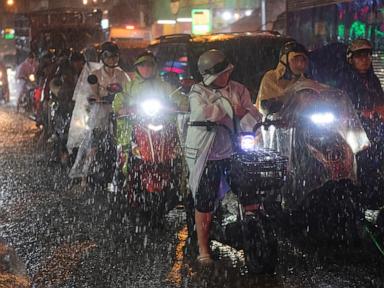
You can see it coming long before the water hits the doorstep. In Ho Chi Minh City, high tides from the Saigon River don't just spill over concrete embankments—they creep up through drainage pipes, bubbling through apartment floors and transforming bustling motorbike arteries into brown, slow-moving rivers. It’s an old routine. People roll up their trousers, balance groceries on their handlebars, and keep going.
Except the stakes aren't what they used to be.
Climate change is rewriting the baseline. It’s easy to look at Vietnam's economic engine and write off the flooding as a seasonal inconvenience or a quirk of monsoon geography. That’s a mistake. When you combine rising sea levels, heavier tropical downpours, and land subsidence caused by excessive groundwater pumping, you get a compounding crisis. Water builds up faster. It drains much more slowly.
Authorities have launched massive interventions, including a $13 billion blueprint targeting more than 150 specific flood hotspots across the urban sprawl. Massive tidal gates, pumping stations, and upgraded canals are supposed to hold the line. But engineering alone won't solve a problem baked into how the city has expanded.
Decades of rapid urban migration pushed lower-income populations into low-lying floodplains. Wetlands and natural drainage basins were paved over to make room for high-rises, commercial hubs, and sprawling residential zones. When you pave over nature's sponge, water has nowhere else to go. Residents like 63-year-old Vo Dang Thi have taken matters into their own hands, physically raising the floors of their homes just to stay dry when the tide peaks.
Fixing urban flooding requires acknowledging that the ground itself is sinking while the oceans are rising. If the city's growth continues unchecked without strict groundwater management and ecological restoration, those billions spent on concrete infrastructure might just buy a little extra time rather than a permanent fix.
Stop treating urban climate adaptation as a future abstract problem. The water is already inside the living room.