The war in Ukraine rarely delivers straightforward victories, but the latest developments on the eastern front have genuinely shifted the conversation. Kyiv recently confirmed that its forces have successfully regained between 125 and 140 square kilometers of territory in the heavily contested Donbass region. While major international outlets treat this as just another headline in a continuous live feed, the reality on the ground points to a much more tactical and deliberate operational shift.
If you look past the standard military communiqués, you'll see a complex chess match. Russia has spent years trying to secure absolute control over this industrial heartland, yet Ukrainian units are proving that localized counter-attacks can still disrupt well-entrenched positions. Let's break down what this territorial recovery actually means for the broader trajectory of the conflict.
Beyond the Numbers: The Reality of Donbass Counter-Attacks
Every time a military report mentions square kilometers recaptured, armchair generals tend to overreact. They either dismiss it as a drop in the ocean or hail it as a total game-changer. Both extremes are wrong.
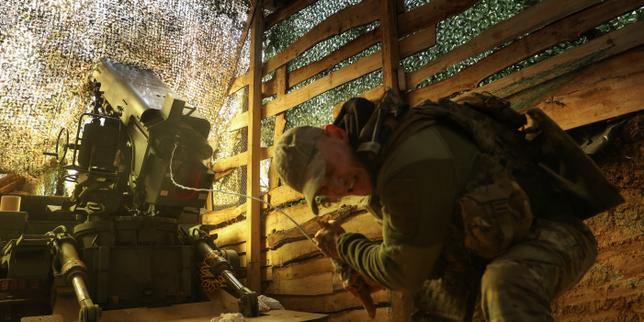
In modern warfare, holding ground is secondary to attrition and logistical control. When Volodymyr Zelenskyy announced that Ukrainian brigades had pushed back Russian lines across roughly 130 square kilometers in the east, the real story wasn't just the acreage. It was the specific sectors where these pushes occurred. Tactical maneuvers like the reported operations in parts of the Donetsk region show that Ukrainian forces are exploiting gaps in Russian defenses rather than relying on blunt, costly frontal assaults. More analysis by NPR explores similar perspectives on the subject.
Why Ground Holding Is Getting Harder for Everyone
Let's look at the data from independent tracking organizations like the Institute for the Study of War. The monthly territorial gains for Russian forces have plummeted dramatically compared to previous years, dropping to modest double-digits as the defenders adapt. At the same time, maintaining control over newly captured ruined villages in the Donbass requires massive logistical pipelines that are constantly under threat from artillery and drone surveillance.
When you're fighting an enemy that relies heavily on drone warfare and glide bombs, every meter of recovered mud comes at an immense cost. Ukrainian commanders know this better than anyone. They aren't trying to roll across the entire steppe in a cinematic blitzkrieg; they are bleeding out the adversary's reserves while keeping morale high at home.
The Brutal Winter Strategy Taking Shape
You can't talk about the Donbass right now without looking at what's happening behind the front lines. Intelligence reports released by Kyiv indicate that Moscow has finalized a new doctrine aimed at intensifying attacks against civilian and critical energy infrastructure as winter approaches.
We've already seen the devastating impact of these tactics in cities like Kyiv, where recent drone strikes targeted key bridges crossing the Dnieper River and critical research facilities. The objective here is transparent. If the Kremlin can't secure rapid breakthroughs in the Donbass, it aims to make the urban centers unlivable and grind down the political will of the population.
This creates a brutal paradox for Ukrainian strategy. Success on the eastern front is desperately needed to maintain international backing and psychological momentum, but every tactical gain demands resources that are simultaneously required to defend domestic power grids against incoming long-range strikes.
What to Watch Next on the Eastern Front
Don't expect a sudden collapse of either line anytime soon. The conflict has settled into a grinding war of endurance where localized gains are hard-fought and even harder to consolidate.
Keep an eye on how effectively Kyiv can integrate its recent counter-offensive successes into a wider defensive posture before the freezing mud of late autumn sets in. If these localized pushes continue to force Russian redeployments from other critical sectors, then these 140 square kilometers will have served their exact tactical purpose. If they result in overextended supply lines exposed to intense artillery retaliation, the cost will outweigh the headlines.
Watch the logistical reports, ignore the sensationalist summaries, and remember that every kilometer in the Donbass is bought with blood, engineering ingenuity, and endless adaptation.