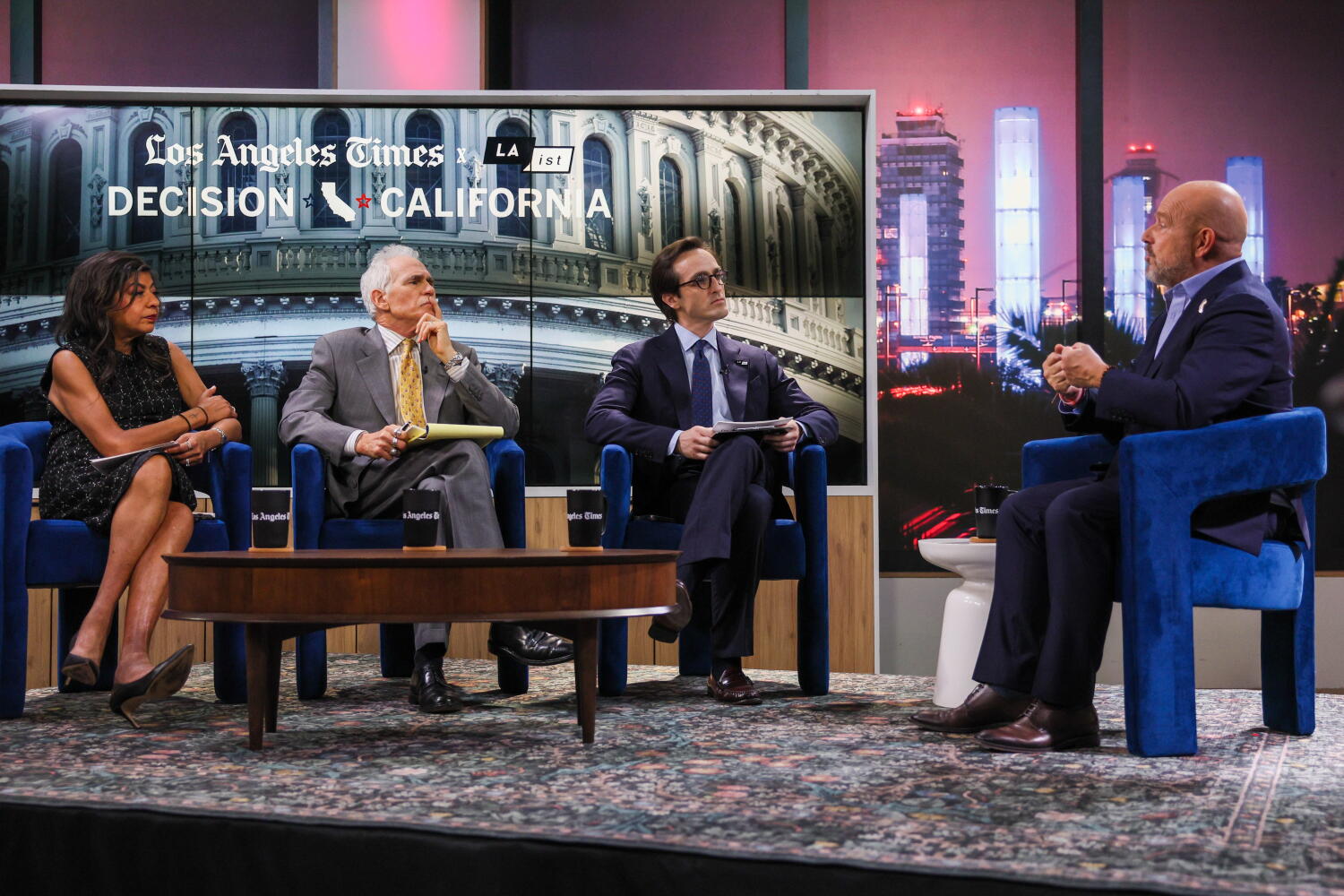
California politics rarely stays quiet, and the state's 2026 gubernatorial race just heated up inside a downtown Los Angeles newsroom. Republican candidate Steve Hilton sat down with local journalists for a high-stakes town hall, laying out a platform that immediately drew sharp lines across the state's political map. If you wanted a clear look at how a conservative outsider plans to pitch himself to a heavily blue electorate, this session laid it all bare.
Hilton leaned hard into populist economics while keeping a curious arm's length from national lightning rods. He knows the golden state is hurting under the weight of a severe cost-of-living crisis. But can his specific mix of aggressive tax cuts and skepticism toward green energy really convince everyday voters? Let us look at what happened when the former Fox News host faced tough questions from reporters and editors.
The Tax Cut Pitch That Stole the Show
Every political campaign needs a headline-grabbing policy, and Hilton's center around drastic tax reform. During the town hall, he defended his aggressive plans to slash income taxes, arguing that working families are being squeezed out of California entirely. He wants to wipe out state income tax for earners making under one hundred thousand dollars while introducing a flat rate for higher brackets, funded in part by killing pricey legacy infrastructure projects like the state's notorious high-speed rail line.
Voters respond to simple solutions when utility bills and grocery prices keep climbing. Hilton knows this intimately. He hammered home the point that California boasts the highest tax burden in the nation paired with some of the most dysfunctional public services. Yet, critics point out that gutting state revenue streams without catastrophic cuts to education or local government services is a massive mathematical hurdle. Hilton brushed those concerns aside, betting that lower taxes will spark an economic boom that pays for itself. It is a classic supply-side gamble, and it remains the centerpiece of his entire pitch.
Walking a Fine Line on Donald Trump
National figures cast long shadows over local elections, and Donald Trump remains radioactive in major California metropolitan centers. During the exchange, Hilton offered a notably tepid stance on the former president. While he shares populist alignment on border enforcement and government overreach, he avoided leaning into Trump’s most polarizing rhetoric.
This calculation makes total sense from a strategic standpoint. Winning a statewide primary in California requires locking down conservative enthusiasm, but surviving a general election means avoiding the kind of toxic national baggage that alienates suburban independents and moderate Democrats. Hilton chose his words carefully, sidestepping traps designed to drag him into national culture wars. He wants voters to focus on state issues like homelessness, wildfire management, and energy costs rather than Washington personality politics. Whether independent voters buy that separation is another question entirely.
Skepticism on Offshore Wind and Energy Policies
Energy policy proved to be another flashpoint. Hilton didn't mince words about his cold stance on offshore wind projects and heavy-handed green mandates, blaming current climate regulations for skyrocketing electricity bills and crushing fuel prices across the state. He argued that California's aggressive push toward green energy is driving businesses out and punishing low-income residents who cannot afford electric vehicles or high utility surcharges.
Instead of subsidizing expensive offshore wind infrastructure, Hilton wants to roll back regulations and unleash traditional energy production alongside alternative fixes. It is a direct challenge to Sacramento's climate orthodoxy. Critics argue this ignores long-term environmental realities, but Hilton is banking on the immediate economic pain felt by drivers at the pump. When you are paying six dollars a gallon for gas, abstract climate goals tend to take a back seat to monthly budgeting.
What This Means for the Race Ahead
The town hall revealed a candidate trying to thread a very narrow needle. Hilton is pitching himself as a disruption agent, a Silicon Valley-adjacent outsider who understands why the California dream feels broken for a new generation. His tax proposals are bold, his rejection of current energy mandates is unapologetic, and his careful dance around national figures shows political self-preservation.
Yet, translating a polished town hall performance into actual ballot boxes across 58 counties is an uphill battle. With a crowded primary field and formidable Democratic opponents waiting in the wings, Hilton has to prove his economic math works and convince skeptical voters that a conservative outsider can actually fix Sacramento's deeply entrenched bureaucracy.
Stop waiting for politicians to save you and start paying attention to the local policy fights shaping your wallet right now. Look closely at how these tax and energy plans impact your own city before heading to the polls.