Commercial aviation relies on a fragile web of trust. For decades, cockpit security protocols focused almost exclusively on external threats. Cabin doors were reinforced, entry codes were restricted, and passenger screening protocols were overhauled. But nobody designed procedures to protect pilots from the person sitting right beside them.
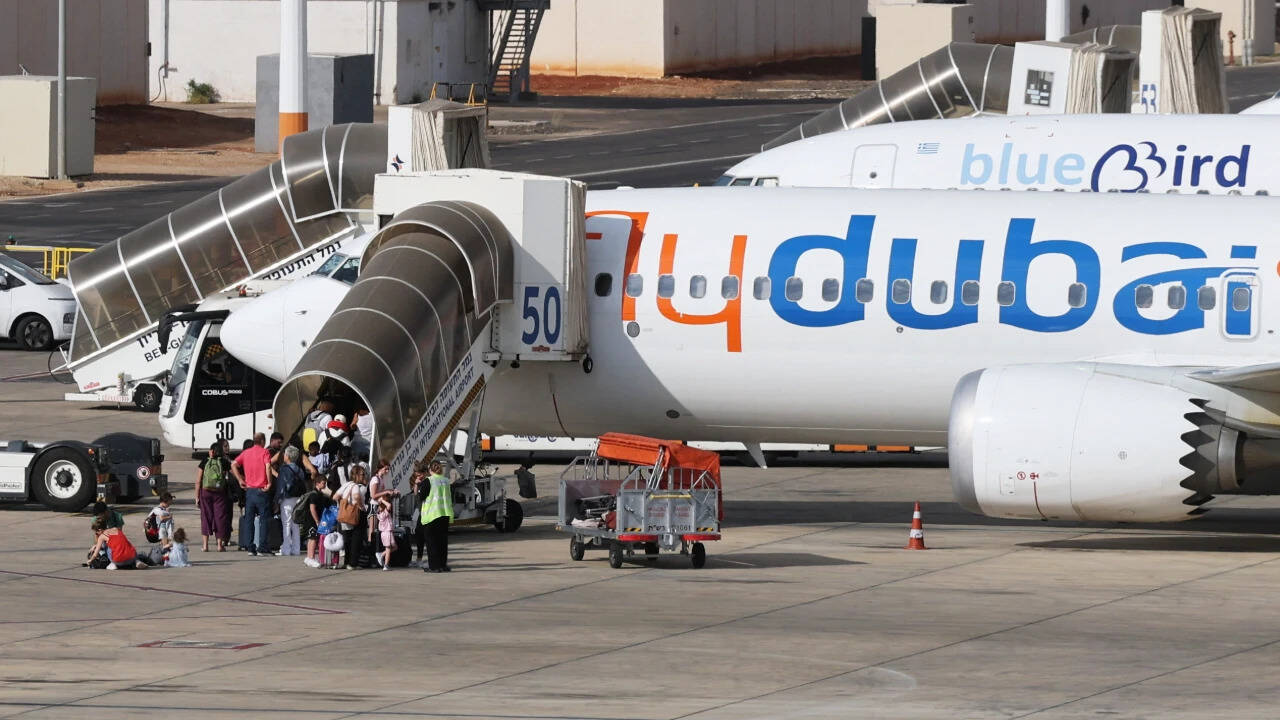
That illusion shattered when flydubai flight FZ1073 plunged over 16,000 feet in just 30 seconds over Saudi airspace.
Indian captain Smit Machchhar fought for his life inside a bloodied cockpit after his Omani co-pilot allegedly launched a sudden, violent knife attack. While crew members and passengers managed to subdue the assailant and a reserve crew safely landed the aircraft in Tabuk, the aftermath opened a Pandora's box of questions about airline hiring, cross-border intelligence, and regional security protocols. Now, Israeli investigators are preparing to question the detained co-pilot in a UAE-led probe. Here is why this case changes everything about modern flight safety.
Inside the Cockpit Chaos
Flight FZ1073 left Dubai for Tel Aviv carrying 174 passengers, the vast majority of whom were Israeli citizens. Cruising at altitude, the routine flight turned into a nightmare when the co-pilot allegedly drew a weapon and attacked Captain Machchhar.
Flight data from Flightradar24 captured the terrifying drop as the aircraft lost 16,625 feet of altitude in barely half a minute during the struggle. Machchhar sustained severe wounds, falling to the floor and fighting to stay conscious.
"I had so many wounds. I had fallen down," Machchhar said from his hospital bed in Abu Dhabi. "I was fighting for my life. At one point, I realised that if I didn't get up... then passengers would lose their lives."
Despite his injuries, Machchhar managed to unlock the reinforced cockpit door. Crew members and alert passengers rushed forward to overpower the attacker. A reserve flydubai flight crew traveling on the plane took over the controls, steering the crippled Boeing aircraft down for an emergency landing in northwestern Saudi Arabia. Saudi authorities detained the co-pilot immediately on the tarmac.
The Cross-Border Investigation
The investigation has evolved into a complex geopolitical puzzle. Because the flight originated in Dubai, landed in Saudi Arabia, and carried mostly Israeli passengers to Tel Aviv, multiple nations have a stake in the outcome.
The co-pilot was transferred from Saudi custody to the United Arab Emirates to face a comprehensive, UAE-led inquiry. Emirati authorities are probing the exact timeline, background, and motives of the suspect. They want to know whether the attack was an isolated act of an unstable individual or part of a coordinated conspiracy.
Israeli Prime Minister Benjamin Netanyahu stated that Israeli officials are participating directly in the UAE-led probe. Israeli investigators are expected to question the Omani co-pilot in the UAE to uncover any external handlers, radical networks, or hidden digital trails. Netanyahu previously claimed the suspect had undergone radical Islamist indoctrination and intended to crash the plane, though official motive conclusions remain pending.
Omani authorities have maintained silence, and the co-pilot's identity has not been publicly released beyond his nationality.
The Vetting Blind Spot
This incident exposes a gaping vulnerability in international commercial aviation: pilot vetting across geopolitical divides.
Israel and Oman do not maintain official diplomatic relations. Netanyahu pointed out that standard aviation policy does not typically permit pilots from countries without formal diplomatic ties to operate flights bound for Israeli airports. How the Omani co-pilot came to be assigned to this specific high-risk route remains an urgent operational question for flydubai management and regional aviation authorities.
Airlines perform background checks, medical evaluations, and routine psychological screenings. Yet, internal radicalization, sudden psychological breaks, or hidden ideological motives are notoriously difficult to catch through standard HR pipelines. When an insider turns hostile, the multi-million-dollar security infrastructure outside the cockpit door becomes useless.
The Fallout for Middle Eastern Aviation
The immediate consequences of the attack rippled across regional transit corridors. Commercial flights between the UAE and Israel faced sudden suspensions as airlines scrambled to evaluate safety protocols. Major Israeli carriers like El Al, Arkia, and Israir rushed to organize emergency repatriation flights for passengers stranded across the UAE.
Captain Machchhar has been widely praised as a hero by both Indian Prime Minister Narendra Modi and Israeli leadership. His refusal to stay down saved nearly two hundred lives. But the aviation industry cannot rely on individual heroism to compensate for structural security flaws.
Airlines must rethink how they monitor flight deck crews. Enhanced psychological check-ins, stricter cross-border crew rostering, and improved internal alarm mechanisms are no longer optional luxuries. If airlines fail to tighten cockpit security from the inside out, the next insider threat might not end with a miraculous recovery.