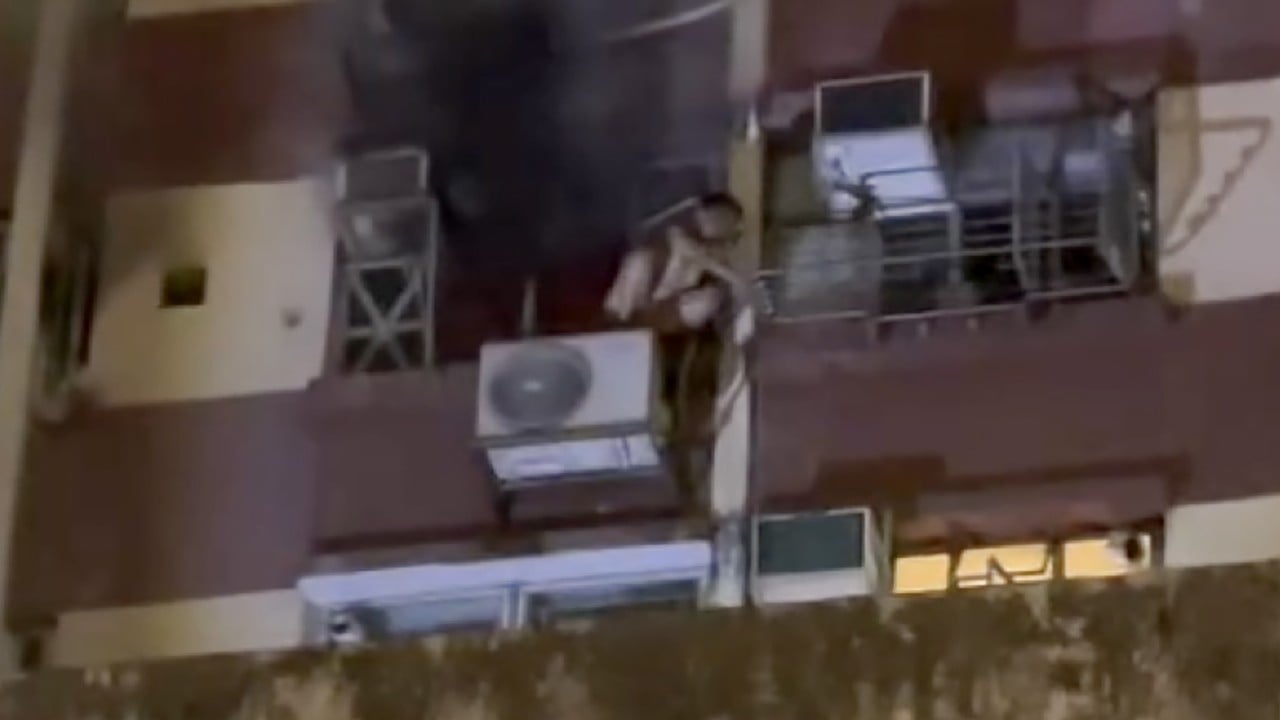
Thick black smoke filled a Kwun Tong apartment on a Wednesday night. Inside, a 13-year-old boy faced a terrifying choice. Stay inside and suffocate, or climb out a window onto an exterior air-conditioning unit. He chose the ledge.
That split-second decision saved his life, but the aftermath triggered a secondary crisis involving emergency response protocols and child neglect laws in Hong Kong.
Inside the Kwun Tong Blaze
The incident unfolded at Tsui To House in the Tsui Ping (North) Estate. At roughly 7:54 PM, a fire erupted in the living room of a residential flat. Preliminary police and fire department investigations pointed to an external power bank or charger as the ignition source.
As flames took hold, dense smoke rapidly engulfed the interior. Wearing only his underwear, the teenager managed to scramble through a window, positioning himself precariously on the outdoor air-conditioning condenser unit to escape the toxic fumes. Observers at BBC News have also weighed in on this matter.
Neighbours raised the alarm immediately. Roughly 70 residents evacuated the building while emergency crews rushed to the scene. Firefighters deployed an exterior ladder, reaching the stranded teenager and pulling him to safety before the blaze was fully brought under control at around 8:25 PM.
The boy was conscious during the rescue. However, emergency responders treated him for suspected smoke inhalation before transporting him to United Christian Hospital for observation.
The Legal Aftermath and Child Neglect Concerns
While the fire itself was extinguished within half an hour, the incident opened a broader legal investigation. Authorities discovered that the 13-year-old had been home alone at the time of the emergency.
Police subsequently located his 42-year-old mother, surnamed Ho, and arrested her on suspicion of child abuse or neglect. The case was transferred to the Kwun Tong district crime investigation team.
This arrest highlights a stark reality regarding supervision laws. In urban high-density housing developments, leaving adolescents unsupervised can carry severe legal consequences if an emergency occurs. Kwun Tong police and social welfare departments frequently remind guardians that home safety extends beyond locked doors and fire-resistant construction materials.
Common Home Fire Risks You Need to Watch
Incidents like the Tsui To House fire underscore how quickly everyday electronics can become hazards.
- Power Banks and Chargers: Leaving portable chargers, cheap lithium-ion batteries, or uncertified power banks plugged into wall sockets unattended creates a major fire risk.
- Overloaded Sockets: High-wattage appliances connected to multi-plug adapters frequently cause electrical short circuits in older public housing estates.
- Blocked Escape Routes: Clutter near windows and exit doors often traps residents when panic sets in.
Practical Steps to Prevent High-Rise Disasters
If you live in a high-rise apartment block, preparation makes the difference between a narrow escape and a tragedy.
- Unplug Unattended Electronics: Never leave power banks, phones, or tablets charging overnight or while you step out of the flat.
- Review Home Safety Rules: Ensure every family member knows the primary evacuation route and what to do if smoke blocks the main doorway.
- Maintain Clear Windows: Keep window security bars and latches in working order so that emergency egress is possible if interior corridors become impassable.
Check your charging habits today. Keep escape paths clear before an emergency forces your hand.