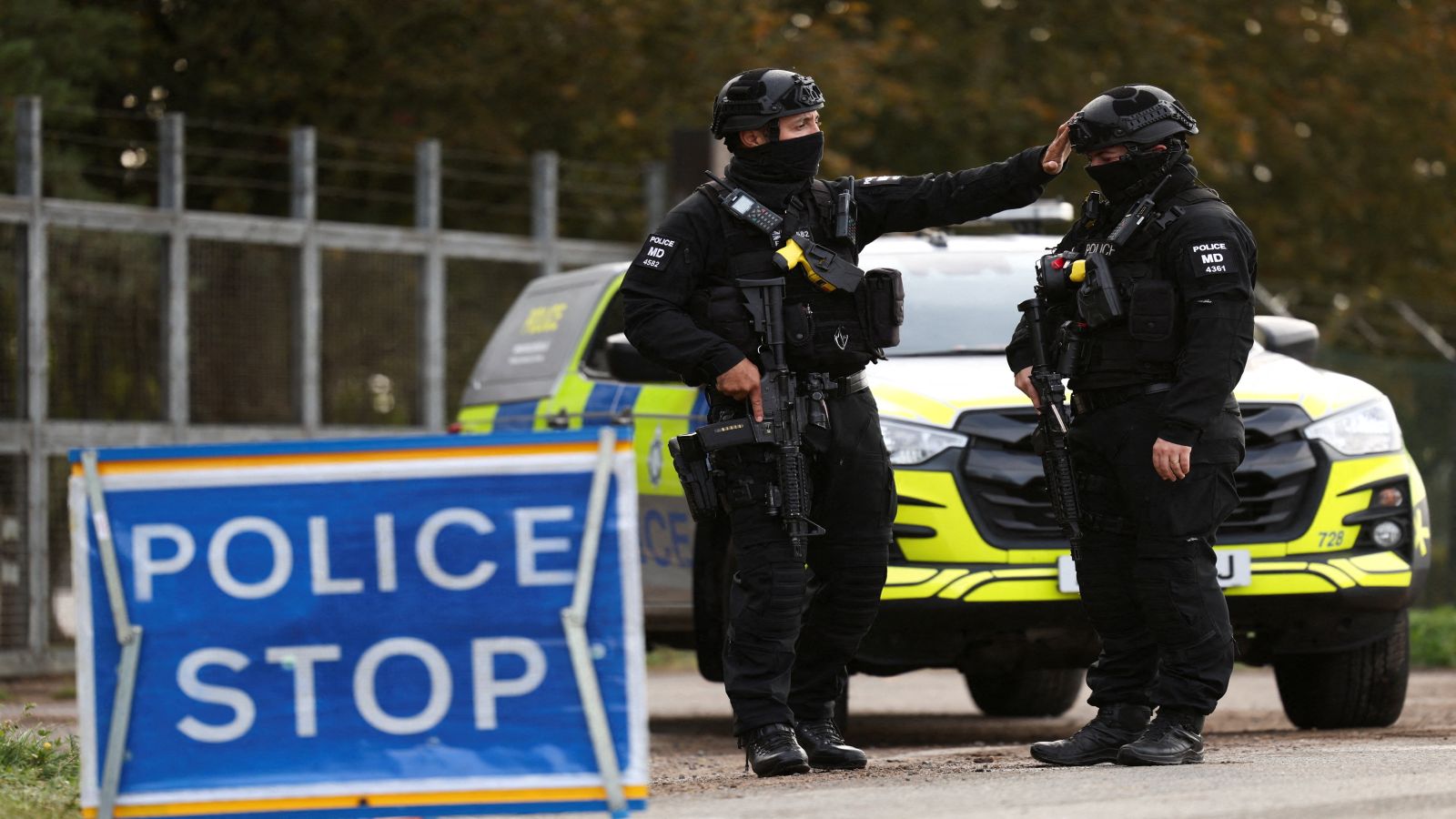
Five British men in their twenties woke up to global headlines after counter-terrorism police dragged them out of vans near a critical military installation in Gloucestershire. The target was RAF Fairford, a British-owned base heavily utilized by the United States Air Force for long-range bomber operations. Donald Trump quickly claimed the suspects had been on intelligence radars for a long time, while British authorities insisted the entire operation kicked off because a local farmer spotted three suspicious vans blocking a rural road and made a frantic phone call.
The disconnect between Washington's confident assertions and London's procedural reality highlights the messy truth about modern counter-terrorism. When local policing collides with international geopolitics, the official narrative gets murky very quickly.
What Happened on Sunday Morning?
The incident began shortly after midnight on a Sunday in the quiet village of Whelford, right near the perimeter of RAF Fairford. A local farmer noticed three white vans parked awkwardly, blocking access roads, and called emergency services.
Police arrived swiftly, detained five men aged 23 to 25, and locked down the area. Domiciles nearby—about 85 households—were evacuated while army bomb-disposal squads deployed robots to inspect the vehicles. Counter-terrorism units quickly stepped in, upgrading the initial detention from suspected explosive offenses to the active preparation of a terrorist act.
Yet, as the dust settled, a startling detail emerged. Despite the initial panic over explosive devices and robot-assisted vehicle sweeps, subsequent checks revealed that no actual explosive material was found in the vans.
The Bail Controversy and Transatlantic Friction
If the missing explosives weren't enough to cause confusion, the suspects' subsequent release on bail certainly did.
British police released the five British nationals under strict conditions while ongoing forensic and digital investigations continue. This decision triggered immediate pushback from high-ranking American officials. U.S. Secretary of State Marco Rubio publicly stated that many people were deeply disturbed that the suspects had been released.
Donald Trump went even further, telling reporters at the White House that American intelligence knew everything about the individuals involved and that he would have never allowed them to walk free on bail. British defense officials countered by defending their legal framework and operational security, noting that British investigative procedures differ significantly from American expectations, and emphasizing that operational constraints limit what can be publicly shared.
Is a Foreign State Behind the Plot?
The core question hanging over the entire investigation is whether this was a homegrown amateur stunt or a state-backed operation sponsored by a foreign actor.
US officials, including Rubio, have strongly suggested that a foreign actor was clearly involved in orchestrating the threat. Investigators are actively probing potential links to Iran, Russia, or international militant networks. The timing is hard to ignore. RAF Fairford has served as a vital forward operating location for U.S. bombers during regional conflicts, including recent strikes tied to the ongoing conflict with Iran.
Unsurprisingly, Tehran has fiercely denied any involvement. The Iranian embassy in London issued a statement condemning the claims as unfounded and malicious speculation pushed by certain media outlets to stoke tensions.
Why RAF Fairford Matters
To understand why a few vans parked near a Gloucestershire runway generated international panic, you have to look at the strategic weight of the installation itself.
RAF Fairford houses the headquarters of the U.S. Air Force's 501st Combat Support Wing and acts as a primary staging ground for Global Strike Command assets. Over the decades, it has played a logistical and offensive role in major conflicts, from the 1990 Gulf War and the 2003 Iraq invasion to recent military actions involving Iran. Because of this high-profile footprint, it remains a permanent fixture on threat assessment boards.
Where the Investigation Goes Next
Right now, the public is caught between conflicting government statements. Trump claims the suspects were being tracked for a long time, whereas the British police record points to a sharp-eyed farmer making a routine late-night phone call. No explosives were found, the suspects are currently out on bail, and intelligence agencies on both sides of the Atlantic are digging through digital devices to piece together what these men were actually planning to do.
Keep an eye on official updates from British counter-terrorism command rather than political rhetoric if you want to separate verified evidence from speculative posturing.