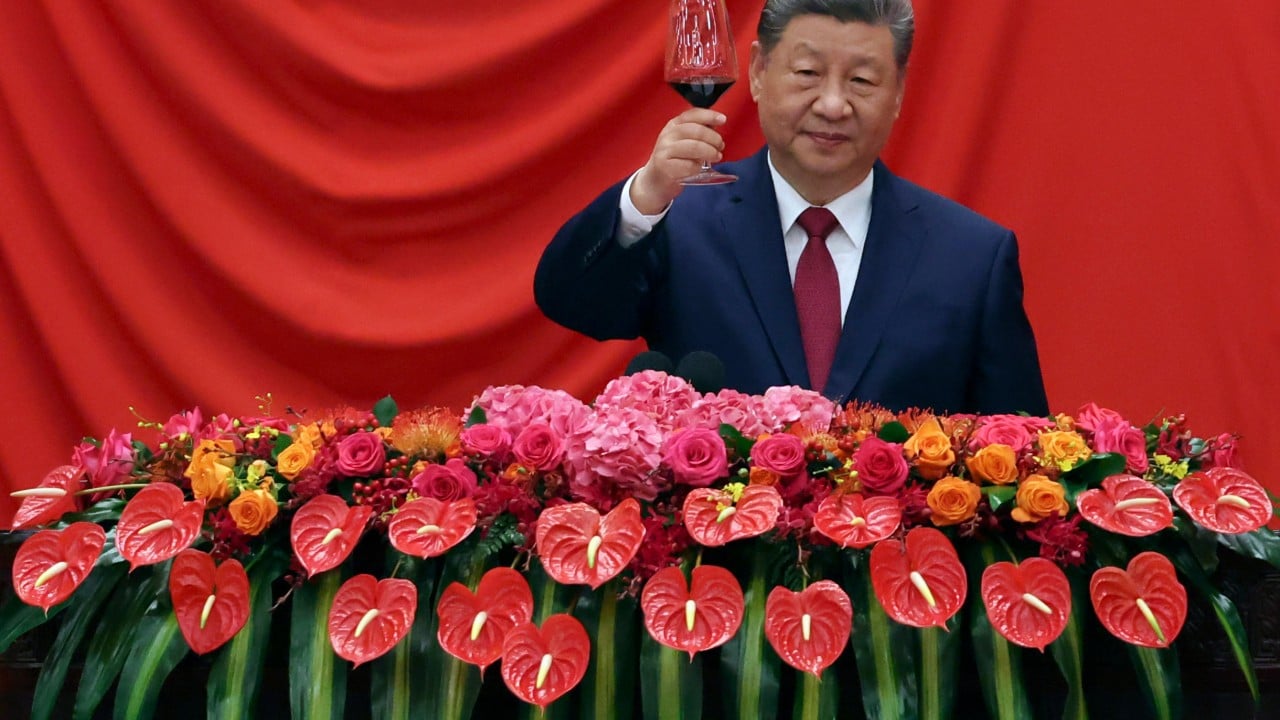
Chinese President Xi Jinping didn't mince words during his address marking the 77th anniversary of the founding of the People's Republic. Standing before party elites at a grand Beijing reception, he delivered a message built around a single premise: the country's economy is pressing ahead despite intense headwinds.
If you watch Beijing's political signals closely, you know these annual National Day speeches aren't just ceremonial toasts. They function as a strategic blueprint for the months ahead. Xi's latest remarks offer a clear window into how top leadership views current financial pressures, domestic hurdles, and global friction.
The Economic Reality Behind the Rhetoric
Let's look past standard political optics. When Xi stated that the nation's economy has demonstrated "strong resilience and vitality" under pressure, he was directly addressing growing market anxieties. Global observers have spent quarters questioning consumer demand, property sector drags, and sluggish growth metrics.
Beijing's response isn't panic. It's doubling down on stability.
Xi explicitly called for upholding the general principle of pursuing progress while ensuring stability. That phrase matters. It tells local officials and state enterprises to avoid reckless maneuvers while still pushing hard to accomplish full-year economic targets. You see a delicate balancing act playing out in real-time. Authorities want to stimulate activity without reigniting systemic debt risks that plagued past growth cycles.
Market confidence remains fragile. Investors want concrete fiscal backing, not just reassuring words at a podium. Yet, by publicly committing to full-year targets, Beijing is signaling that state machinery will step in wherever private demand flags.
Stance on Cross-Strait Dynamics
You can't separate Beijing's economic agenda from its geopolitical posture. Alongside financial goals, Xi used the platform to reiterate firm opposition to Taiwan independence and external interference.
He called for deepening cross-Strait exchanges and cooperation while maintaining a hard line against separatist forces. For foreign policy watchers, this dual focus on economic resilience and territorial sovereignty shows that Beijing refuses to let external pressures or internal economic bumps shift its core strategic priorities.
Domestic stability and national reunification remain non-negotiable pillars of the current administration's long-term vision. When international markets evaluate risk in Asia, these recurring declarations are essential factors to price in.
What This Means for Global Markets
If you're tracking supply chains, commodity demand, or cross-border investments, speeches like this define the operational boundaries inside the world's second-largest economy.
Beijing is telling you that the playbook hasn't changed. High-quality development, technological self-reliance, and state-backed stabilization remain the core directives. While skeptics point to structural hurdles, the leadership is betting that institutional control and industrial capacity will outlast current macroeconomic strains.
Watch the upcoming data releases closely to see how local governments translate these high-level directives into actual policy spending. The real test is execution, not speechwriting.