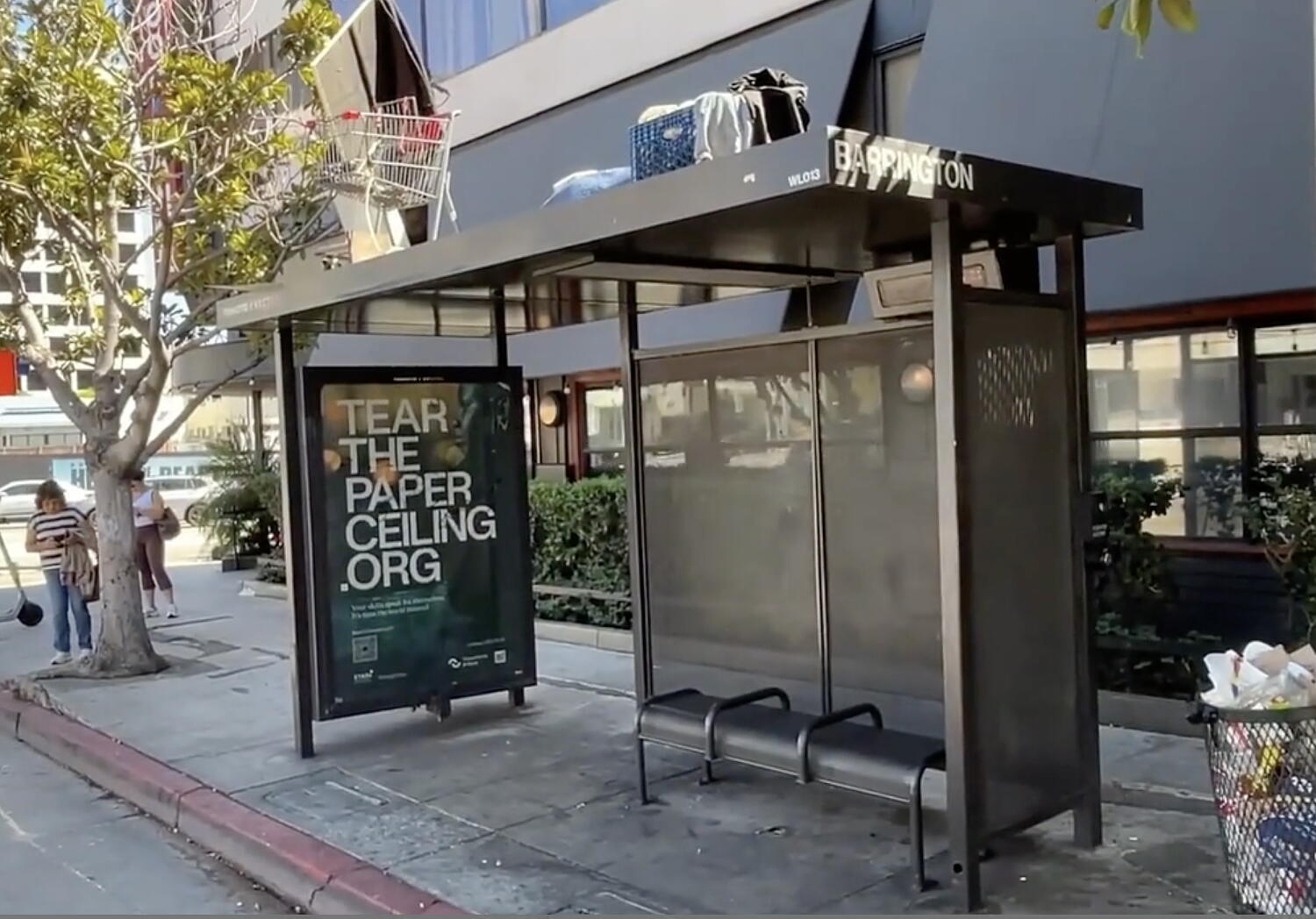
You expect to see traffic, commuters checking their phones, and maybe a stray coffee cup at a busy Los Angeles intersection. You don't expect to see a full makeshift campsite perched on the roof of a transit shelter. Yet that is precisely what happened at the corner of Wilshire Boulevard and South Barrington Avenue in Brentwood, where a man hauled his personal belongings and a shopping cart several feet into the air to set up camp on top of a Metro bus stop.
Viral footage and local news reports captured the bizarre scene, which quickly drew crowds of stunned onlookers in one of West LA’s most heavily trafficked commercial corridors. The individual was seen lounging alongside his cart high above the sidewalk, turning public transit infrastructure into an elevated living space. It’s an arresting visual that highlights just how far the city's housing crisis has drifted into the surreal.
The Logistics of Vertical Encampments
How do you even get a shopping cart onto the roof of a bus shelter? That's the question local residents and commuters kept asking. Hauling personal property, bedding, and a metal cart up a vertical structure requires real effort.
This isn't an isolated incident in Southern California anymore. Over the past few months, viral videos across Los Angeles have shown people carving out living spaces in increasingly gravity-defying locations. From improvised shelters built high on freeway overpass pillars to tents tucked into narrow concrete ledges, individuals are pushing physical boundaries to find a spot out of the immediate path of street sweeps and foot traffic.
When public infrastructure becomes a housing alternative, normal urban rules break down entirely.
Who Is Actually Responsible
The Brentwood incident quickly triggered a bureaucratic guessing game. Commuters and local business owners wondered who was supposed to step in. Does Metro own the shelter structure? Is it city property? Does local council district jurisdiction apply?
As local reports confirmed, City Councilmember Traci Park’s office eventually deployed sanitation crews and homeless outreach workers to the Wilshire and Barrington location to clear the roof. But the delay in response exposes a chronic friction point in municipal management. When public assets are repurposed for habitation, agencies often bounce responsibility back and forth while the public watches in disbelief.
Under local rules like Section 41.18, pitching tents in specific public zones is restricted. But when an encampment literally goes vertical, enforcement protocols get complicated. City workers have to balance public safety, transit access, and humanitarian outreach without escalating dangerous situations on top of metal structures.
Why This Keeps Happening in Plain Sight
Los Angeles continues to grapple with a deep housing shortage and inadequate shelter capacity. Tens of thousands of people sleep on the streets of LA County every single night. When standard sidewalks face heavy policing, constant cleanups, or strict enforcement zones, people look for alternative territory.
Upward mobility usually means getting off the streets and into a permanent home. In modern Los Angeles, it has bizarrely come to mean climbing higher into the air just to find a quiet place to sleep.
City resources are poured into continuous cleanup cycles, yet the root drivers persist. Clearing a bus stop roof solves the immediate transit block, but it does nothing to address the systemic conditions that pushed someone to hoist a shopping cart onto public steel in the first place.
If you commute through West LA, expect to see more creative—and desperate—efforts by unhoused residents trying to carve out space in a city that feels increasingly hostile to everyone trying to survive in it.
Take a close look next time you wait for the bus. You might just need to look up.