Eleven months. That is how long a man can wait for a decision that might alter his life, his property, and his family's survival, only to hear a judge announce that the verdict remains trapped in limbo. Most people grumble, file another useless petition, or accept the grinding inefficiency of the legal machine. Sikander Bhatti chose a different path. He brought actual fire to the courtroom.
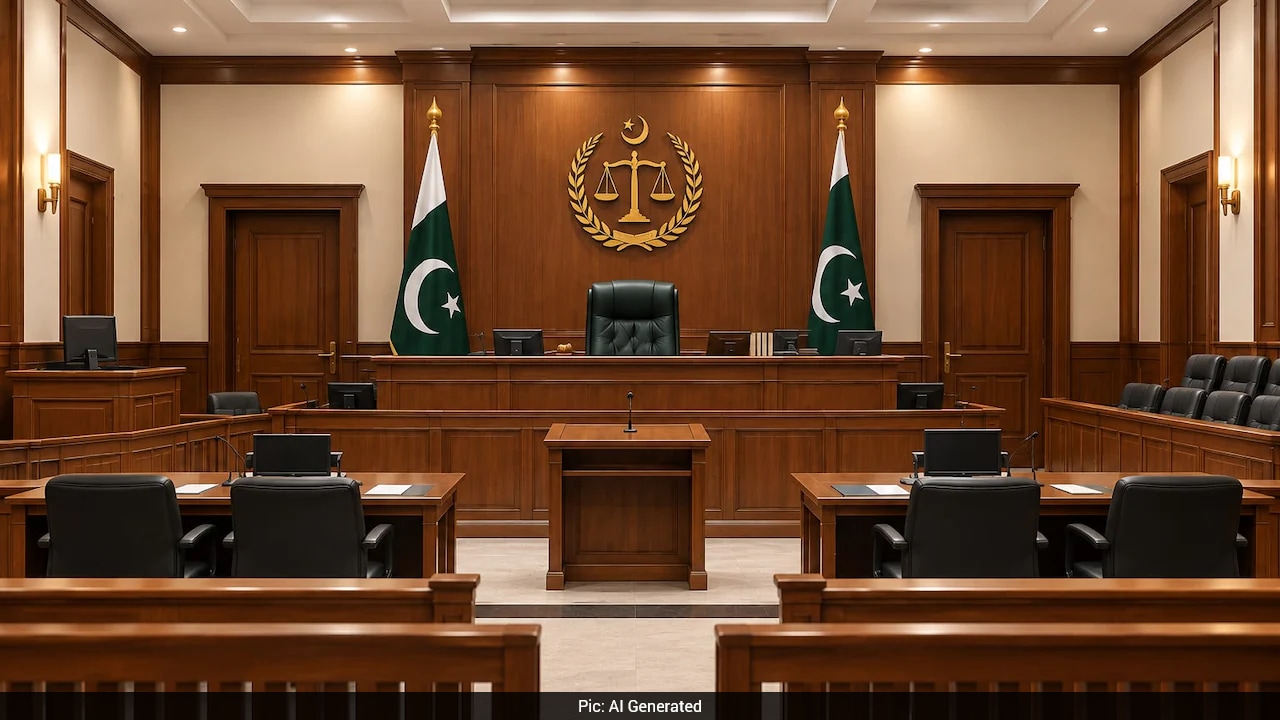
The dramatic clash at the Sindh High Court's Hyderabad Circuit Bench laid bare a systemic collapse that legal professionals deal with daily. When Justice Jawad Akbar Sawana declined to issue a reserved judgment in a contentious land dispute originating from Nawabshah, Bhatti snapped. Representing his own family in a battle that had dragged on for years, he allegedly set his official courtroom seat ablaze.
It sounds like a dark satire or a chaotic scene from a crime thriller. Yet, it actually happened in broad daylight, exposing the intense pressure cooker that judicial backlogs create across South Asia.
The Breaking Point Of Judicial Delay
We talk about court backlogs like they are abstract statistics on a policy white paper. They are not. Every delayed verdict represents a human life suspended in uncertainty.
Bhatti's case was no ordinary brief. It concerned his personal family land in Nawabshah, a dispute dragging through the courts for years. When the bench reserved its judgment, litigants expect a timeline. Weeks turn into months, and months stretch past a year.
According to Ayaz Tunio, president of the Hyderabad High Court Bar Association, lawyers had already tried diplomatic routes. They walked into the judge's chambers, sat across from him, and begged him to clear the backlog of reserved decisions. Those pleas went nowhere. The court simply stalled.
When you trap people in a system with no escape valves, explosions happen. Bhatti did not just protest a late ruling; he struck at the physical symbol of an authority that felt indifferent to human time.
Why Pakistan's Legal Backlog Fuels Desperation
Pakistan's judicial system struggles under millions of pending cases. Civil land disputes, criminal trials, and constitutional petitions routinely take decades to resolve. Supreme and High Court judges face immense pressure, but the trial and circuit courts often become bottlenecks where cases vanish for generations.
Consider what happens when a land dispute sits unresolved for eleven months after final arguments.
- Witnesses move away or pass away.
- Evidence degrades.
- Financial costs mount as legal fees bleed families dry.
- Psychological stress destroys relationships.
When the final arbiter says "not today" for the hundredth time, the social contract frays. Bhatti's drastic act highlights an uncomfortable reality: lawyers and litigants have lost faith in procedural reform. They see institutional patience as a weapon used against them.
The Aftermath And The Real Crisis
Bar associations find themselves in an awkward spot after incidents like this. They must condemn the destruction of property and threats to judicial safety, but they cannot ignore the underlying fury. Tunio acknowledged the frustration openly, noting that multiple judgments had languished before the same bench for months.
Police investigations and disciplinary actions will follow. Bhatti will likely face severe legal consequences for turning a courtroom into a bonfire. But punishing one lawyer does not fix a broken docket.
If courts want to prevent a repeat of the Hyderabad Circuit Bench incident, they need structural accountability. Judges cannot hoard reserved verdicts for nearly a year without consequences. Timelines must be enforced from the top down, or courtroom benches will not be the only things catching fire.
The real story isn't just about a reckless lawyer losing his temper. It is about a system that broke a man until the only voice he had left was smoke and flames.