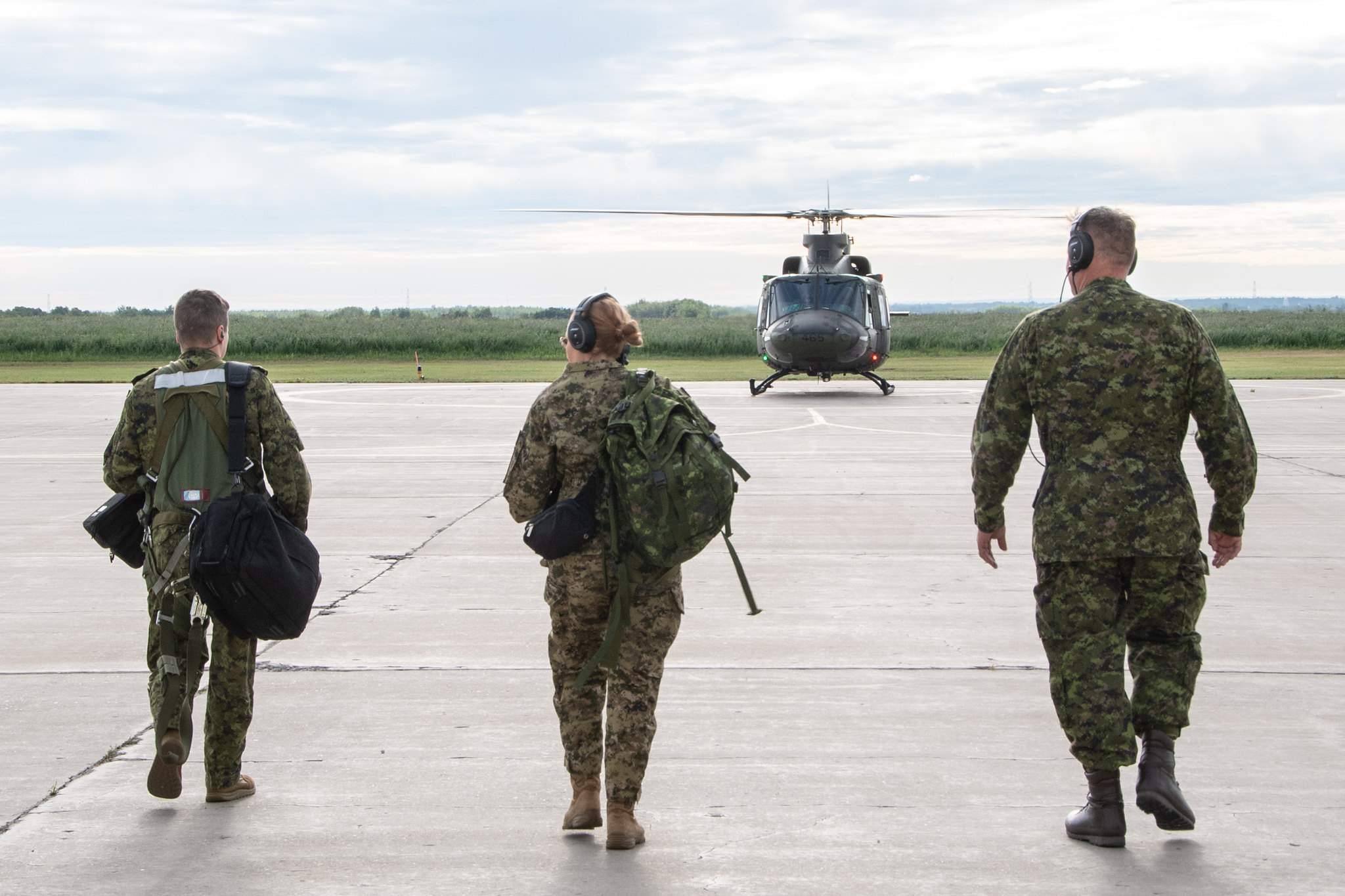
Millions in new military funding won't erase deep-seated western alienation. Federal Defence Minister David McGuinty recently touched down at CFB Edmonton to remind Albertans about billions in ongoing federal defence spending. Standing shoulder-to-shoulder with Alberta Premier Danielle Smith, the message was clear. Ottawa wants to convince the province that a strong Canada depends on a strong Alberta.
Timing matters. This push arrives right as Albertans prepare to head to the ballot boxes for a high-stakes referendum on Confederation. Voters face a complex ballot that includes questions on whether the province should remain in Canada or trigger a second, binding vote on separation. McGuinty's pro-Canada tour is a direct response to rising tensions, but it hits a population that often feels ignored by eastern politicians until election time rolls around.
The Price Tag of National Defense
McGuinty pointed to an ongoing $8 billion injection into military spending across the province. That headline figure sounds massive. Look closer, and you will find specific allocations designed to cement Alberta's strategic value to the Canadian Armed Forces.
Take the $550 million earmarked for CFB Edmonton to establish a western operating base for the air force's new CC-330 Husky fleet. That infrastructure upgrade is a big deal for local logistics and response capabilities. Premier Smith acknowledged the economic and strategic boost, noting it puts the province at the forefront of national air defense.
Yet, money alone rarely changes minds in politics. Critics quickly point out a stark mathematical imbalance. Alberta's net fiscal contribution to the rest of Canada through equalization payments totals tens of billions annually. When locals look at an $8 billion defense investment spread over years, many view it as a modest return on a massive financial investment. It is pennies on the dollar compared to what flows out of the province every single year.
Why This Referendum Stings Different
This isn't your average political dispute over pipeline approvals or carbon taxes. The Oct. 19 referendum puts the structural integrity of the country front and center. Ten distinct questions stare voters in the face, testing the patience of a population that has spent decades frustrated by federal energy policies and fiscal redistribution.
Premier Smith has walked a fine line. She welcomed the defense dollars while emphasizing that Ottawa and Edmonton can, in fact, find common ground. Cooperation sounds great at a press conference on a military base. On the ground, everyday voters are dealing with skyrocketing living costs, shifting energy markets, and a pervasive sense that federal leaders treat western provinces as economic engines rather than equal partners.
Defense spending is an easy card for Ottawa to play because it taps into national pride and local economic benefits. CFB Edmonton employs thousands of military personnel and civilian contractors. Families rely on those paychecks. When the federal government invests in local military infrastructure, it protects jobs.
Still, you cannot buy loyalty with hardware. Defense jets and air hubs do not fix the structural grievances driving separatist sentiment. People want a system that respects provincial jurisdiction and stops treating western industries as political punching bags.
What Happens Next
The referendum results will shape western Canadian politics for a generation. If voters reject separation while demanding major structural reforms, Ottawa will have to answer hard questions about federalism. If the vote leans toward a second binding referendum, the constitutional crisis will explode overnight.
McGuinty's pro-Canada message landed with a mixed reception. The military hardware is real, and the jobs are vital. But until federal leaders address the core economic and political frustrations fueling Alberta's anger, pouring money into military bases will feel less like partnership and more like a PR campaign. Watch the ballot boxes closely. The outcome will test the limits of Canadian unity like never before.