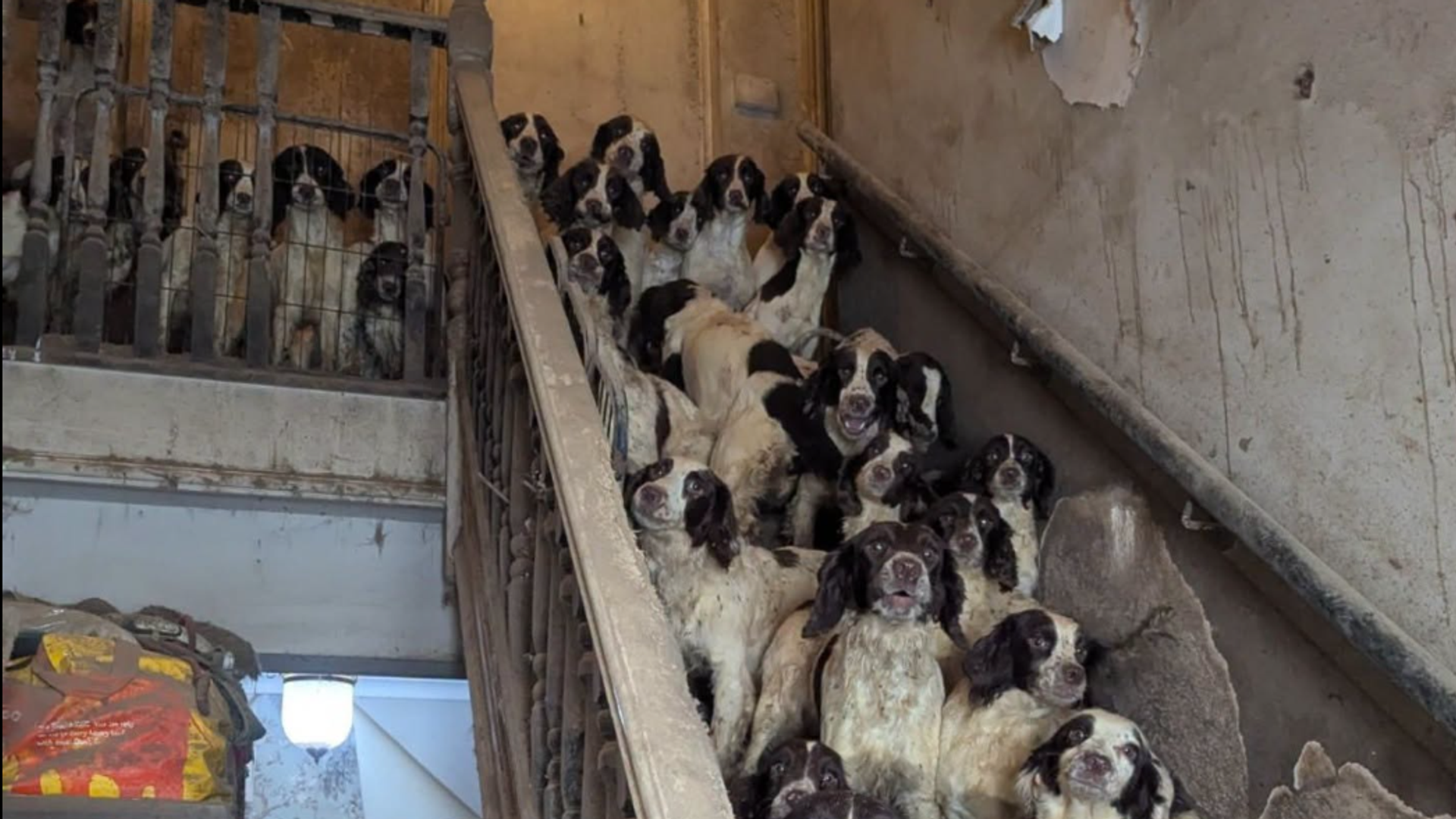
When RSPCA officers stepped into a residential home in Tickhill, South Yorkshire, they walked into a nightmare. They didn't find a makeshift commercial kennel or an abandoned property. They found a family home packed with 84 dogs and two cats living in absolute squalor. Every single surface—from the floorboards to the ceilings—was caked in layers of dirt and animal waste several inches thick.
For animal welfare experts, scenes like this trigger a familiar, frustrating question. How does a house get to that point?
The case concluded at Barnsley Magistrates Court, where 61-year-old children's social worker David Parkes was found guilty of three animal welfare offences. His wife and son had already pleaded guilty earlier. Yet looking past the courtroom verdict reveals a darker pattern of psychological isolation, compounding neglect, and the terrifying speed at which an unmanaged breeding spiral turns a home into a disaster zone.
The Anatomy of an Overwhelmed Household
Most people assume animal hoarding starts with malicious intent. It rarely does. In situations involving dozens of pets, the root cause is almost always severe cognitive distortion mixed with social isolation.
Mrs. Parkes admitted to inspectors that the situation got out of control following the COVID-19 pandemic. That timeline isn't an accident. Lockdowns isolated families, severed community ties, and removed outside accountability. When you're stuck inside, a small pack of unspayed dogs multiplies fast.
Let's look at the numbers from the Doncaster property:
- Eighty-four dogs, primarily Springer Spaniels and Patterdale terriers.
- Two cats named Jess and Flower.
- Thirty-three spaniels crammed onto a single staircase, caked in filth with matted fur resembling heavy dreadlocks.
- Piles of faeces covering kitchen floors and walls up to ten inches deep on upper landings.
When animals aren't neutered, populations explode exponentially. Without intervention, litters arrive faster than a family can rehome them. Soon, the sheer volume of mouths to feed and waste to clean overwhelms human coping mechanisms. Denial sets in. People stop inviting guests over, cut off contact with neighbors, and normalize conditions that should cause immediate panic.
The Irony of Professional Blindspots
What makes the Tickhill case sting on a deeper level is David Parkes's profession. As a children's social worker, his entire career centered on recognizing risk, spotting environmental hazards, and intervening when vulnerable living spaces deteriorated.
How does someone whose daily job is identifying neglect fail to see it inside their own hallway?
Compartmentalization is a powerful psychological shield. Humans possess an alarming capacity to blind themselves to realities they cannot bear to face. When you live inside a rotting environment day after day, your senses adapt. The overpowering stench of ammonia becomes background noise. The visual horror of walls coated in dried waste blurs into normal decor.
It highlights a dangerous truth about human psychology. Expertise in one arena doesn't protect you from complete domestic breakdown in another. Professional competence often masks private chaos.
The Myth That Animal Hoarders Don't Care
People love to label hoarders as monsters. The reality is far more tragic. Many hoarders genuinely love their animals, or at least believe they are saving them.
Veterinary reports from the South Yorkshire raid noted that while the animals lived in filth, there was no evidence of a commercial puppy mill grinding dogs down for profit. Instead, it was an uncontrolled accumulation of pets. The family tried giving a few away, failed, and simply let the population spiral.
Affection without resources is cruelty. When 84 dogs compete for scraps of food in a confined space, the weakest animals starve, develop severe anxiety, or suffer untreated medical emergencies like broken bones and painful ear infections. Loving an animal means providing proper medical care, safe space, and mental stimulation. If you can't provide those basics, the affection is empty.
How to Spot and Stop the Spiral Early
Animal hoarding doesn't happen overnight. It starts with two pets, skips neutering, expands to five, and snowballs from there. If you suspect a neighbor, friend, or relative is losing control of their pets, you need to act before it turns into a biohazard zone.
Watch for these warning signs:
- A sudden, overwhelming smell of urine or ammonia drifting from a property.
- Windows permanently sealed shut or blocked off with cardboard and stacked items.
- Refusal to let anyone inside the home.
- Animals appearing unkempt, matted, or underweight from resource competition.
- A rapidly increasing number of pets visible in windows or yards.
Don't wait for a court trial or a headline-grabbing RSPCA raid to care. Speak up, contact local animal welfare charities, or alert authorities. Early intervention saves animals from months of suffering and pulls struggling humans out of environments that destroy their mental health.
The dogs rescued from that South Yorkshire home have mostly found second chances through the tireless work of rescue workers and foster homes. But the underlying psychological vulnerabilities that created the disaster remain active in neighborhoods everywhere. Keep your eyes open.