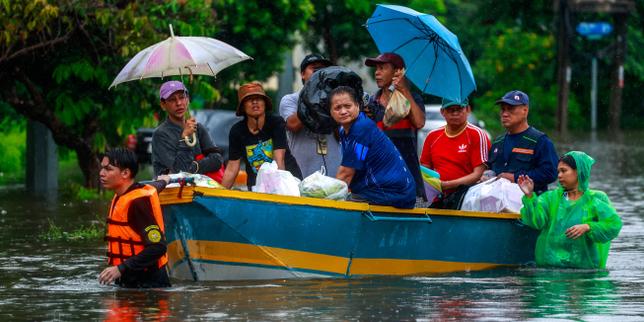
Heavy rain in Southeast Asia isn't a surprise. But when nearly 300 millimeters of water falls on a sprawling concrete metropolis in less than 48 hours, the system breaks.
Bangkok woke up to a crisis on Saturday, September 26, 2026. Governor Chadchart Sittipunt didn't hesitate. He declared a flood disaster emergency across all 50 districts of the Thai capital. If you've ever tried navigating Sukhumvit Road or Ramkhamhaeng Road when drainage systems fail, you know how quickly chaos takes over. Major arteries turned into rivers. Motorists abandoned cars on bridges. Local shops in districts like Bang Bua were swallowed by waist-high water.
Prime Minister Anutin Charnvirakul even cut short a trip to London to fly back home. Why? Because the images circulating online don't just show puddles. They show a city on the edge.
The Real Problem With Bangkok's Geography
Let's talk about why this happens. Bangkok was historically known as the "Venise of the Orient." Sounds romantic, right? It isn't. The city sits on old, flat swamplands barely 1.5 meters above sea level. For another look on this story, see the latest coverage from USA Today.
When you build a concrete megalopolis on top of a swamp, water has nowhere natural to go. The city relies heavily on a complex web of canals and electric drainage pumps. But when rainfall exceeds normal thresholds by massive margins—recording nearly 487 millimeters for the month up to late September against a historical average of about 269 millimeters—those pumps can't keep up. The canals fill to the absolute brim.
Water doesn't just flow down; it backs up out of the drains. It bubbles up through the pavement. It spills directly into ground-floor apartments and alleyway kitchens.
What People Get Wrong About the 2026 Floods
Everyone loves to compare current disasters to the historic 2011 floods that paralyzed Thailand for months and killed over 500 people. Social media loves a good panic.
Is this 2011 all over again? Honestly, no.
While locals like 67-year-old vendor Somkid Pheuk-ngam have voiced fears that the current water levels feel worse right in their immediate neighborhoods, municipal officials stress a very different timeline. The Bangkok Metropolitan Administration reported that conditions stabilized by Saturday afternoon. Once the heavy skies clear completely, the city expects it will take roughly two to three days to drain the remaining water out of the urban basin.
That doesn't make it easy for the thousands affected. Convenience store shelves emptied out by Saturday lunchtime as residents scrambled for dry rations. Authorities opened temporary shelters, moving around 980 people out of danger zones and safely transferring vulnerable, bedridden patients to local hospitals. Tragically, a few isolated fatalities—such as an electrical accident at a housing estate and elderly residents trapped by rising water—remind everyone how dangerous flash floods can be.
Practical Steps If You Are in the Area Right Now
If you live in Bangkok or find yourself traveling through the city during this emergency, stop trying to drive through flooded intersections. It ruins engines and leaves vehicles stranded, blocking emergency lanes.
Follow these concrete rules:
- Avoid low-lying residential zones right next to major canals. That's where overflow happens first.
- Check flight statuses early if you need to head toward Suvarnabhumi or Don Mueang airports. Allow double the usual transit time because connecting roads remain congested or closed.
- Move valuable electronics, documents, and vehicles to elevated ground immediately.
- Keep away from standing water near electrical poles to avoid tragic short-circuit risks.
Bangkok will drain. The pumps are running flat out. But as weather patterns grow more erratic year after year, surviving the rainy season takes a lot more than crossing your fingers and hoping for a dry afternoon.



