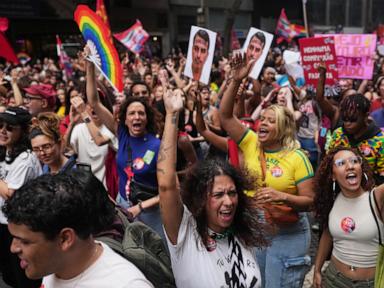
The streets of Rio de Janeiro are boiling. Thousands of young Brazilians didn't wait to lick their wounds after a tense first round of voting. Instead, they flooded downtown corridors, turning historical squares into seas of red shirts and defiant chants.
Why? Because the prospect of a Flávio Bolsonaro presidency has galvanized a generation that refuses to stay quiet.
If you're watching Brazil's political sphere right now, you know the stakes couldn't be higher. Incumbent Luiz Inácio Lula da Silva and Flávio Bolsonaro are locked in a brutal runoff scheduled for October 25. Neither candidate crossed the 50% threshold on Sunday. But the momentum right now has rattled progressives, especially since right-leaning candidates captured over 8 million votes down-ballot, handing Bolsonaro a critical numerical edge.
Students aren't just reacting to numbers on a screen. They're reacting to what those numbers mean for the immediate future of Brazilian democracy, public education, and civil liberties.
The Reclaim of the National Colors
You've probably seen images of Brazilian soccer jerseys hijacked by far-right nationalists over recent years. Protesters in Rio are fighting back against that aesthetic monopoly.
Take Talita Amaral, a 19-year-old environmental science student. She marched through Cinelândia square sporting the iconic yellow and green jersey, explicitly turning it into an act of reclamation.
"We're fighting for Brazil, not for Lula," Amaral put it bluntly.
That distinction matters. Many young voters aren't giving Lula a blank check. They're showing up because the alternative feels like an existential threat to public universities, environmental protections, and constitutional norms. When you talk to students on the ground, the sentiment is uniform: despair is a luxury nobody can afford. WhatsApp groups are buzzing, makeshift mobilization networks are expanding by the hour, and street-level organizing has become a daily routine.
The Shadow of Corruption and Foreign Alignment
The anxiety driving these protests isn't born in a vacuum. Flávio Bolsonaro carries heavy baggage. His father, former President Jair Bolsonaro, is currently serving a 27-year sentence for attempting a coup. Meanwhile, Flávio himself faces intense scrutiny over corruption, money laundering, and tax evasion ties connected to the failed Banco Master.
Protesters hoisted signs referencing these exact scandals, reminding onlookers that accountability shouldn't be tossed aside for political convenience.
Beyond domestic corruption, students are deeply worried about international optics. A Flávio Bolsonaro victory could tightly anchor Brazil’s foreign policy to right-wing populism abroad, echoing past alignments with Donald Trump's administration. Remember when Trump slapped a 50% tariff on Brazilian goods and sanctioned a Brazilian Supreme Court justice over Jair Bolsonaro's legal troubles? Students do.
"If Bolsonaro wins, Brazil will become a colony of the United States," warned João Victor Vieira, a 20-year-old literature student in Rio.
That fear of subjugation cuts deep in a country fiercely protective of its sovereignty. For marginalized groups—including women, people of color, and the LGBTQ+ community—the rhetoric of the Bolsonaro family feels like a direct target on their backs.
What Comes Next Before the Runoff
The countdown to October 25 is moving at breakneck speed. With millions of conservative votes up for grabs from eliminated candidates, both camps are fighting for every single undecided citizen.
If you want to understand how this plays out, watch the streets of urban centers like Rio and São Paulo. Social movements in Brazil have historical muscle. They've weathered military dictatorships, economic crashes, and deep polarization.
The student movement has proven that it isn't waiting on the sidelines for traditional politicians to save the day. They're organizing, occupying public spaces, and forcing the national conversation back onto democratic safeguards and civil rights.
Keep your eyes on the ground developments, track local voter turnout initiatives, and watch how both campaigns handle the pressure of an unpredictable runoff. The battle for Brazil's soul is far from over.