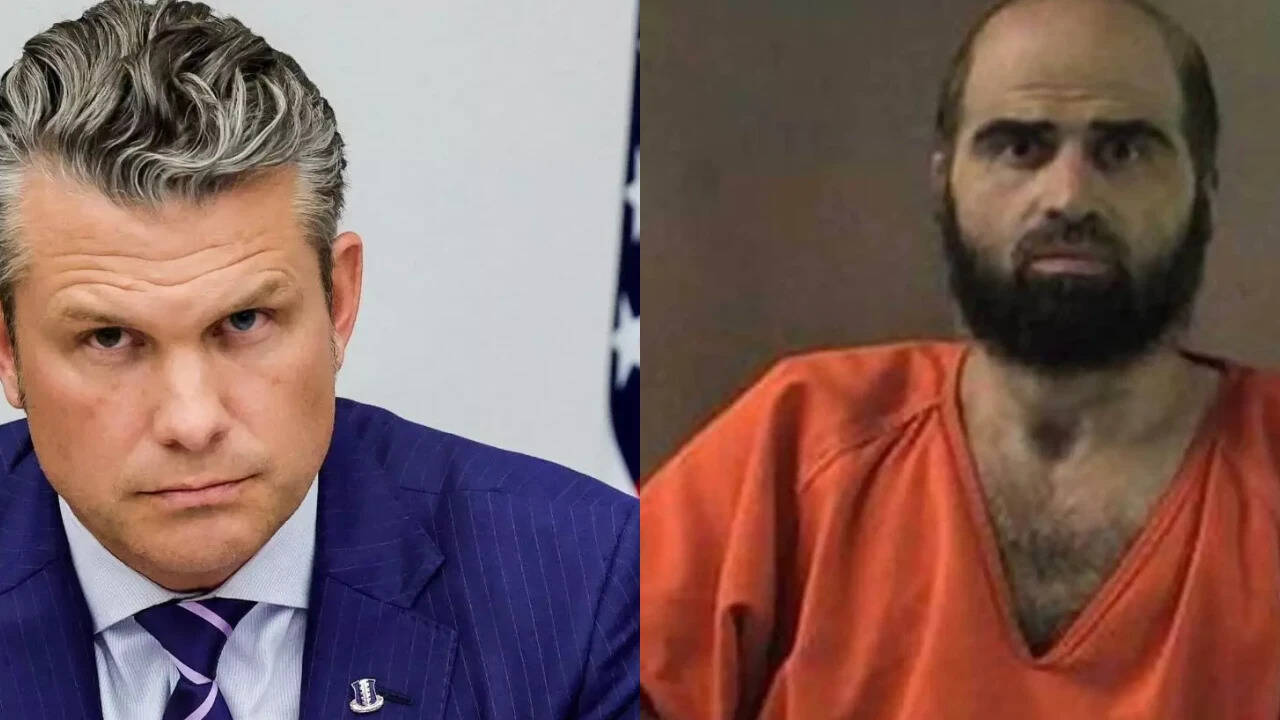
The Pentagon just drew a sharp, violent line through decades of state-sanctioned secrecy. By confirming plans to livestream the military execution of Nidal Hasan on December 3, defense officials are tearing down a wall that has kept capital punishment hidden behind sterile prison walls for nearly a century.
Hasan, the former Army psychiatrist convicted of murdering 13 people and injuring 32 others in the 2009 Fort Hood shooting, faces death by a firing squad at the Texas military base where he committed the massacre. Defense Secretary Pete Hegseth made no apologies for the unprecedented digital broadcast, arguing that a public spectacle serves a specific purpose. Citizens need to see the direct, unfiltered consequences of mass violence. Yet, turning a military execution into an online stream detonates norms that have governed American penal policy since the public hanging of Rainey Bethea in Kentucky back in 1936.
You have to ask yourself what happens when the machinery of death goes digital. The administration is betting that transparency acts as a powerful deterrent. Critics, however, warn that broadcasting a state killing crosses a moral rubicon, transforming justice into entertainment and inviting a fresh wave of constitutional and ethical battles.
The Logistics of a Modern Firing Squad
Under military law, execution by firing squad requires direct presidential authorization. Donald Trump approved Hasan's execution following Hegseth's recommendation. Opting for a firing squad rather than lethal injection isn't an arbitrary aesthetic choice. Across the country, states struggle to secure execution drugs as pharmaceutical companies block their products from being used in capital punishment. South Carolina brought back the firing squad in 2025, and federal guidelines now explicitly include hanging, electrocution, and gas alongside bullets.
Choosing Fort Hood as the venue on a Thursday afternoon at 1:00 PM—roughly matching the timing and location of the original 2009 attack—is a deliberate piece of staging. It anchors the event to the exact geography of the trauma. But televising it globally changes the physical reality of the death chamber. Millions of people will watch a state-sanctioned execution from their phones and laptops, bypassing the traditional handful of carefully vetted press witnesses and victims' families.
Legal scholars point out that this sets up an immediate collision course with the federal court system. Military law experts note that Hasan's defense team could file emergency habeas corpus petitions to block the public broadcast, arguing it violates Eighth Amendment protections against cruel and unusual punishment or infringes upon basic human dignity. The United States Supreme Court has never directly ruled on livestreaming a federal or military execution, leaving a massive legal vacuum that defense attorneys will scramble to exploit in the weeks leading up to December 3.
Why This Breaks Every Precedent in Modern Penology
For decades, the American death penalty moved in the opposite direction. States systematically enclosed executions behind heavier security gates, switched from hanging and the electric chair to anonymous lethal injections, and restricted witness viewing windows. The explicit goal was sanitization. Governments wanted to execute prisoners without shocking public sensibilities or turning executions into political rallies.
Hegseth’s announcement shatters that sanitizing impulse completely. By streaming the event, the Pentagon embraces a philosophy closer to historical public spectacles than modern penal reform.
This shift triggers difficult questions that go far beyond one military case:
- Does broadcasting state-sponsored executions reduce violent crime, or does it desensitize the public and normalize state violence?
- Where do courts draw the line between public accountability and voyeuristic spectacle?
- How will victims' families react when an intensely personal tragedy becomes a global internet broadcast watched by millions of disengaged scrollers?
Opponents argue that turning an execution into a livestream strips away the solemnity of legal punishment. Elisabeth Semel, co-director of the Death Penalty Clinic at UC Berkeley Law, notes that the move aligns with an administration heavily invested in political spectacle. When punishment becomes content, the focus shifts from justice to performance.
What Happens Next
Nidal Hasan has spent over a decade on death row following his 2013 military trial, where he famously represented himself, offered little defense, and stated he acted to protect insurgents abroad. Whether his legal team can successfully stall the December 3 execution through federal injunctions remains the immediate test.
If the broadcast goes ahead, it will instantly become one of the most-watched and most contentious digital events in modern history. It forces a reluctant public to look directly at the ultimate penalty the state inflicts in its name. Love it or condemn it, the wall of secrecy around capital punishment just collapsed, and there is no way to rebuild it before December.