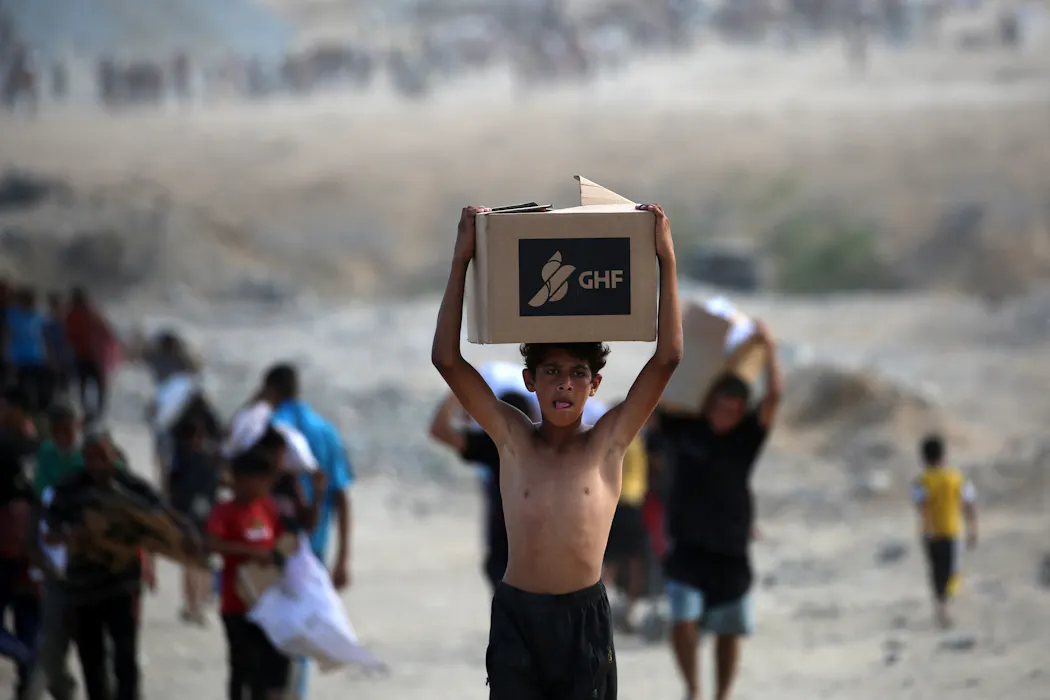
When you turn life-saving relief into a corporate venture, humanity loses. We watched it happen in real-time when the Gaza Humanitarian Foundation and private security contractors stepped in to handle distribution, bypassing established international frameworks. It looked like a logistical solution on paper. On the ground, it became an unmitigated disaster that weaponized survival and sidelined accountability.
If you want to understand why privatized assistance failed the people of Gaza, you have to look past the press releases. Corporate entities and private contractors answer to profit margins and opaque backers, not international humanitarian law. When the United Nations and traditional relief agencies get sidelined, the entire architecture of neutral aid collapses.
The Illusion of Efficiency
Proponents of privatized aid always pitch the same story. They claim traditional bureaucratic institutions are too slow. They argue that profit-driven logistics can move faster, secure supply chains better, and fix broken distribution lines.
It sounds convincing until you test it against reality. In Gaza, the reliance on opaque corporate groups like the Gaza Humanitarian Foundation did not speed up meaningful relief. Instead, it fractured the response. Funding sources remained hidden behind corporate secrecy. Contractors operated without public oversight. Civilians paid the ultimate price while aid became a tool for territorial control and political leverage rather than impartial relief.
When aid distribution falls into the hands of private security firms, the core principles of neutrality and independence vanish. Relief turns into a militarized operation. Communities don't see reliable sustenance; they see another layer of surveillance and restriction.
Sidelining the UN and Breaking the Rules
You cannot replace decades of humanitarian framework with a pop-up corporate initiative and expect success. The United Nations and established agencies like UNRWA possess institutional memory, local networks, and an explicit mandate to protect vulnerable populations.
By freezing them out, international actors created a vacuum. The alternative model relied on shadowy security outfits with zero transparency. Independent monitors repeatedly warned that channeling relief through these private structures served a darker purpose: enforcing blockades, managing population movement, and masking forced displacement under the guise of philanthropy.
When accountability disappears, corruption thrives. Without independent oversight, food and medicine become scarce commodities controlled by armed entities rather than distributed by need.
The Dangerous Precedent Set for Global Crises
What happened in Gaza isn't an isolated incident. It serves as a terrifying blueprint. If governments can outsource humanitarian crises to private contractors, accountability dies everywhere.
Think about what happens when war zones and famine-stricken regions become testing grounds for corporate logistics firms. Governments escape political responsibility by pointing to private entities, while corporations hide behind commercial confidentiality laws when things go wrong. It creates a closed loop of impunity.
We saw the result clearly. Famine deepened. Essential infrastructure crumbled further. Trust in any international humanitarian effort took a massive hit.
Fixing a Broken System
You fix this by returning to fundamentals. Aid must remain independent, impartial, and grounded in human rights, not commercial contracts. Governments need to stop funding opaque foundations that operate outside international law.
If the global community wants to prevent another catastrophe like the one in Gaza, policymakers must strip away the corporate mask from disaster relief. Real aid requires transparency, public scrutiny, and a commitment to human dignity over profit. Anything less is just another word for control.
The rise of privatised aid: A conversation with Fogbow
This video provides an in-depth conversation exploring how privatized aid models operate and what they reveal about the changing landscape of global humanitarian systems.
http://googleusercontent.com/youtube_content/1