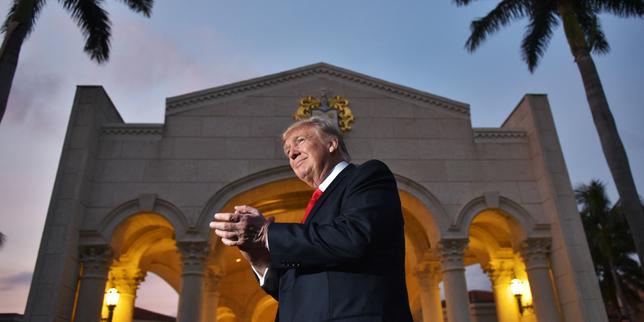
Camp David has hosted decades of American diplomacy, but Donald Trump has always preferred his own turf. Now, his administration is actively pushing to formalize that preference into official government policy.
The White House confirmed that the federal government requested a feasibility study to transform the Trump International Golf Club in West Palm Beach into an official presidential retreat. If approved, the Florida property would function as a southern alternative to the rustic Maryland compound traditionally used by commanders-in-chief.
Supporters of the plan point to practical logistical factors. The club sits just minutes away from the newly renamed Donald J. Trump International Airport. It features extensive perimeter space, lacks high-rise buildings looming over the fairways, and provides established infrastructure for heavy security details. Administration officials argue these elements make it uniquely suited for high-level summits and meetings with foreign leaders.
Yet, the proposal arrives loaded with political baggage. Trump has a long-documented aversion to the traditional Maryland retreat, once remarking that its rustic charm wears thin after thirty minutes. Instead, he spent significant portions of his presidencies operating out of his private properties in Florida and New Jersey. Critics immediately flagged the obvious ethical concerns, questioning the optics and financial implications of the federal government investing official resources into upgrading a private asset owned by the sitting president's family. As highlighted in recent reports by NPR, the results are widespread.
The timing also aligns with a broader pattern of efforts to embed the Trump family name into the official architecture of American governance. Earlier, plans were announced to host the G20 summit at another Trump property, the Trump National Doral in Miami. While lawyers representing the golf club have compared the proposed Florida compound to historic international sites like Windsor Castle or the Élysée Palace, local residents and ethics watchdogs are expressing familiar frustrations regarding airspace restrictions, motorcade congestion, and local disruptions.
Whether the plan moves from a White House study to permanent reality depends on federal clearances, funding structures, and ongoing debates over executive ethics. For now, the administration's push highlights an ongoing blur between private enterprise and public office that has defined Trump's political career.