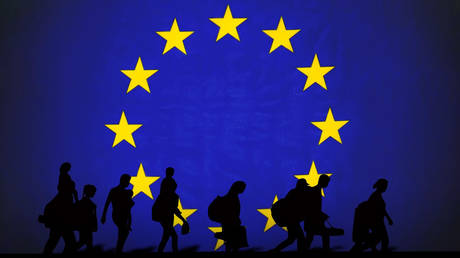
The rules that kept the Western world ticking for eighty years are cracking. Ed Miliband stepped up to the podium at the Labour Party conference in Liverpool with a blunt message that politicians usually avoid: the old international order is broken, and Britain can't sit this one out.
You don't need a degree in international relations to see it. War has clawed its way back into Europe. Democratic norms look fragile. Global rules get ignored the moment they become inconvenient. Miliband didn't wrap his speech in diplomatic fluff. He pointed straight at the failures, drew on his family's history as refugees, and argued that fighting for international values is the only practical way to secure British interests.
Here is what his speech actually means for Britain's foreign policy, and why the shift matters right now.
Personal History Meets Hard Geopolitics
Miliband started his address by talking about his parents. His father walked one hundred kilometers from Brussels to Ostend to catch one of the last boats to Britain before the Nazi invasion. His mother spent her childhood hiding in Poland before arriving as a teenager.
Politicians love using family anecdotes as cheap emotional hooks. But here, the background anchored a harder argument. Miliband framed his family's survival not around abstract luck, but around what he calls "survivor's responsibility."
When you treat global politics as a spectator sport, you lose. Miliband argued that Britain’s post-war role in building organizations like NATO and the UN wasn't charity. It was self-defense disguised as diplomacy. Today, with the international rule of law being flouted, he argues that the country has to roll up its sleeves again.
The Gaza Shift and Confronting the Critics
One of the sharpest moments of the conference came when Miliband addressed Gaza directly. For two years, pro-Palestinian campaigners have accused Labour of dragging its feet and failing to challenge Israel.
Miliband didn't dodge the criticism. He looked at the audience and said, "You were right."
That kind of direct admission is rare in modern politics. Under Andy Burnham's leadership, the government is resetting its approach. Miliband committed to banning the import of goods from illegal settlements in the West Bank and disrupting British financial and construction supply lines tied to those settlements. It's a concrete policy shift that moves past empty rhetoric. It addresses a core grievance of voters who felt the government's foreign policy had become morally disconnected from reality.
Managing AI and the G20 Presidency
Foreign policy isn't just about tanks and treaties anymore. Technology moves faster than diplomacy, and artificial intelligence poses risks that its own creators are sounding alarms about.
Miliband made it clear that Britain cannot trust tech corporations to police themselves. Profit is their primary motive, not public safety.
With the UK holding the G20 presidency next year, the government plans to push for global guardrails on artificial intelligence. It's an ambitious target. Tech giants hate regulation, and international consensus on emerging technology is notoriously hard to forge. But leaving AI entirely in the hands of private firms is a massive gamble that no government should be willing to take.
Climate Security and Confronting Deniers
You cannot talk about global stability without addressing climate change. Miliband tied environmental policy directly to national security, taking aim at domestic political opponents who delay or deny the crisis.
Future generations will judge political leaders harshly if they treat ecological collapse as an optional debate. Treating climate denial as a national security threat changes the tenor of the political argument. It shifts environmentalism from a lifestyle choice into a core defense issue.
Rebuilding the European Partnership
Brexit left Britain isolated and awkward on the world stage. Miliband spent a significant portion of his address pointing back toward Brussels, calling for a "stronger, deeper partnership" with the European Union.
Geography isn't something you can negotiate away. Trade, security, and climate action all require coordinated alliances. Acting alone sounds brave on a campaign poster, but it's ineffective in practice. Rebuilding ties with Europe is essential if Britain wants any real leverage in a shifting global landscape.
The world order isn't going to fix itself. Miliband's speech was a rare mix of moral clarity and blunt realism. Whether the government can match these grand ambitions with sustained execution remains to be seen. But acknowledging the cracks is the first step toward fixing them. Stop waiting for stability to return on its own. The work starts now.