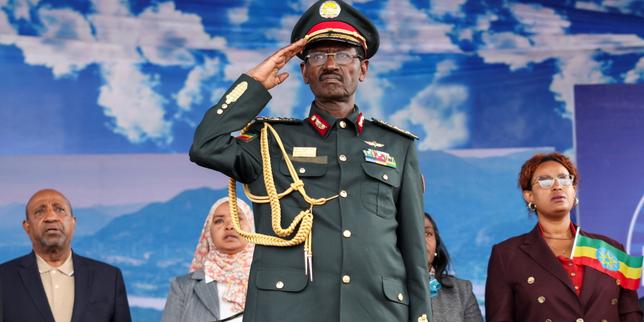
The Horn of Africa is sliding back into a dangerous security crisis, and Addis Ababa is fast running out of scapegoats. When Ethiopia’s army chief, Field Marshal Birhanu Jula, stood up to publicly accuse Eritrea, Sudan, and Egypt of backing rebel factions in the north, he wasn't just describing a battlefield. He was signaling panic.
Renewed fighting in the Tigray region and surrounding areas has shattered the fragile peace that followed years of devastating conflict. But blaming external powers for internal combustion is a tired political playbook. If you look closely at the geopolitical chessboard, Ethiopia's own aggressive push for Red Sea access and unresolved domestic fractures are driving the very instability the military claims to fight.
The Real Trigger Behind the Regional Blame Game
Why is Ethiopia pointing fingers right now? Because the federal government's grand ambitions have alienated every single one of its neighbors.
Prime Minister Abiy Ahmed’s persistent quest for sovereign access to a Red Sea port—specifically targeting Eritrea's coastline via Assab and previously flirting with deals in Somaliland—has alarmed Asmara and Mogadishu alike. When a regional powerhouse aggressively telegraphs its desire for maritime territory, neighboring states don't sit still. They hedge their bets.
Field Marshal Jula claimed that the Tigray People’s Liberation Front (TPLF) and its allies cannot survive on their own without logistical supply lines running through Sudan, logistical backing from Egypt, and coordination with Eritrea. Egypt has its own bitter, long-running dispute with Addis Ababa over the Grand Ethiopian Renaissance Dam (GERD), making Cairo an easy target for Ethiopian accusations. Sudan, meanwhile, is bogged down in its own catastrophic civil war against the Rapid Support Forces, leaving Khartoum with zero bandwidth to stage proxy wars in Ethiopia—unless you count the mutual accusations of harboring rival militias.
Inside the Ground Reality of Renewed Fighting
Clashes have displaced over 150,000 people in recent weeks. The TPLF has seized critical transport hubs and airfields, pushing into neighboring Afar and Amhara regions. Meanwhile, communications blackouts across Tigray's capital, Mekele, have made independent verification nearly impossible, though reports of drone strikes continue to leak out.
Eritrean Information Minister Yemane Meskel fired back on social media, pointing out a basic truth: Ethiopia's own unilateral moves to host and train militia groups have destabilized the entire borderlands.
You can't rattle your neighbors, threaten their territorial sovereignty, and then act surprised when they decide to look the other way—or worse—when insurgents start pushing back against federal troops.
What Comes Next for the Horn of Africa
Pointing fingers at Cairo, Khartoum, and Asmara won't stop drones from flying or refugees from packing the roads. Real stability requires Addis Ababa to fix its domestic governance issues and dial down inflammatory rhetoric regarding regional borders and ports.
As long as the government treats every internal rebellion as a foreign conspiracy, the cycle of violence will continue to spin out of control. Stop looking across the border for someone to blame. The fire is burning from the inside out.