Counterterrorism police don't usually arrest suspects on the holiest day of the Jewish calendar by accident. When Rahman Salehi and Salam Ahmadyan were handcuffed on September 20, they weren't just suspects in a standard criminal case. They were right at the center of an alleged state-backed bomb plot targeting Jewish communities in northern England.
Two Iranian nationals standing before Westminster Magistrates' Court charged with terrorism offenses exposes a much darker reality about how foreign intelligence networks operate inside British borders. If you think modern security threats only arrive via sophisticated cyberattacks or high-profile missile strikes, you're missing the invisible war being fought on suburban streets.
The Manchester Connection and the Shadow of Past Violence
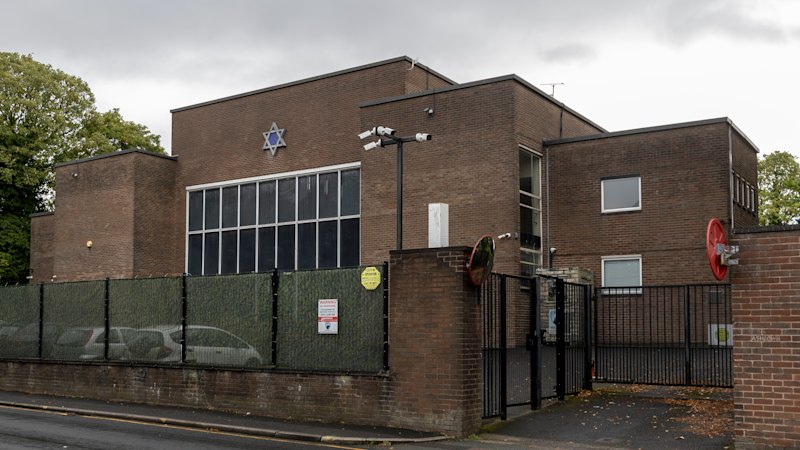
The targets weren't chosen at random. Prosecutors state that Salehi, 34, and Ahmadyan, 36, conducted hostile surveillance on key locations in Manchester, including the Manchester Jewish Museum and the Heaton Park synagogue.
That second location carries heavy emotional and historical weight. It's the exact same site that suffered a deadly attack almost a year prior, which left two Jewish worshippers dead. Prosecutors allege these men were actively preparing a homemade explosive device under the direct instruction of a third-party handler believed to be operating from inside Iran.
Let's look at the background of the accused. Salehi arrived in Britain via a small boat crossing from Europe in 2020 and subsequently received asylum. Ahmadyan made a similar small-boat crossing in 2023, with his asylum application still pending when authorities moved in.
This detail turns a standard counterterrorism story into a raging political debate about border control, asylum vetting, and how easily foreign proxies can slip through immigration cracks. When individuals enter through irregular channels and allegedly pivot to domestic terrorism funded or directed from abroad, governments face intense scrutiny.
A Wider Pattern of State-Backed Aggression
This isn't an isolated incident. Just a week prior to this court appearance, British security forces dealt with a major incident at RAF Fairford—an air base utilized by the United States military for strategic operations. A dual British-Iranian national was arrested on suspicion of preparing terrorist acts related to that facility.
While British counterterrorism officials insist the Manchester synagogue plot and the RAF Fairford incident are separate, the timing is impossible to ignore. UK Home Secretary Shabana Mahmood stated bluntly that the country faces severe, ongoing threats from the Iranian regime, pointing out that state actors routinely hide behind proxy networks and criminal syndicates to execute attacks and silence dissidents overseas.
Governments across the globe are waking up to this exact modus operandi. Australia took the extraordinary step of expelling Iran's ambassador after intelligence agencies tied Tehran to arson attacks against Jewish institutions, including the Adass Israel Synagogue in Melbourne and a Sydney kitchen in 2024.
When state actors outsource violence to criminal proxies, tracking them becomes a nightmare for local law enforcement. You're no longer just fighting organized terror cells with clear ideological manifestos. You're dealing with operatives who blend into everyday migrant communities, waiting for activation codes from handlers thousands of miles away.
What This Means for European Security Moving Forward
The judicial process for Salehi and Ahmadyan has only just begun. Both men were remanded in custody ahead of their next appearance at the Old Bailey on October 23, having entered no plea during their initial hearing.
Yet the broader fallout is already cementing itself into daily life. Synagogues, Jewish museums, and community centers across Europe are forced to maintain heightened security postures indefinitely. The psychological toll on minority communities living under the constant shadow of state-sponsored foreign aggression is immeasurable.
Intelligence agencies are facing mounting pressure to overhaul how they screen asylum seekers who originate from hostile nations. Relying solely on traditional background checks doesn't work when foreign intelligence services actively recruit individuals after they've already settled abroad.
Watch how European capitals respond to these proxy networks over the coming months. Expect stricter intelligence sharing, harder lines on diplomatic expulsions, and intense scrutiny on border arrivals from high-risk regions. The frontline of international conflict isn't just a distant border anymore. It's happening right down your street.