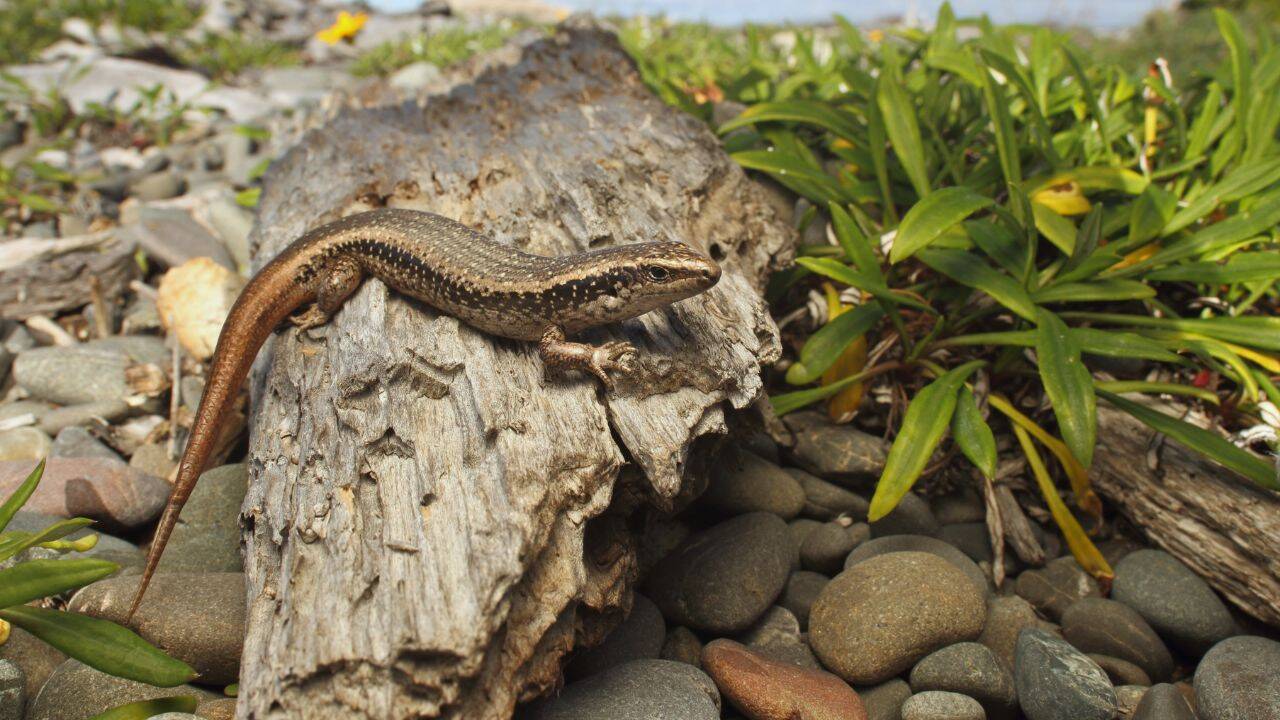
If you think saving a reptile species comes down to locking a few animals in a cage and crossing your fingers, you haven't looked closely at what's happening on the coast of Napier. Conservation isn't just about good intentions anymore. It's about concrete engineering, predator mesh, and hard choices.
New Zealand just completed a high-stakes rescue mission for one of its most vulnerable residents. They built a 676-square-metre pest-proof fortress on a Marine Parade foreshore reserve to save the northern spotted skink. On April 18, 2026, four of these rare lizards—two males and two females—were moved into their new home.
You might wonder why a patch of land measuring twenty-six by twenty-six meters matters. The answer reveals how close we've pushed some animals to the absolute edge.
The Backstory Behind the Napier Skink Sanctuary
The northern spotted skink, known scientifically as Oligosoma kokowai, used to thrive across parts of the upper South Island and lower North Island. Then humans arrived, bringing rats, mice, cats, and a nasty habit of paving over coastal habitats. By the 1960s and 1970s, native coastal plants like Muehlenbeckia were ripped out and replaced with manicured lawns.
For a long time, experts thought the Napier population was completely extinct. Then a tiny remnant group popped up in 2006. Surveys in the early 2020s showed the situation was critical. Fewer than twenty-five animals likely remained in the wild at their only known Napier stronghold, making them genetically distinct and dangerously exposed.
When a multi-million-dollar stormwater infrastructure project threatened the remaining habitat, Napier City Council and herpetologists didn't just bulldoze ahead. They engineered a solution that lets flood resilience and wildlife survival happen side by side.
What Makes This 676-Square-Metre Enclosure Actually Work
Building a sanctuary on a flat mown lawn means you have to construct an entire ecosystem from scratch. You can't just drop lizards onto grass and hope for the best.
The Napier enclosure features heavy-duty predator-proofing designed to keep out every climbing and burrowing threat. A two-metre-high fence lined with fine mesh blocks mice, rats, and feral cats. A specialized cap sits at the top to stop any athletic predators from scaling the barrier.
Inside, conservationists didn't skimp on the interior design. The habitat packs deep rock piles, heavy logs, driftwood, and tailored vegetation to mimic a thriving coastal ecosystem. Small edible fruits and strategic basking zones give the skinks everything they need to regulate their body temperature and find food. Entry is locked down tighter than a high-security lab, with access restricted strictly to approved personnel.
The Long Road to Rebuilding a Mainland Population
Let's be realistic about what these four skinks represent. Two males and two females won't magically turn into a thriving population overnight. These reptiles breed slowly, and the enclosure has a maximum capacity of around three hundred animals. Reaching that number will take years, if not decades.
Every single one of the founding four skinks was photographed before release. Herpetologists use individual scale patterns and markings like a fingerprint. This lets researchers track each animal during ongoing monitoring sessions to see if they're surviving and, more importantly, reproducing.
Future success depends heavily on finding additional northern spotted skinks elsewhere and introducing them to the sanctuary. Bringing in new bloodlines prevents inbreeding and builds genetic resilience in a population that came within a hair's breadth of vanishing forever.
Why This Project Changes the Urban Conservation Playbook
Cities and wildlife usually don't mix well. Urban expansion usually means concrete wins and nature loses.
The Napier project flips that script. It proves that major infrastructure work—like a $37.4 million stormwater upgrade featuring pump stations and coastal outfalls—doesn't have to spell total doom for local biodiversity. By factoring habitat mitigation directly into civil engineering budgets, cities can protect endangered species right in their backyards.
You don't need a remote island sanctuary deep in the Fiordland to save a native species. Sometimes you just need a fenced-off square of city coastline, serious commitment, and a refusal to let a unique lineage die out quietly.
Keep an eye on how these monitoring reports develop over the next few years. The lessons learned behind this two-metre mesh fence will dictate how we protect urban wildlife when every square metre counts.