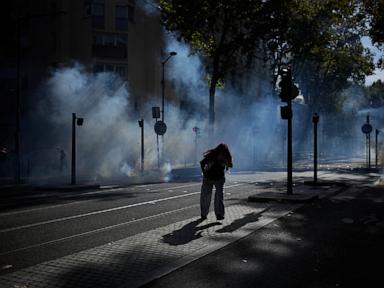
French teenagers are furious, and they're making sure the government hears them. When a high schooler in Paris tells you they haven't had a science teacher for an entire academic year, you start to understand why trash cans are burning outside school gates. This isn't just about rowdy kids skipping class. It's a nationwide fracture exposing the decay of public education under President Emmanuel Macron's administration.
If you're wondering why hundreds of schools are shuttered and riot police are firing tear gas in cities from Paris to Brest, look no further than chronic underfunding, absent staff, and unbearable classroom conditions. Let's break down why this crisis erupted, what students are actually demanding, and why the government is struggling to regain control.
The Breaking Point Behind the Barricades
The unrest didn't appear out of nowhere. It started as localized frustration in the Paris region before spreading across France like wildfire. Teenagers in their mid-to-late teens, mostly attending state-run lycées, decided they'd had enough of decaying facilities and missing educators.
Consider the reality on the ground:
- Classrooms lack basic textbooks and learning materials.
- Staff absences go unfilled for weeks or months.
- School hours are grueling and long, yet academic performance keeps dropping in international rankings.
- Heatwaves turn classrooms into ovens with temperatures hitting 35 to 40 degrees Celsius (95 to 104 Fahrenheit), making exams nearly impossible.
When students point out these systemic failures, they're met with administrative silence. So they take to the streets, build blockades out of burning bins, and clash with security forces.
The Escalating Violence and the Government Response
What started as peaceful demonstrations quickly turned volatile. Groups of youths have hurled projectiles at riot police, set fires near school entrances, and engaged in running battles with authorities. According to reports from the Interior Ministry, thousands of people have been taken into custody since the movement intensified, with roughly 90 percent of them being minors.
The political fallout has been swift and brutal. Prime Minister and government officials have condemned the violence outright. They point to severe incidents, such as attacks on law enforcement officers and injuries to head teachers, insisting that legitimate grievances don't justify riots. Justice officials have even floated the idea of holding parents financially responsible for property damage caused by protesting teens.
Yet, heavy-handed policing hasn't stopped the momentum. Nearly 400 schools were completely closed down on a single Friday, with disruptions hitting over 560 institutions nationwide.
Beyond the Classroom: Broader Grievances
While the core of the protest focuses on dilapidated buildings and teacher shortages, the movement has quickly absorbed other political flashpoints. Walk through any student blockade in Paris or Marseille, and you'll spot cardboard signs addressing entirely different political battles.
Students are voicing deep anxiety about economic security. Many fear the government might scale back vital support systems, such as subsidized €1 meals for low-income youth or housing welfare assistance. Others are carrying banners opposing far-right political figures or expressing solidarity with international causes. This blending of educational demands with broader anti-establishment frustration is precisely why the French state is having such a hard time containing it. Teachers' unions have also called for rolling strikes, adding weight to the student demands and paralyzing normal operations.
What Happens Next
The French government faces a classic political trap. If they crack down too hard with police forces, they risk radicalizing a larger portion of the younger generation and alienating parents who secretly sympathize with the students' plight. If they give in too easily, they project weakness on public spending and infrastructure reform.
Fixing a broken educational system takes billions of euros and years of structural planning—luxuries that an embattled administration struggling with poor poll numbers doesn't easily have. Until concrete solutions replace empty promises, the barricades aren't going away anytime soon.
Students riot across France over dilapidated schools and staff shortages | ABC NEWS
This video provides on-the-ground footage and context regarding the violent student clashes and school closures spreading across France.
http://googleusercontent.com/youtube_content/1