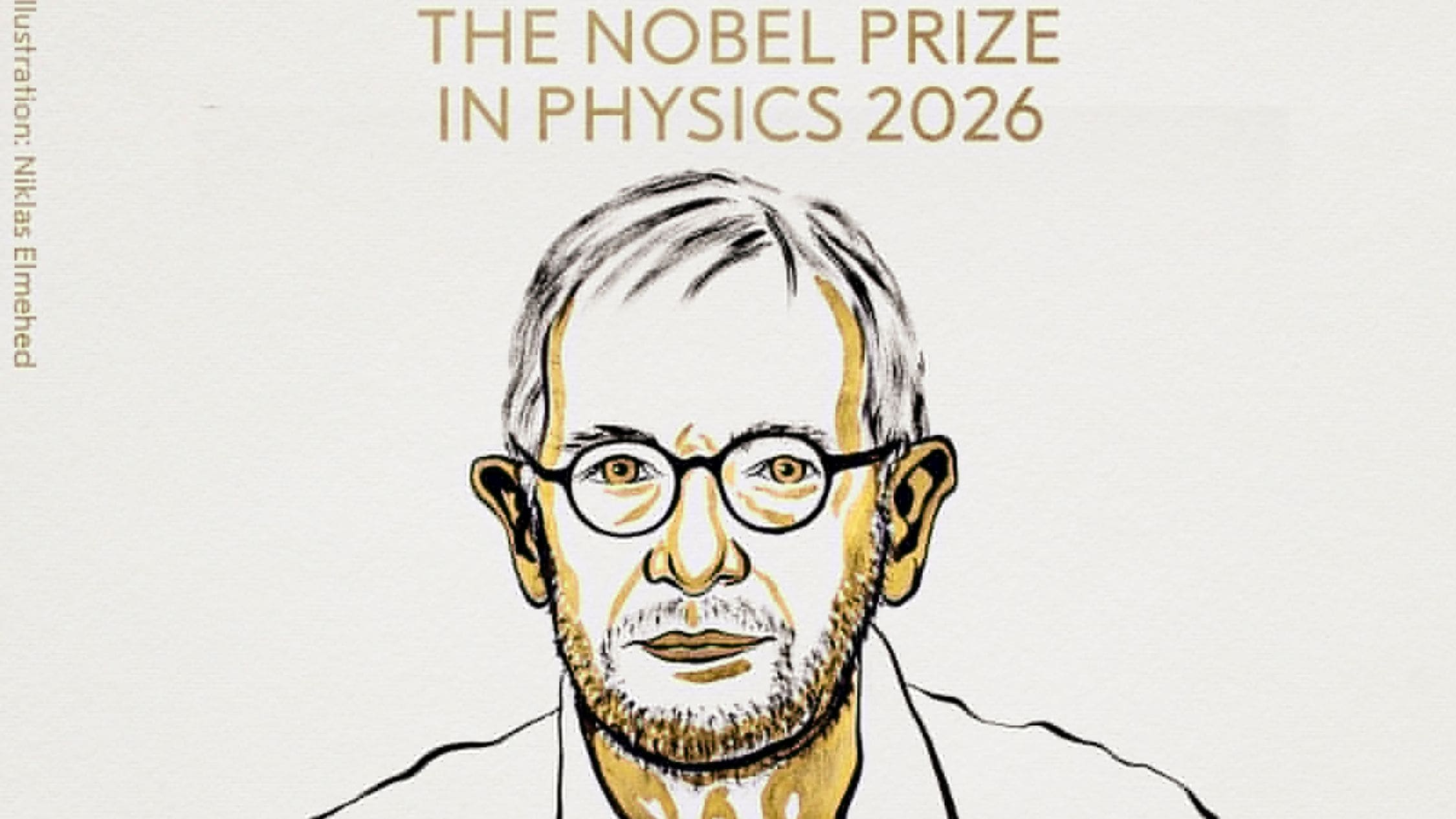
You can look right at the stars with a traditional telescope, but you are only seeing light. What about the messages arriving from the most violent corners of the cosmos that refuse to carry light? They come in the form of ghostly subatomic particles. Francis Halzen just won the 2026 Nobel Prize in Physics because he spent decades chasing those invisible messengers, proving they originate far beyond our solar system.
If you have ever wondered why anyone would bury a detector deep inside the ice at the South Pole, the answer changes how you think about astronomy forever.
The Ghost Particle Problem
Neutrinos are weird. They possess almost zero mass, carry no electrical charge, and pass through solid matter—including you, your house, and the entire planet Earth—without stopping. Trillions of them stream through your body every single second. Catching one is basically like trying to intercept a single invisible bullet fired from light-years away using a net made of thin air.
Most researchers thought it was an impossible dream to turn these phantom particles into a practical window for astronomy. They interact so rarely with anything else that detecting them requires a monstrously large volume of material.
Francis Halzen refused to accept that limitation. Back in the 1980s, he started pushing an audacious idea. Instead of building a tiny detector in a clean lab, why not turn a cubic kilometer of pristine Antarctic ice into a particle trap?
Building IceCube at the Bottom of the World
Turning a frozen wasteland into a world-class scientific instrument takes a stubborn kind of genius. Halzen led the international collaboration that built the IceCube Neutrino Observatory.
The engineering feat itself defies belief. Teams melted holes a mile deep into the Antarctic ice using hot-water drills, lowering strings packed with thousands of digital optical modules into the abyss. When a high-energy astrophysical neutrino occasionally smashes into an atomic nucleus inside the ice, it produces a faint flash of blue light called Cherenkov radiation. Those sensors catch the flash, allowing scientists to trace the exact trajectory of the particle back to its source.
Mark Pearce, chair of the Nobel Committee for Physics, noted that Halzen's tenacity and scientific vision paved the way for a brand-new kind of astronomy. At 82 years old, the University of Wisconsin-Madison researcher has watched a concept born in physics theory transform into a sprawling global observatory.
Why Neutrino Astronomy Actually Matters
For centuries, humanity relied purely on photons—visible light, X-rays, radio waves, and gamma rays—to map the universe. But photons get blocked by dust clouds, scattered by magnetic fields, and distorted on their long journeys across space.
High-energy neutrinos experience none of that interference. Because they travel in straight lines straight from their energetic sources—like active galactic nuclei, black holes, and cosmic accelerators—they act as uncorrupted cosmic postal carriers. When IceCube detects an astrophysical neutrino, it points a literal finger back at the exact cosmic event that birthed it.
You are no longer guessing what happened billions of light-years away. You have a direct tracking beacon.
What Comes Next for Cosmic Detectors
Winning a Nobel Prize usually marks the sunset of a career, but neutrino astronomy is currently picking up speed. Upgrades to IceCube and plans for even larger detectors across the globe mean we are only scratching the surface of high-energy particle astrophysics.
Take a moment to let that sink in. Every time you look up at the night sky, you are missing the half of the universe that doesn't shine with light. Thanks to decades of relentless work by Francis Halzen and his global team, those dark channels are finally open.
Check your local science institutions or university physics departments for upcoming lectures detailing the next generation of Antarctic neutrino detectors, and start tracking how high-energy astrophysics shapes our understanding of spacetime.