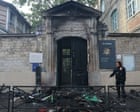
Hundreds of secondary schools shuttered. Nearly 3,000 teenagers detained in a matter of days. Tear gas choking the streets from Paris to Strasbourg. France is staring down a youth uprising that has rapidly metastasized from routine student demonstrations into high-intensity urban violence.
If you think this is just another minor round of French teenagers complaining about exams, you've missed the plot entirely.
When roughly 400 French lycées slammed their doors shut, it wasn't because of a casual walkout. It was the boiling point of structural failures inside the French educational machine colliding with acute infrastructure stress. Overcrowded classrooms, brutal timetables, teacher shortages, and blistering heatwave conditions earlier in the year created a powder keg. When students took to the streets to blockading entrances, the state responded with riot police. The result? Total friction. Around 100 schools have suffered severe physical damage, pushing repair bills into the hundreds of millions of euros. The Auvergne-Rhône-Alpes region alone clocked 25 million euros in property damage.
Inside the Grievances Driving the Youth Revolt
Students aren't marching just for fun. The root causes run deep into the daily reality of the French public school system.
For years, teachers unions have warned about ballooning class sizes and crumbling facilities. You can't squeeze thirty-five teenagers into a room designed for twenty during a heatwave without breaking something. The breaking point arrived when student leaders organized blockades at institutions like Lycée Voltaire in Paris and Couffignal secondary school in Strasbourg.
Instead of opening a dialogue early, authorities relied heavily on police lines and tear gas. That heavy-handed approach transformed what started as a labor and infrastructure dispute into an anti-establishment street battle. Teens aged 15 to 18 found themselves clashing directly with law enforcement. The interior ministry reported nearly 2,000 detentions on a single Thursday, showing the sheer scale of the dragnet.
The State Fights Back With Financial Liability
Government ministers are scrambling to regain control. Education minister Édouard Geffray went on record warning that children are putting themselves in extreme danger out on the streets. Meanwhile, justice minister Gérald Darmanin took a hardline stance. He instructed local prosecutors to activate civil liability laws, forcing parents to pay out of pocket for the destruction caused by their kids.
It's a bold gamble. Will holding parents financially accountable stop teenagers from throwing rocks and building street blockades? History suggests punitive financial threats rarely cool down angry adolescents who feel ignored by the establishment.
Tensions remain high across major urban hubs. Incidents flare up daily near schools in Marseille and Strasbourg, proving that closing buildings doesn't solve the underlying anger—it just displaces it onto the pavement.
The French government faces a stark choice. They can treat this purely as a law-and-order crisis to be crushed by riot squads, or they can address the systemic decay rotting their public school infrastructure from the inside out. Until real structural fixes happen, expect the streets to stay hot.