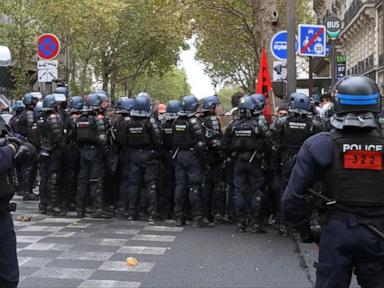
Smoke curls outside a Paris high school. Students stand behind makeshift barricades. Up to 500 schools across France are completely or partially shut down.
When youth take to the streets in numbers large enough to halt an entire national education apparatus, you aren't looking at a random outburst. You are looking at a system cracking under its own weight. French high schools have become flashpoints for deep-seated public frustration.
What Sparked the French School Protests
It started simply. In late September, students at a suburban Paris high school walked out. Their complaints were straightforward and unglamorous. They pointed to chronic teacher shortages, leaking roofs, overcrowded classrooms, and crumbling infrastructure.
Instead of addressing these root causes quickly, the unrest metastasized. Within days, blockades spread from Paris to major hubs like Marseille, Lille, Nantes, and Montpellier. By early October, Education Minister Edouard Geffray confirmed that roughly 400 to 500 out of France’s 3,700 high schools faced mandatory closures or partial suspensions due to security fears and property damage.
At least 24 schools suffered arson or severe ransacking, while scores of education staff sustained injuries amidst violent clashes and heavy police deployment of tear gas.
The Financial Pressure Cooker
You can't separate these student walkouts from the broader economic storm hovering over France. The demonstrations coincide with a high-stakes government push to pass a strict deficit-narrowing budget. Austerity measures and massive budget adjustments are colliding directly with public services.
When bond yields spike to multi-decade highs and the state looks to tighten spending, public infrastructure takes the first hit. Students and teachers are feeling the immediate pinch of underfunded classrooms. Decades of deferred maintenance have left physical school buildings in states of severe disrepair.
Why Traditional Media Gets the Story Wrong
Mainstream coverage often frames these events strictly as teenage delinquency or sudden riots. That framing misses the point entirely. Parents, teachers' unions, and students have formed a broad coalition demanding systemic reform.
When one in three instructors joins a walkout or supports youth blockades, you are witnessing an institutional revolt. The anger isn't coming out of nowhere. It is the product of chronic neglect, unfulfilled security promises, and a growing disconnect between government fiscal targets and the daily reality of public education.
Restoring order by deploying riot police and barricading gates won't fix cracked walls or empty teacher desks. Until the underlying structural crises are resolved, classrooms will remain vulnerable to ongoing friction.
Stop pretending these strikes are an anomaly. They are a loud warning sign for any centralized administration ignoring public infrastructure.
France Student Protests Erupt! 400+ Schools Shut As Clashes And
This video provides an on-the-ground look at the widespread student demonstrations and school closures unfolding across France.
http://googleusercontent.com/youtube_content/1



