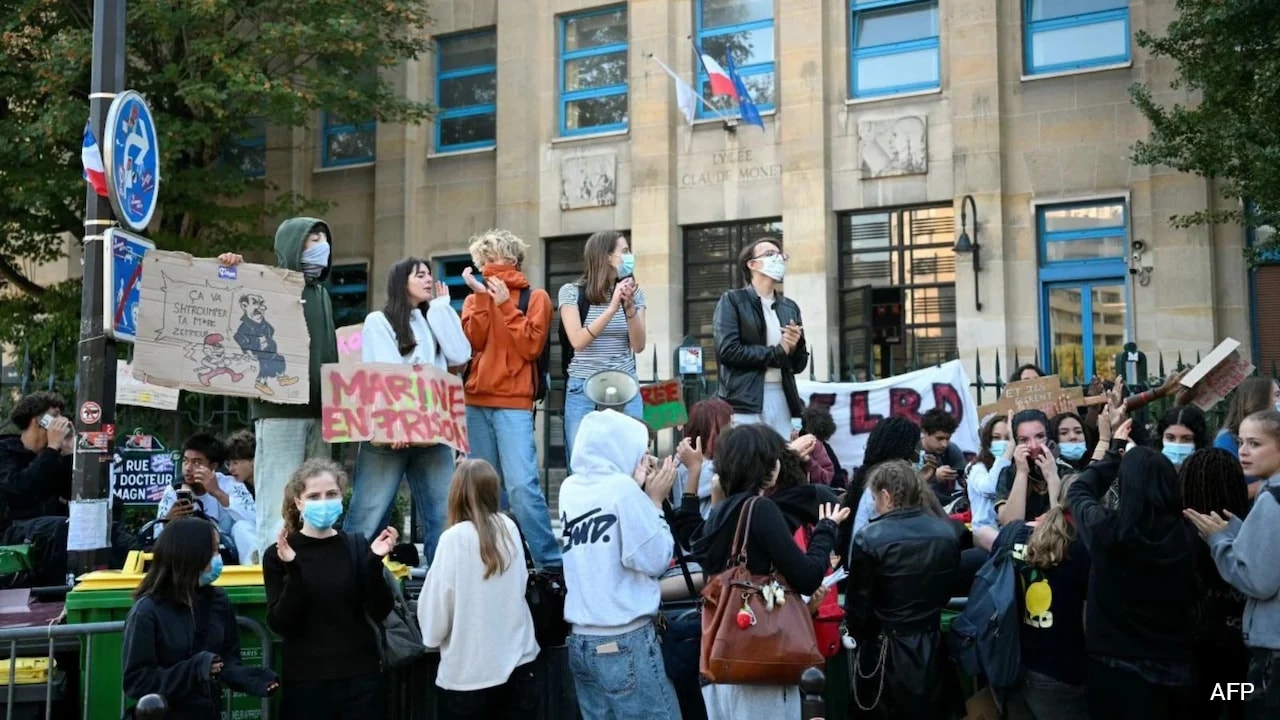
Hundreds of French high schools remain shuttered. Desks sit empty. Benches serve as barricades.
What started in late September as localized friction in a Paris suburb over teacher shortages and sweltering, overcrowded classrooms has morphed into a full-scale national crisis. Education Minister Edouard Geffray noted that between 400 and 500 high schools out of France’s 3,700 total are completely or partially closed.
This isn't just about hot classrooms anymore. It’s a collision between teenage frustration, aggressive police responses, and a fragile national economy staring down a harsh 2027 budget.
If you think this is your typical French student strike, you're missing the bigger picture.
The Breaking Point Behind the Blockades
France has a long, colorful history of student protests. People often write them off as teenage tradition. But ignoring these movements is a mistake.
The grievances this time are painfully concrete. Walk into any suburban high school outside Paris or roam the halls in northern cities like Lille, and you'll find systemic rot. We are talking about chronic teacher shortages, leaking roofs, antiquated facilities, and classrooms packed tighter than a Parisian metro at rush hour. Teenagers aren't just skipping class for fun. They're genuinely angry that their learning environments are crumbling.
When the protests kicked off in late September, they quickly spun out of control. Government figures point to 24 schools ransacked or burned, 78 national education staff injured, and property damage scaling into the tens of millions of euros.
Around 5,000 people—mostly teenagers—have been arrested nationwide since last Monday. Skirmishes with police have turned violent, with tear gas and batons becoming daily occurrences outside school gates.
When Classroom Anger Meets Fiscal Reality
What makes this wave of protests uniquely dangerous for Paris isn't just the burning bins or blocked gates. It's the timing.
France is wrestling with a brutal fiscal reality. The government is desperately trying to pass a deficit-narrowing 2027 budget that satisfies anxious markets. Last week, France's 10-year bond yield briefly topped 5 percent. That is its highest level since 2002.
Investors are already nervous about French public spending and sovereign debt. Add widespread civil unrest, blocked transport arteries, and millions of euros in property damage to the mix, and you get a recipe for economic jitters. The unrest isn't happening in a vacuum. It amplifies every single fear financial markets already harbor about the nation's political stability.
Government spokeswoman Maud Bregeon insists that restoring order is the top priority. Paris police chief Patrice Faure took to social media over the weekend, publishing an open letter warning that the students who started the movement no longer control it. He urged teenagers to abandon blockades and shift to peaceful marches.
Nobody is listening.
The Shadow of Radical Groups and Union Intervention
Things are getting murkier. Security officials are deeply worried about what comes next, specifically pointing to an upcoming national day of demonstrations.
Intelligence reports fear that extremist, far-left, and anarchist elements are hijacking the student momentum. They want to turn peaceful high school grievances into urban guerrilla warfare in central Paris.
That fear brought heavy hitters like Sophie Binet, head of the CGT union, into the fray. Binet announced that union members would march alongside students on Tuesday for a specific reason: to protect them.
"We've been appalled by what we have seen over the past 10 days and by the unprecedented crackdown that the government has organised," Binet stated publicly.
When major labor unions feel compelled to chaperone teenagers to keep them safe from both state crackdowns and radical agitators, the situation has moved past a standard school board dispute.
What Comes Next for France
The French government finds itself trapped. Conceding completely to student demands means blowing wider holes in an already strained national budget. Cracking down harder with riot police risks further escalating violence, radicalizing more teenagers, and driving older labor unions into open, aggressive alliance with the youth.
This crisis won't vanish with the ringing of a bell. The underlying rot in public education infrastructure and the broader economic anxiety won't fix themselves overnight. Keep a close eye on the streets of Paris and Lille this week. The outcome of these protests will test whether the state can maintain fiscal discipline without losing control of its own future generations.