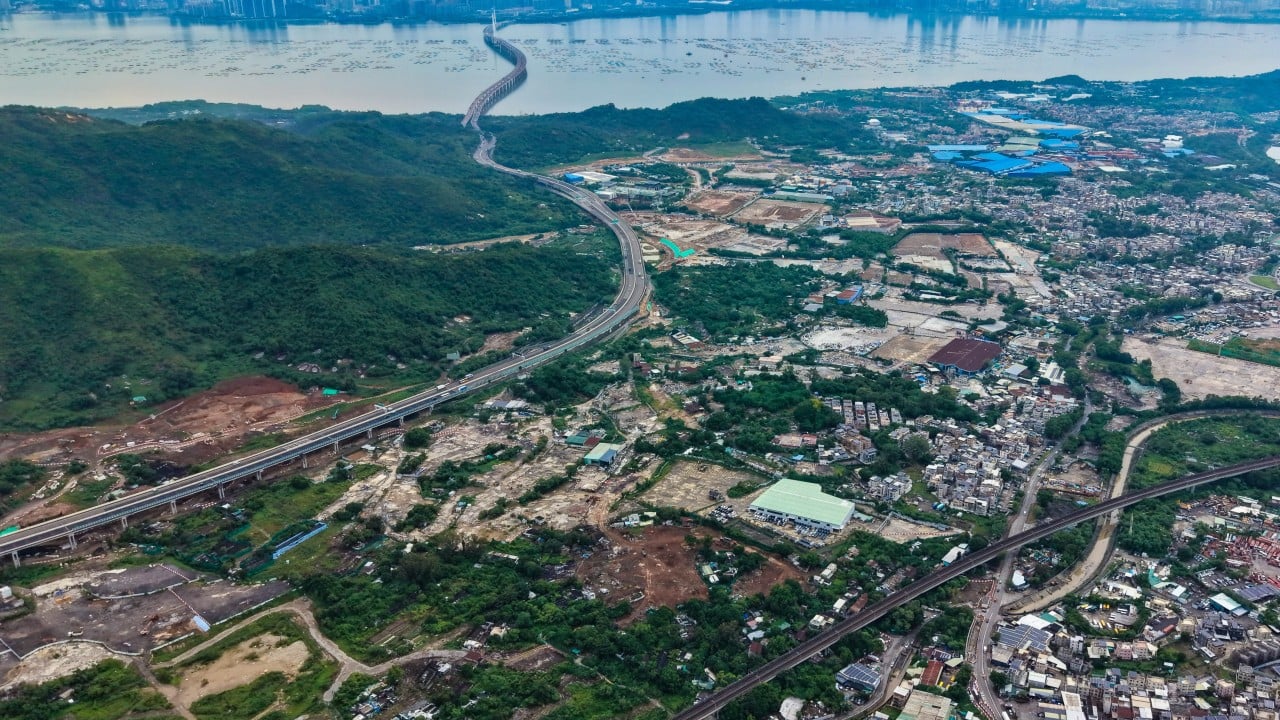
Hong Kong's ambitious Northern Metropolis plan relies on one hard truth: build the rails and roads first, or watch the whole mega-project choke on its own growth. For decades, the city's urban planning playbook followed a reactive script where residential towers went up first, and transportation caught up years later. That delay caused massive commuter headaches in new towns like Tung Chung and Tseung Kwan O. With the Northern Metropolis designed to house roughly 2.5 million people and create hundreds of thousands of jobs, officials can't afford to repeat past mistakes.
The government is aggressively fast-tracking key rail and road networks under the "Eight Vertical and Eight Horizontal Corridors" framework. But hitting those ambitious deadlines requires overcoming steep engineering, financial, and regulatory hurdles. If you look past the official press releases, the timeline is tight, and the margin for error is razor-thin.
The Transit Backbone Driving the New Growth Engine
At the center of this frantic push is the Northern Link project. The main line and its spur line are now targeted for a synchronized opening by 2034, which is two years ahead of the original schedule. When completed, this railway will loop across the northern New Territories, dramatically shrinking travel times. For instance, traveling between Kam Sheung Road and Kwu Tung will drop from a grueling 60-to-80-minute bus or roundabout trip down to just 12 minutes on the rails.
Meanwhile, smaller milestones are ticking closer. Kwu Tung Station on the existing East Rail Line is slated for completion in 2027, serving as an early proof of concept that transit integration can keep pace with initial housing arrivals. Other projects, such as the Northern Link Spur Line connecting to the new Huanggang Port in Shenzhen, aim to fuse Hong Kong and Shenzhen metro networks into a single cross-boundary ecosystem. Further analysis on the subject has been shared by USA Today.
Why Speed Brings Its Own Set of Risks
Trying to shave years off megaproject timelines sounds great on paper, but it introduces serious operational friction. Transport authorities and the MTR Corporation are banking heavily on adopting mainland Chinese engineering and construction standards to slice 20 to 30 percent off construction costs and timelines. While mainland standards for concrete, steel structures, and signaling systems are undeniably advanced, adapting them to Hong Kong's strict local requirements—especially severe typhoon resilience and complex underground geology—takes careful coordination.
Legislators and transport analysts have pointed out that historical cross-border infrastructure projects frequently hit snags when trying to merge two completely different regulatory systems. If engineering teams miscalculate the soil conditions or face bureaucratic friction in approving dual-standard components, those "two years ahead of schedule" buffers could vanish overnight.
Financial Realities and the Rail-Plus-Property Model
You can't pave railways with good intentions alone. Funding the Northern Metropolis transport links requires creative financial structuring, especially as the government navigates tighter fiscal conditions. To pay for the Northern Link, authorities granted the MTR Corporation ten plots of land in areas like Fanling North, Kwu Tung North, and San Tin for lucrative rail-plus-property developments, alongside tens of billions of dollars in land premium deductions.
This model works brilliantly when the property market is booming, but it leaves infrastructure funding vulnerable to real estate market dips. If private developers grow cautious about bidding on large land parcels in remote new development areas, cash flow for transit extensions could stutter.
What Needs to Happen Next
Hong Kong's push to accelerate these transport links is the right strategy, but execution will dictate success. Officials must maintain strict oversight on engineering safety standards while avoiding the red tape that typically bogs down public works. If you're tracking the region's economic evolution, keep a close eye on the 2027 Kwu Tung Station opening and the 2028 tunneling milestones for the Northern Link main line. Those early delivery dates will reveal whether the city's fast-track gamble is actually paying off.


