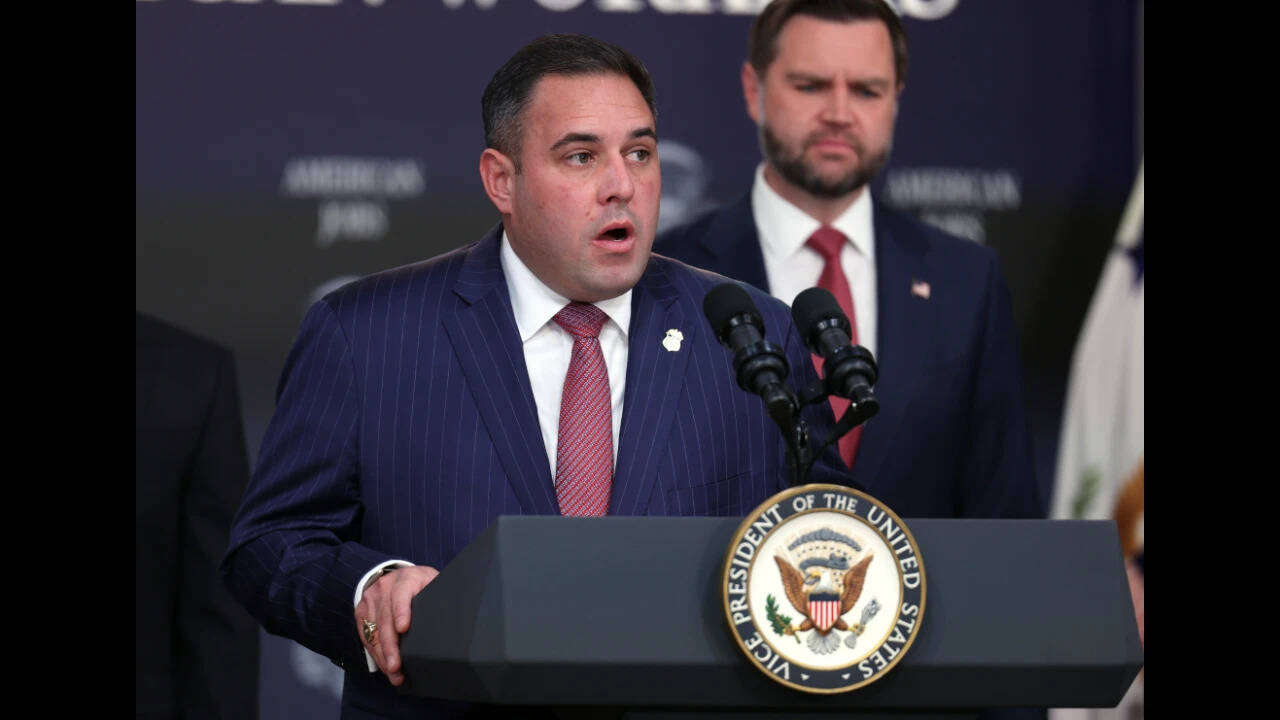
When a high-ranking US government official decides to amplify viral misinformation on social media, things usually get messy fast. That reality hit the internet when Anthony D'Esposito, the Inspector General of the US Department of Labor, reacted to a post by conservative commentator Benny Johnson with a casual "Ruh roh." The claim being boosted was simple yet entirely false: that India's stock market had completely collapsed following the Trump administration's latest restrictions on foreign worker programmes.
The announcement in question involved the Trump administration suspending eight major tech giants—including Cognizant, Infosys, Tata Consultancy Services, Wipro, HCL, Capgemini, Microsoft, and Adobe—from the Permanent Labor Certification, or PERM, programme. PERM is a cornerstone of the employment-based green card process, requiring employers to prove there aren't enough qualified American workers before hiring foreign nationals. Johnson claimed this action triggered an immediate economic meltdown in India.
The timeline tells a very different story. Anyone who spends two minutes looking at market hours knows that Indian stock exchanges closed hours before the US administration formally announced the PERM restrictions on October 8. A Community Note on X quickly flagged the obvious chronological flaw, pointing out that an announcement made late in the US day could not possibly cause a crash that had already finished trading across Mumbai time zones hours prior.
Despite the glaring fact-check, the narrative caught fire online. Critics jumped on D'Esposito for engaging with unverified claims, with users asking how a senior inspector general could overlook basic data. Other commentators accused high-profile accounts of weaponizing economic anxieties to push anti-outsourcing rhetoric, pointing fingers at Indian IT firms that sponsor thousands of professional visas every year.
Real market dynamics are rarely dictated by a single political announcement. While Indian benchmark indices did experience a sharp pullback, financial analysts attributed the movement to entirely different pressures. Rising global crude oil prices, tightening monetary policy from the Reserve Bank of India, and steady institutional foreign investor outflows were the true drivers of the downward trend, not Washington's green card updates.
Markets have a habit of making commentators look foolish within twenty-four hours. By the next trading session, the Sensex and Nifty bounced back strongly in early trade. Tata Consultancy Services shares jumped over four percent after reporting a solid fifteen percent year-on-year rise in net profit, hitting Rs 13,884 crore. Infosys, HCL Tech, and Tech Mahindra similarly rebounded, proving that multinational tech giants weathering regulatory shifts are built on fundamental earnings rather than sudden panic.
The suspension of the PERM programme certainly introduces administrative friction for companies trying to secure permanent residency for foreign talent. It forces human resources departments and immigration lawyers to scramble for alternative legal pathways or adjust deployment strategies. Yet conflating procedural policy changes with a total national economic collapse reveals a fundamental misunderstanding of how global trade and technology ecosystems actually function.
Social media algorithms reward outrage and speed over accuracy every single time. When public officials choose viral soundbites over verified timelines, they hand ammunition to bad-faith actors across the web. Checking the timestamp before sharing a panic-inducing headline remains a lost art, even inside the halls of government.