Marine Le Pen thought she had successfully buried her party's toxic past. She kicked her own father out, changed the brand name, and spent years courting Jewish voters by framing her far-right movement as a shield against extremism. It was a calculated transformation designed to get her into the Elysée Palace.
Then Mediapart dropped a bomb.
An investigative report published in late September 2026 revealed private written exchanges allegedly belonging to Jordan Bardella, the 31-year-old National Rally president and Le Pen's designated prime minister. The documents, spanning back to his teenage years in the party's older, openly radical incarnation, point straight back to antisemitic conspiracy theories about banking monopolies. Suddenly, the carefully polished image of France's leading presidential ticket faces a severe stress test.
The Strategy Behind the Rebrand
For years, critics and political scientists have watched the National Rally execute a strategy called "de-demonization." Jean-Marie Le Pen, the party's founder, turned antisemitism and Holocaust denial into a permanent political brand until his daughter ousted him in 2015. Marine Le Pen needed mainstream credibility to win a national election.
Jordan Bardella was supposed to be the crown jewel of that sanitization effort. Young, polished, and remarkably popular on social media platforms, he projected a modern face that appealed to voters who would never have voted for the elder Le Pen. He was the proof that the party had changed its DNA.
If the newly surfaced messages are genuine, that narrative unravels completely. Yonathan Arfi, who leads the representative council of French Jewish institutions, called the allegations a "stinging repudiation" of the party's image makeover. You cannot claim to have cleansed your ranks of hatred while your handpicked second-in-command allegedly spent his youth trading in classic antisemitic tropes.
How the Campaign is Responding
Le Pen and Bardella aren't hiding. They are fighting back with aggressive rhetoric.
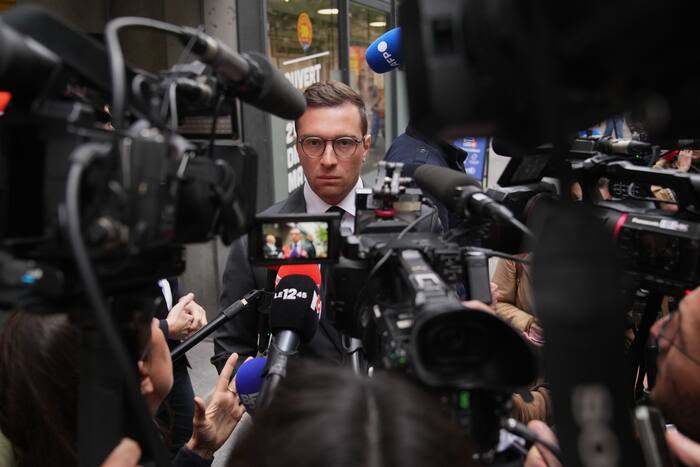
During a joint appearance with conservative ally Eric Ciotti, the pair slammed the investigative report as a coordinated political hit job designed to derail their momentum ahead of the 2027 election cycle. Bardella denied authoring the remarks, called them entirely delusional, and launched an immediate libel lawsuit.
Le Pen dismissed the accusations with characteristic bluntness, telling supporters that she and Bardella had put on their "Kevlar suits" for a dirty political war. It's a high-stakes gamble. By circling the wagons and projecting absolute unity, they hope to rally their base before doubts spread to moderate voters who are currently leaning toward Le Pen as President Emmanuel Macron prepares to step down.
What This Means for the 2027 Election
French voters care deeply about the historical baggage of the far-right, even if inflation, immigration, and security dominate the day-to-day polls. Le Pen is currently a front-runner, benefiting from a July court ruling that cleared her path after an embezzlement conviction threatened to sideline her.
Yet, French presidential campaigns are notoriously fragile. A single week of negative headlines can shift momentum, especially among cautious center-right voters who want to back a viable candidate without endorsing extremism. If Mediapart releases further documentation or if the legal battle drags out, Le Pen's prime ministerial bet could turn into her biggest liability.
To secure victory, Le Pen must prove that the allegations are an isolated fabrication or ancient history that no longer matters. If voters decide that the old prejudices are still alive beneath the new suits, the presidential campaign could stall right at the finish line. Stop ignoring the foundational cracks in the National Rally's facade. Watch how the moderate coalition responds in the coming weeks, and track whether mainstream media pressure forces Bardella off the ticket entirely.