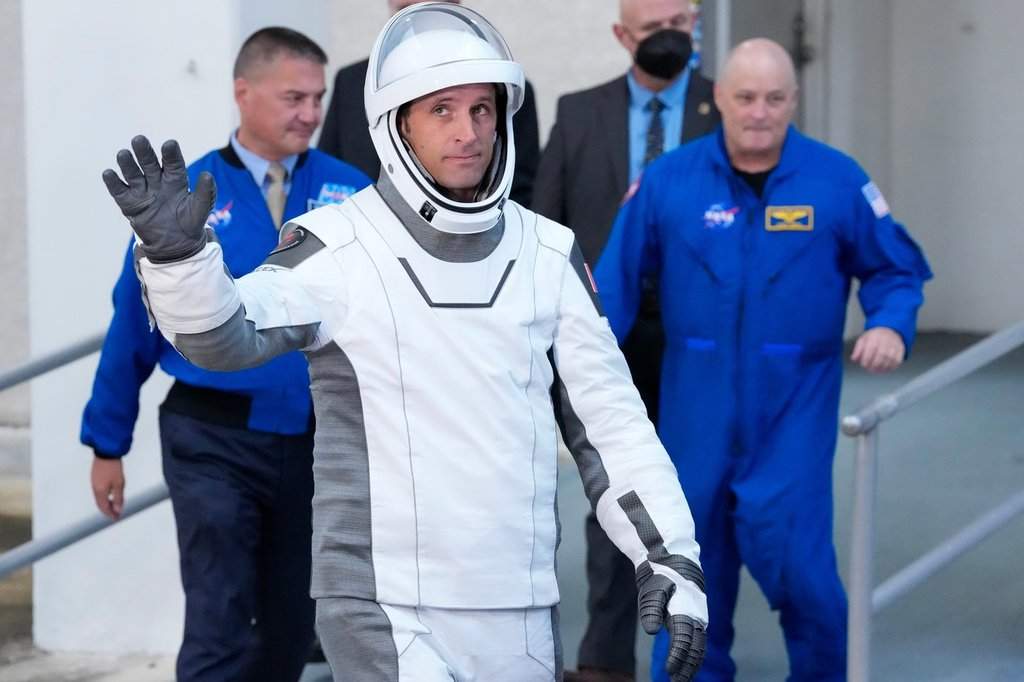
Blasting off into orbit isnt just about escaping gravity. For Canadian astronaut Joshua Kutryk, a thunderous Thursday morning launch aboard a SpaceX Falcon 9 rocket marked the start of a grueling six-month stint on the International Space Station, making history as the first Canadian to fly on NASA's Commercial Crew Program.
He didn't believe it right away. About ten minutes after lifting off from Florida, sitting inside the capsule as a mission specialist alongside NASA commander Jessica Watkins, pilot Luke Delaney, and Roscosmos cosmonaut Sergey Teteryatnikov, Kutryk radioed back down to Earth with pure disbelief. It feels weird up there. Of course it does. You're hurtling through the thermosphere at thousands of miles an hour.
The Crew-13 mission didn't waste time getting there. NASA clocked it as the fastest flight ever to the orbital laboratory, taking just under eight hours to dock. When the hatch finally swung open, seven crew members waiting inside welcomed them with handshakes and hugs. After a quick orientation and a look at the view, Kutryk had one immediate priority: sleep.
You cannot overstate what this mission demands. Over the next half-year, this four-person crew will manage critical station maintenance, tackle complex technology trials, and run hundreds of scientific experiments designed to improve life back on Earth and pave paths further into the solar system.
And Kutryk is doing it all while managing a wild personal timeline. Back home, his wife is expecting their third child while he orbits the planet every ninety minutes. That is a unique kind of pressure. Growing up on an Alberta cattle farm, Kutryk probably didn't picture himself orbiting Earth while fielding international headlines, yet here he is, carrying the torch for Canadian space exploration.
The Politics and Tech Behind the Ride
Space exploration rarely happens in a vacuum, political or physical. Industry Minister Mélanie Joly watched the launch firsthand from the Kennedy Space Center. It was her first time witnessing a rocket go up, and she called the experience humbling. She also pointed out the obvious reality: space is one of the few places where nations can still manage basic cooperation during tense geopolitical weather.
Even with ongoing trade tensions and U.S. tariffs hanging over Ottawa, cooperation on orbital infrastructure has held steady. Joly met with NASA administrator Jared Isaacman right after the launch to talk about future lunar bases and Mars architectures.
Heres where Canada's engineering muscle really shines. NASA isn't working with Canada out of charity. They need our robotics. From the legacy of the Canadarm to newer iterations like Dextre, Canadian space robotics are baked right into the architectural blueprint of America's deep space ambitions. Isaacman made it clear during post-launch briefings that NASA is banking heavily on Canadian tech for future lunar habitation.
A Golden Year for Canadian Space
We are watching a massive resurgence in public and political enthusiasm for space. Earlier this year, Jeremy Hansen became part of the historic Artemis II crew, flying past the moon on a ten-day lunar loop that sent humans farther from home than ever before. Mathieu Caron, the Canadian Space Agency's director of astronauts and life sciences, joked that for the first time in his thirty-year career, his kids finally think his job is cool.
Ottawa is taking note. The federal government plans to roll out a brand-new space strategy in the coming months, accompanied by fresh funding dedicated to the Canadian Space Agency and a soon-to-be-announced agency president. The goal is simple: push domestic capabilities further, build industrial strength, create high-tech jobs at home, and secure sovereignty in an increasingly contested domain.
We aren't just hitching rides anymore. We are building the machinery that makes deep-space survival possible. Keep your eyes on the night sky over the next six months because Joshua Kutryk and his crew are rewriting what Canada can achieve off this rock.