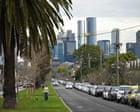
You grab a bottle of wine, some cheese, and head down to the wide grassy patch on Canning Street. It is a ritual as old as inner-city living itself. Then, local authorities pull the rug out from under you.
Melbourne's famous median strip picnic spots in Carlton North became an overnight political flashpoint after a sudden ban outlawed public drinking on the grass. Instead of accepting the new rules, locals did what any passionate community would do. They brought out the punch bowls, laid down the tablecloths, and threw a massive act of civil disobedience right in broad daylight.
If you have ever wondered how a patch of grass can ignite a municipal war, look no further than the clash currently playing out across Drummond, Rathdowne, and Canning Streets.
How a Quiet Street Sparked a Citywide Uprising
It all started because a small handful of residents got tired of the noise. Following a modest 29-signature petition submitted to the local council, authorities quickly reclassified these oversized nature strips. The goal was simple: stop people from drinking alcohol on council grass. For another perspective on this event, check out the latest update from USA.gov.
The backlash was instant and brutal. Within days, a counter-petition pulled in more than 7,700 signatures. Locals weren't just fighting for their right to hold a casual afternoon drink. They were fighting for the shrinking footprint of shared public space in modern urban centers.
Local venues like the Wine Corner Store caught immediate flak, though business owners pointed out they simply sell retail drinks while patrons choose where to sit. As venue owner Steve Misfud-Ellul noted, ninety-nine percent of the time it is just people sitting on the grass with the loudest noise being laughter. Yet, a few localized noise complaints were enough to trigger a blanket ban.
The Reality of Urban Open Space
Post-pandemic life changed how we view shared infrastructure. People are desperate for third spaces—places that aren't home and aren't the office where you can actually connect with neighbors.
When urban areas strip away these casual communal zones under the guise of amenity control, communities push back. Friday's protest on Canning Street featured everything from fine glassware to cheese platters, with participants aptly describing it as champagne socialism with a serious point. It wasn't about lawlessness. It was about public ownership of public land.
Even state politicians jumped into the fray. Premier Ben Carroll took to social media to state that if the local council didn't reverse the ruling, the state government would step in and scrap it for them. Meanwhile, local councillor Edward Crosling acknowledged that the council went too far with an outright ban and pledged to introduce a motion to reclassify the median as open space while handling genuine resident concerns separately.
What This Means for Public Space Management
Urban planning battles usually drone on behind closed doors. This one spilled straight onto the grass. When authorities apply blunt-force bans to fix localized neighborhood friction, they usually create a much larger political headache.
If you live in a dense urban neighborhood, keep an eye on how your local council classifies your local parks and nature strips. These rules change quietly until someone tries to enjoy a Friday afternoon drink and faces a fine. Real community spaces require compromise, not blanket prohibitions.