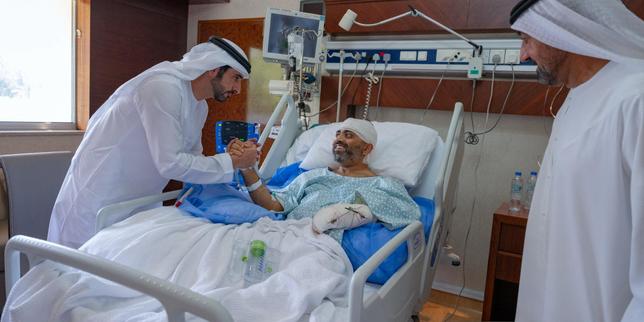
When a cockpit struggle aboard a Flydubai flight from Dubai to Tel-Aviv nearly turned into a catastrophic disaster, the world looked on in shock. Captain Smit Machchhar, an Indian national, survived a brutal stabbing attack by his co-pilot and managed to open the cockpit door, allowing passengers and reserve crew to overpower the attacker and safely land the aircraft in Tabuk, Saudi Arabia. Almost instantly, global leaders praised his courage. But back in New Delhi, the incident quickly transformed into something else entirely. Prime Minister Narendra Modi and the Hindu nationalist apparatus didn't just praise a brave pilot; they weaponized his survival.
Why does a mid-air crisis involving an Indian captain flying a Middle Eastern carrier resonate so deeply with domestic politics in India? The answer lies in how modern political machinery converts individual trauma into collective national pride. When Modi video-called Machchhar from his hospital bed, the interaction was carefully recorded, packaged, and distributed across government channels and social media networks. Machchhar's mention of reciting the Hanuman Chalisa during his ordeal became the focal point of state-aligned narratives. It turned a terrifying aviation emergency into a deeply religious allegory of Hindu resilience overcoming foreign peril.
For the ruling Bharatiya Janata Party (BJP), framing current events through a nationalist lens is standard operating procedure. By amplifying Machchhar's identity and his Hindu prayers, the party crafts a compelling narrative that blends personal heroism with civilizational pride. This isn't an isolated strategy. Modi’s administration routinely seizes upon overseas triumphs, rescues, and crises to project an image of a resurgent, muscular India whose citizens embody exceptional valor on the global stage.
Critics argue that exploiting such high-stakes events distracts from systemic issues at home, but political strategists know the value of emotional resonance. When millions of voters see an Indian captain standing firm against danger, bleeding and reciting sacred verses, it creates an immediate psychological bond. It shifts public consciousness away from everyday economic struggles and locks it onto a unifying, triumphant spectacle. For broader background on this development, extensive analysis can also be found at The Guardian.
You cannot separate this hyper-nationalist framing from the broader geopolitical context either. The flight was headed to Israel, carrying a large number of Israeli passengers, and diverted into Saudi airspace. Yet, the domestic media coverage in India quickly narrowed down to one core theme: the unyielding grit of an Indian son. Modi's direct engagement with Machchhar cemented the state's ownership of the hero's journey, ensuring that every headline reinforced the message of a strong leader backing a strong people.
Public relations and political survival often rely on timing and symbols. Captain Machchhar did not ask to become a political football, but his survival offered an irresistible opportunity for image-building. As long as national identity remains the most potent currency in Indian politics, every heroic act abroad will be carefully mined for domestic political capital.
Watch how these narratives are constructed the next time international drama unfolds. Look past the emotional surface to see the political architecture beneath. Heroism in the skies sells tickets, but on the ground, it sells power.


