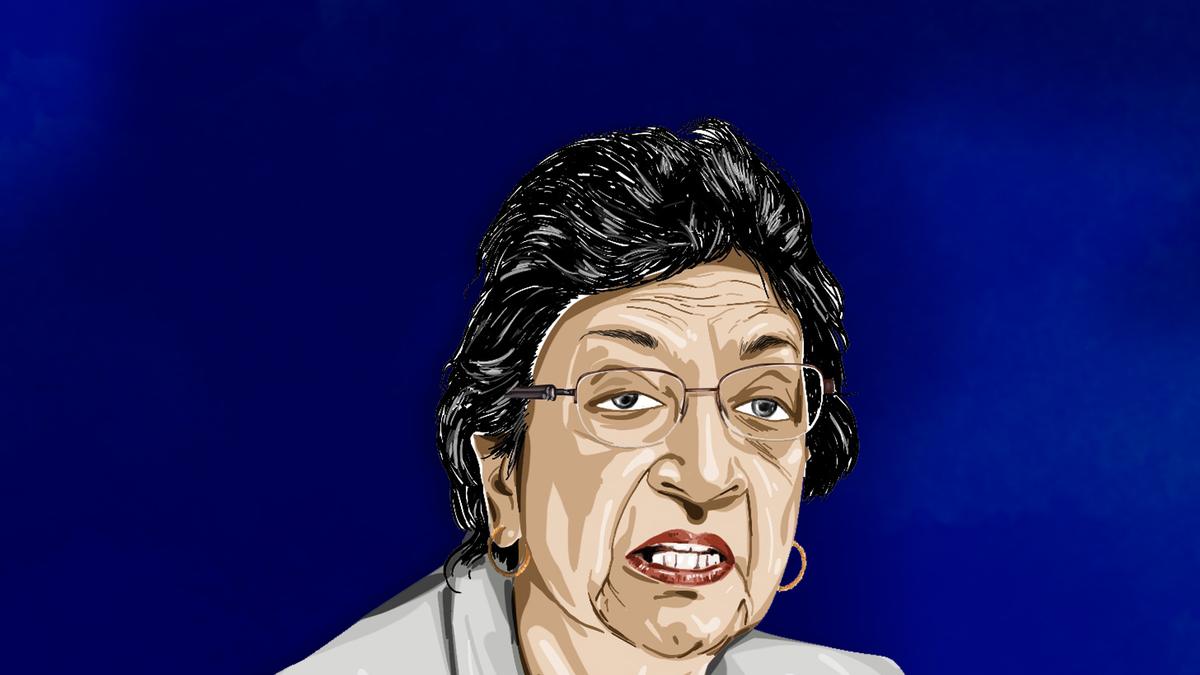
You don't spend decades staring down apartheid regimes, international war criminals, and institutional corruption without making a few enemies. Navi Pillay has never cared about making friends in high places. From defending anti-apartheid activists in segregated South Africa to holding war criminals accountable at the international level, her entire career reads like a masterclass in stubborn, uncompromising legal advocacy.
When you look at how global justice operates today, her fingerprints are everywhere. Yet most people only catch glimpses of her name during major United Nations headlines. Let's break down why her trajectory matters, how she transformed international law from a toothless tiger into something with actual teeth, and what her decades on the front lines teach us about holding power to account.
Breaking Barriers in Apartheid South Africa
Long before she walked the halls of the United Nations, Pillay faced a rigged system right at home in Natal, Province. Graduating with law degrees in the 1960s meant hitting a brick wall of racial segregation. No major white-owned law firm would hire her because they couldn't have white employees taking orders from a non-white woman.
So she did what any fighter would do. She opened her own practice in 1967, becoming the first non-white woman to do so in her province.
- She represented anti-apartheid activists from the ANC and other underground movements.
- She sued the state to stop the torture of political prisoners.
- She successfully won visitation and legal rights for Nelson Mandela and other prisoners locked away on Robben Island.
You've got to understand the personal risk involved here. Her husband was detained under the Terrorism Act in 1971, and instead of backing down, she went to court and successfully fought the police interrogation tactics. That grit didn't come from a textbook. It came from living under a regime that wanted her silenced.
Redefining Crimes Against Humanity at the UN Tribunals
Moving from local defense attorney to international judge is a massive leap, but Pillay handled it with characteristic force. Appointed as a judge to the International Criminal Tribunal for Rwanda in 1995—and later serving as its president—she faced the horrific aftermath of the 1994 genocide.
Before her tenure, international tribunals often treated sexual violence during conflicts as an unfortunate byproduct of war rather than a core weapon. Pillay helped completely flip that script.
Under her judicial watch, the tribunal recognized rape and sexual violence not just as isolated acts of assault, but as systematic tools of genocide and crimes against humanity. That single legal shift changed international jurisprudence forever. It meant warlords and military commanders could no longer hide behind the excuse of wartime chaos. If you weaponized rape, you were looking at a genocide charge.
Bringing Accountability to the Global Stage
When she took over as the UN High Commissioner for Human Rights from 2008 to 2014, she didn't soften her approach to appease powerful member states. Governments love human rights rhetoric until it applies to their own backyard. Pillay called them out anyway.
She pushed for independent probes into war crimes in Sri Lanka, criticized powerful nations over civil liberties crackdowns, and consistently defended migrants and marginalized communities against state overreach. Critics often labeled her outspoken, but that was precisely the point. International watchdogs aren't supposed to whisper; they're supposed to shine a glaring spotlight on abuses.
Her work didn't stop when her UN term ended. She has served as an ad hoc judge at the International Court of Justice and chaired high-profile inquiries into occupied territories and human rights abuses across the globe. Recognition followed, including major honors like the Sydney Peace Prize and the 2026 Nobel Peace Prize for her lifetime commitment to international law.
What We Can Learn From Her Blueprint
If you want to understand how real systemic change happens, look at Pillay's trajectory. It never came from polite committee meetings or waiting for the "right political climate." It came from relentless documentation, refusing to back down when threatened, and forcing institutions to live up to the laws they wrote on paper.
Justice isn't handed down by benevolent states. It has to be dragged into the light by people willing to weather the backlash. Navi Pillay spent her entire life doing the heavy lifting while everyone else watched from the sidelines.