You can't please everyone, but getting pelted with jeers from both sides of a historic geopolitical divide takes a special kind of political isolation.
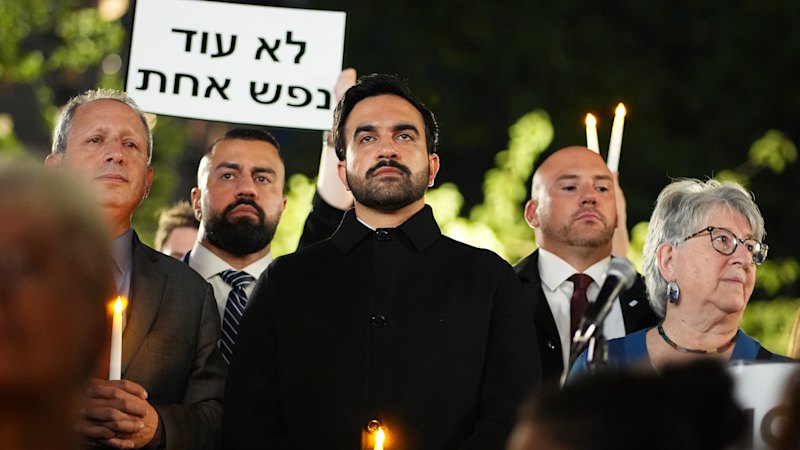
New York City Mayor Zohran Mamdani learned this lesson the hard way on a tense Wednesday evening in Union Square. Standing at a candlelight vigil organized by Israelis for Peace New York to mark the third anniversary of the October 7 attacks, Mamdani found himself trapped under a barrage of hostility. On one side, pro-Palestinian demonstrators marched in from City Hall, shouting accusations that he was a traitor to the Palestinian cause. On the other side, prominent Jewish leaders spent the entire day excoriating him for a commemorative statement that focused heavily on civilian casualties in Gaza rather than Jewish grief.
It's a brutal reminder of how hyper-polarized local politics have become when global conflicts land on municipal doorsteps. Let's break down what actually happened, why both factions turned on him, and what this moment reveals about the limits of progressive diplomacy in America's largest city.
The Anatomy of a Union Square Clash
The atmosphere in Union Square on Wednesday wasn't just tense; it was volatile. The candlelight vigil, intended as a space for mourning and reflection by a pro-peace Israeli group, was rapidly overshadowed by a protest crowd that dwarfed the original gathering.
When Mamdani arrived around 7:30 PM, walking through a heavy police cordon with a solemn expression and a black coat, many protesters didn't notice him at first. Once they did, the reaction was immediate and fierce. Chants erupted accusing the mayor of cowardice and complicity, with some demonstrators shouting slogans that crossed hard lines into direct support for Hamas and fierce condemnation of the Israel Defence Forces.
Organizers of the vigil tried to hold their ground behind tight police barricades, embracing each other as police managed the surging crowd. Tamar Glezerman, one of the event organizers, expressed a sentiment shared by many caught in the crush: she wished people would listen instead of shout. But shouting was the primary currency of the night.
Why Jewish Leaders Condemned the Mayor's Statement
Long before the protesters flooded Union Square, Mamdani was already facing intense backlash from mainstream Jewish organizations. The root cause was an official statement released by the mayor earlier that day marking the anniversary of the Hamas-led assault.
Instead of focusing exclusively on the terror attacks, the slaughter, and the hostages, Mamdani’s statement pivoted heavily toward the immense suffering of Palestinians in the Gaza Strip during the subsequent war.
That framing triggered immediate outrage from community leaders. Rabbi Rick Jacobs, president of the Union for Reform Judaism, didn't hold back in his criticism. He pointed out that proclaiming empathy for the Jewish community while failing to acknowledge basic humanity during deep grief is fundamentally hollow. For many Jewish New Yorkers, turning an anniversary of an unprecedented terrorist massacre into an indictment of Israel felt not just callous, but actively dangerous for local community safety.
The Backlash from the Pro-Palestinian Left
You might assume that centering Palestinian suffering in Gaza would earn Mamdani unwavering praise from pro-Palestinian activists. That assumption would be entirely wrong.
The protesters who marched from City Hall to Union Square viewed his participation in an Israeli-organized vigil—even a pro-peace one—as an unforgivable compromise. To these activists, standing anywhere near a commemoration that acknowledged Israeli victims of October 7 was a betrayal of the broader anti-war movement. They hurled insults calling him a traitor, proving that in moments of extreme ideological conflict, nuance is treated as treason by the most radical fringes on both sides.
Mamdani has long maintained a critical stance toward Israeli policy, which is precisely what propelled him into office with strong support from progressive voters. Yet, holding public office means governing a diverse city where symbolic gestures carry massive weight. By trying to walk a tightrope between acknowledging Palestinian trauma and participating in a Jewish memorial event, he alienated both ideological extremes simultaneously.
Navigating the Trap of Global Politics at the Local Level
Local politicians across the United States have increasingly found themselves dragged into international disputes they have no power to resolve. Mayors are elected to fix subways, manage housing crises, balance municipal budgets, and keep streets clean. But voters and activists demand moral declarations on global conflicts, forcing municipal leaders onto a stage where every word is dissected, weaponized, and protested.
When you take a hard public stance on foreign policy, you build a coalition based on shared ideology. But when an anniversary as emotionally charged as October 7 rolls around, that coalition fractures under the weight of real-world grief and anger. Mamdani's experience in Union Square illustrates the heavy political cost of trying to address irreconcilable narratives in a public square.
The shouting match in Union Square wasn't just about one mayor or one statement. It was a snapshot of a city—and a country—struggling to find any common ground amid deep-seated pain. If there's a practical lesson to take away from this messy political spectacle, it's that attempting to appease everyone during a generational conflict usually guarantees you will end up standing alone behind a police barricade, listening to both sides scream your name.