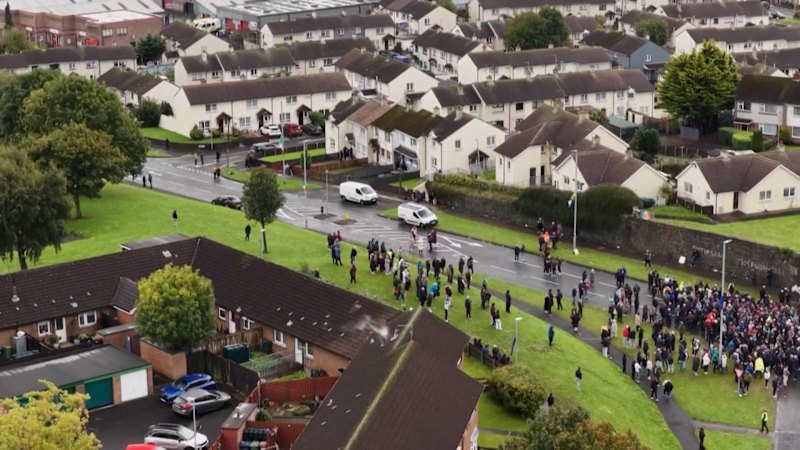
Old fractures in Northern Ireland never truly heal. They just wait under the surface for a spark. Around 2,000 protesters blocked the entry points to a Catholic area in a Northern Irish town, completely halting an Orange Order parade that planned to march through the neighborhood on a Sunday morning in September 2026.
This standoff happened right after the lifting of an almost thirty-year ban on that specific route. For decades, that path served as a volatile flashpoint for bitter sectarian disputes. When authorities cleared the way for the Protestant parade to return, local residents didn't stay quiet. They organized en masse, showing that old wounds remain raw and community consent cannot simply be legislated from above.
The Weight of Thirty Years
Parade routes in Northern Ireland are never just streets. They represent territory, identity, and power.
For nearly three decades, the blocked route stayed off-limits to the Orange Order. That ban kept a lid on chronic neighborhood clashes. When the restriction lifted, supporters of the march saw it as a restoration of traditional rights. Residents of the Catholic area viewed it as an aggressive provocation and an unwelcome intrusion into their community space. Similar coverage on this trend has been shared by NBC News.
You can't separate these events from the complex history of the region. Even decades after the Good Friday Agreement, local neighborhoods remain deeply segregated. Walking a contentious parade route through an opposing community acts as a physical assertion of dominance. That's why thousands of people turned out at dawn to block the streets.
Why Route Disputes Still Ignite Crisis
People outside Northern Ireland often wonder why a simple walking route causes such massive civil unrest. The answer lies in the symbolism.
- Territorial Markers: Marches often mark Protestant cultural identity, but when they cross into nationalist or Catholic areas without local agreement, they feel like an occupation.
- Fragile Peace: Local infrastructure and community relations are built on delicate compromises. Changing the rules on parades disrupts that balance overnight.
- Political Fallout: Local politicians face immense pressure from both hardliners and moderates, making any compromise nearly impossible to broker.
When thousands of citizens physically block a road, policing becomes a nightmare. Law enforcement officers stood caught between protecting the legal right of the Orange Order to march and preventing a massive public safety disaster.
Moving Forward From the Standoff
Ignoring community opposition doesn't make sectarian tension disappear. If local authorities and parading commissions want to avoid repeat crises, top-down decisions won't cut it.
Real progress requires sustained local dialogue before restrictions change. Communities need mechanisms to voice opposition without resorting to mass street blockades. Until leaders address the root causes of segregation and territorial friction, every lifted ban risks dragging Northern Ireland right back into headline-grabbing division.