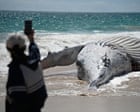
A massive marine mammal carcass washes up on a popular metropolitan coastline. Hundreds flock to the shore. Some pull out their phones to pose smiling for a photograph against a grim backdrop of decomposition, while others gag from the overwhelming stench drifting across the sand.
Human fascination with tragedy and scale is weirdly predictable. When a six-metre whale carcass surfaced at Perth's City Beach on a Monday morning, it didn't just draw local surf lifesavers and the Department of Primary Industries and Regional Development. It drew a crowd.
Let's look at what actually happens when nature crashes into urban coastal life.
The Deadly Attraction of a Marine Carcass
When a whale dies at sea, its journey isn't finished. Currents and winds drag it toward the shore, turning a tragedy of the deep into a public spectacle. But a dead whale on a public beach is a major hazard. NPR has also covered this fascinating subject in great detail.
Within hours of the discovery at City Beach, authorities closed several kilometres of coastline in both directions. Why? Because a rotting whale is basically an all-you-can-eat buffet for apex predators.
Multiple sharks, including a massive five-metre great white, were spotted cruising right through the breaking waves near the carcass. The timing couldn't be worse for local beachgoers. Just ten days prior, sixty-three-year-old Greg O'Neill was killed in a shark attack while swimming close to shore at Sorrento Beach, located about twelve kilometres north.
Yet, despite explicit warnings from Town of Cambridge mayor Gary Mack urging people not to take risks, onlookers still crowded the shoreline.
Why Do We Treat Natural Disasters Like Tourist Photo Ops?
It's easy to mock the selfie-takers standing downwind from a rotting six-metre mammal. We live in an era where documentation trumps common sense. If you didn't post it, did it even happen?
Psychologically, disasters create a strange pull. A dead whale is an anomaly. It's colossal, ancient, and deeply out of place on a suburban beach where people usually sip coffee and sunbathe. People feel a compulsion to get close to things that defy everyday reality, even if those things smell like biological decay and attract massive sharks.
Local resident David Jones pointed out the sad irony while talking to reporters, noting that several dead whales had washed up on that exact stretch of coast over the preceding decade. It's a recurring cycle of grief, curiosity, and municipal headaches.
The Logistical Nightmare of Removal
Getting rid of a six-metre dead whale isn't as simple as hauling it away in a pickup truck. Town officials faced a grim logistical puzzle.
Towing it back out to sea sounds logical until you factor in the surf conditions. The heavy carcass was rocking back and forth, wedged firmly on a sandbar. Pushing it back into the ocean often fails because onshore winds and waves just wash the decaying mass right back onto the beach a few miles down the coast.
Instead, authorities relied on a heavier operation: loading the massive remains onto a truck to be hauled off to a landfill site. It's a messy, expensive, and smelly business that requires heavy machinery and specialized teams.
Staying Safe When Nature Gets Close
If you find yourself near a stranded marine animal or a washed-up carcass, don't treat it like a tourist attraction. Here is what you actually need to do to stay safe:
- Keep your distance: Stay well back from the waterline if authorities issue marine warnings. Carcasses release gases that can cause them to rupture, and they act as immediate shark magnets.
- Obey beach closures: If local surf lifesavers or council mayors shut down a stretch of sand, respect the boundary. A five-metre great white does not care about your morning jog or your photo op.
- Report sightings immediately: If you spot a stranded animal or carcass, call local fisheries or marine rescue services instead of walking right up to poke it.
Nature demands respect, not a backdrop for your social media feed. Leave the beach to the experts before the apex predators decide to make you part of the spectacle.