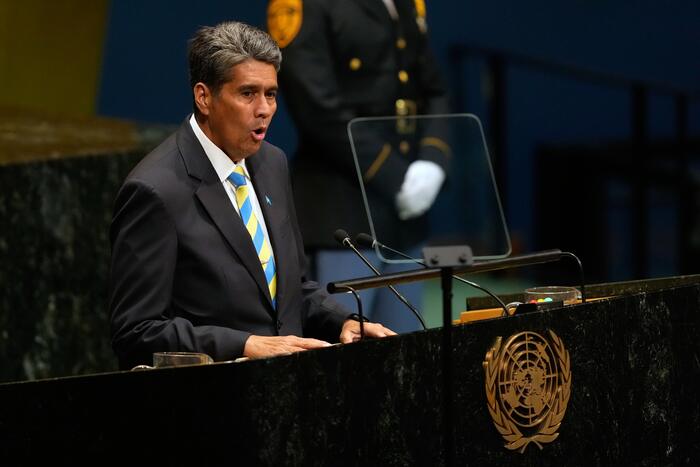
When Palau President Surangel Whipps Jr. recently took his children to visit his nation's Helen Island, two-thirds of it was already gone. Rising seas had swallowed generational burial grounds, erasing an entire culture's physical footprint. Most people view island nations through the lens of a two-week vacation. They see white sand, clear water, and a postcard getaway. They don't see the reality of salt water poisoning freshwater wells, schools crumbling into the surf, or young people questioning whether they should even bring children into a climate-threatened world.
Yet despite being on the front lines of an environmental crisis they didn't create, small island nations refuse to surrender. At the United Nations, these countries punch far above their weight class. They function as the moral conscience of a warming world, forcing industrial superpowers to reckon with the consequences of unchecked carbon emissions.
The Battle to Keep 1.5 Alive
Back in 2015, during the negotiation of the Paris climate agreement, small island states pushed hard to get the global warming target tightened from 2 degrees Celsius down to 1.5 degrees Celsius compared to pre-industrial times. They argued then—correctly—that anything higher was an existential death sentence.
Now, scientists concede the world is hurtling past that 1.5-degree threshold. The physical reality of breaching that mark means more extreme weather, faster melting ice sheets, and irreversible sea-level rise. But negotiators for the Alliance of Small Island States refuse to let the target go.
Surrendering on 1.5 degrees means accepting the drowning of entire countries. Saint Kitts and Nevis environment minister Joyelle Clarke put it bluntly when she called breaching the threshold a death sentence. Industrialized nations caused this crisis, but island communities are paying the price with their homes, their fresh water, and their heritage.
Refusing Climate Displacement
A major fear haunting low-lying nations like Tuvalu, the Marshall Islands, and Palau is forced relocation. When your landmass shrinks, what happens to your sovereignty?
Fortunately, international bodies are starting to respond. The United Nations recently adopted a resolution affirming that small island states must keep their sovereignty and marine rights intact no matter what rising seas do to their physical land. That legal protection matters. It means these countries aren't just erased from the map legally when the water claims the sand.
Leaders from across the Pacific and Caribbean are drawing a hard line. Tuvalu Prime Minister Feleti Teo pointed out that his country sits on a tiny fraction of land while managing hundreds of thousands of square kilometers of ocean wealth. They aren't packing up and leaving. Marshall Islands Foreign Minister Kalani Kaneko echoed that sentiment at the General Assembly, stating clearly that their people have no choice but to stay home, speak their language, protect their identity, and fight back.
The Psychological Toll on the Next Generation
The physical loss of land tells only half the story. The psychological burden on younger generations is crushing.
When children watch their ancestral beaches wash away and hear global leaders make empty promises year after year, hope starts to fade. Ministers report talking to young people who openly question why they should plan for a future or have families when the rest of the world refuses to curb emissions fast enough. That despair is a direct symptom of global inaction.
When major economies treat climate targets as negotiable guidelines rather than absolute survival limits, they break a fundamental trust with vulnerable populations.
What Needs to Happen Now
If the world wants to honor the moral authority of island nations, shifting goals from empty rhetoric to aggressive execution is non-negotiable.
- Zero out fossil fuel investments: Nations must rapidly phase out coal, oil, and gas dependency to pull global temperatures back down below the 1.5-degree ceiling later this century.
- Enforce loss and damage funding: Major industrial polluters must provide direct restitution to front-line nations for infrastructure damage, relocation costs, and lost ecosystems.
- Protect maritime boundaries permanently: Uphold international legal frameworks ensuring that rising seas do not strip island nations of their exclusive economic zones and sovereign rights.
Island nations aren't asking for charity. They're demanding accountability. They refuse to give up, and the rest of the world can no longer afford to look away.