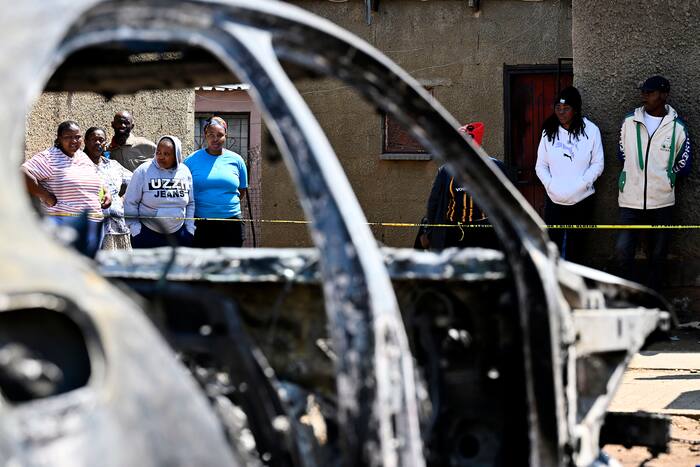
Two devastating mass shootings shook South African townships within hours of each other, leaving at least 27 people dead and exposing a terrifying escalation in the nation's violent crime crisis.
South Africa's crime statistics are grim, averaging nearly 60 homicides a day. But these coordinated, multiple-gunman attacks target ordinary spaces like bars and community stores, shifting the danger zone right into everyday neighborhoods. If you want to understand why these tragedies keep happening and how law enforcement is scrambling to respond, you have to look past the basic headlines.
The Horror in Wedela and Lwandle
The violence unfolded over a single terrifying night. In Wedela township, southwest of Johannesburg, eight gunmen armed with AK-47 assault rifles and pistols stormed a local bar. They opened fire on patrons outside before marching inside to continue the carnage.
Seventeen people died on the scene—13 men and four women—while at least 15 others sustained serious injuries. The attackers didn't just shoot and run. They robbed patrons of their mobile phones and torched two cars outside before vanishing into the night. Additional information into this topic are covered by TIME.
Barely four hours later, lighting struck twice in Lwandle township near Cape Town. Multiple gunmen opened fire at a store linked to an entertainment venue, leaving 10 people dead and 11 others wounded.
No arrests have been made in either case. Police have deployed specialized tactical units to both areas, but communities are left wondering how heavily armed squads can execute massacres of this scale in broad public view and escape clean.
A Growing Pattern of Mass Violence
Mass shootings used to be rare anomalies in South Africa. Not anymore.
Security experts note a disturbing shift from isolated disputes to calculated, multi-shooter rampages. Just five days prior to these weekend massacres, another attack at a house party in KwaMakhutha township near Durban killed 11 people, including a pregnant woman. Earlier incidents include a June mass shooting in Johannesburg that claimed 12 lives, alongside a pair of bloody massacres in December that left 21 dead.
Townships and informal settlements bear the heaviest burden. These neighborhoods, characterized by tight-knit shacks and sparse municipal infrastructure, remain vulnerable targets for organized crime syndicates, protection rackets, and illegal mining factions.
Local residents feel abandoned. In Wedela, community members told reporters they had seen gang turf wars before, but nothing that approached this level of indiscriminate slaughter.
The Flood of Illegal Firearms
The root cause of South Africa's soaring death toll isn't a mystery. It is the sheer volume of illegal weaponry in circulation.
While legal firearm ownership requires strict competency testing, background checks, and licensing, the black market tells a completely different story. Political parties and national gun owner associations estimate that between 2 million and 6 million illegal firearms circulate across the country. Many of these weapons originate from police corruption, smuggled stock from neighboring conflicts, or lost military caches.
When criminals can easily acquire military-grade assault rifles like AK-47s, local policing units outgunned and underequipped find themselves entirely overmatched.
The Military Response and What Comes Next
President Cyril Ramaphosa's administration has tried drastic measures to regain control. In March, the government deployed soldiers onto the streets in a yearlong operation to combat rampant violent crime in high-risk zones around Johannesburg and Cape Town.
Critics argue that using the military signals an admission of total failure by the South African Police Service. Yet supporters maintain that organized crime syndicates operating with impunity pose an existential threat to the nation's democratic stability and economic growth. Following the Wedela massacre, military units were immediately dispatched to secure the crime scene and assist local authorities.
Solving this crisis requires more than temporary boots on the ground. Law enforcement must dismantle the underground trafficking networks supplying illegal firearms and root out internal corruption that allows criminal cartels to operate unchecked. Until those structural failures are fixed, South Africa's townships will remain trapped in the crossfire.