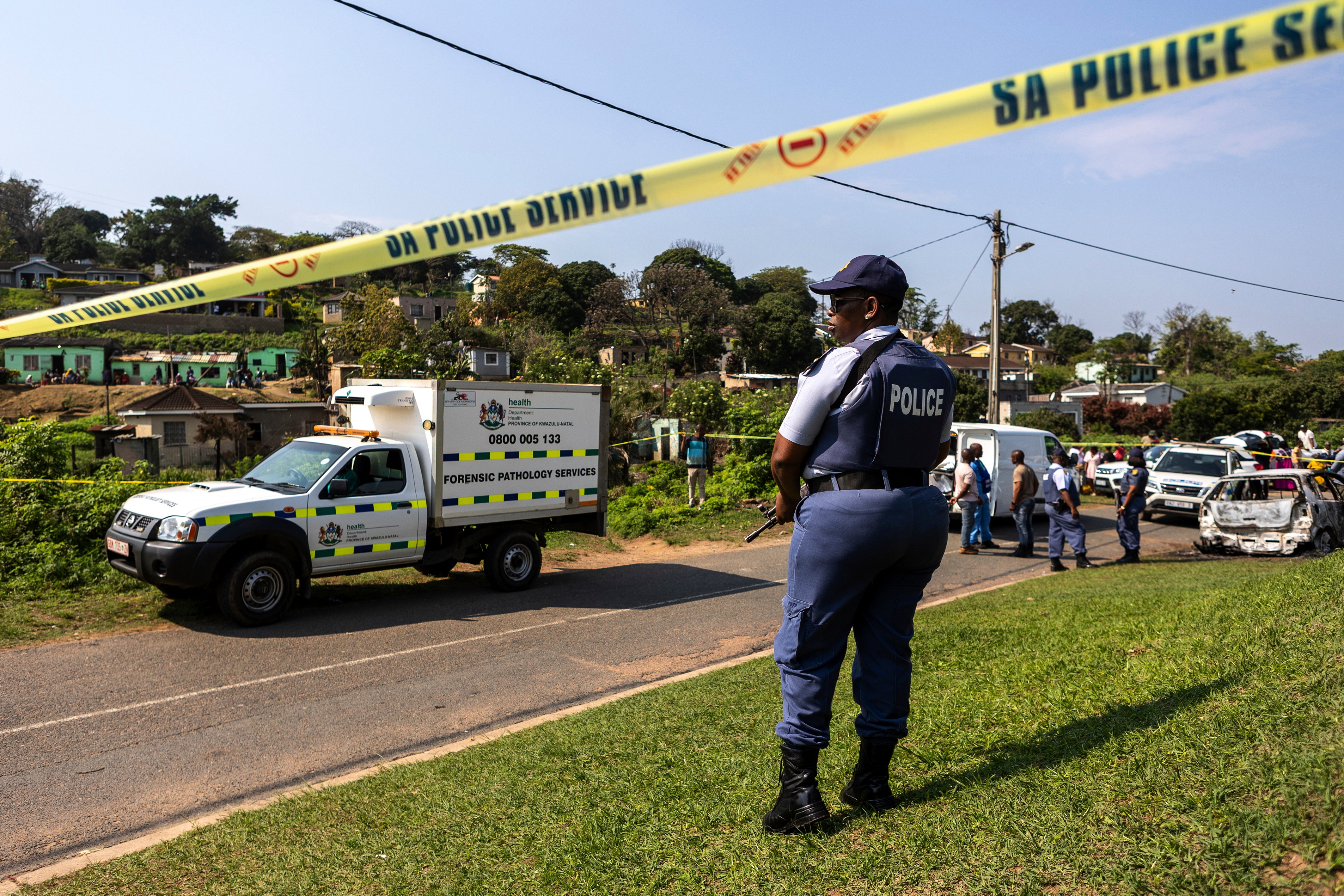
Thirty-eight people dead in seven days. That is the devastating toll of a single week of mass shootings across South Africa, leaving cities like Johannesburg, Cape Town, and Durban paralyzed by fear. If you think routine crime reporting captures this level of violence, you're missing the bigger picture. This isn't just about random street crime. It points to a systematic breakdown where illegal firearms, organized crime syndicates, and turf wars operate with terrifying impunity.
The Anatomy of a Bloody Week
The violence unfolded in a terrifying cascade across major urban centers. Near Johannesburg, 17 people lost their lives when armed men wielding AK-47s stormed a township tavern, robbed patrons of their cellphones, and torched vehicles before vanishing. Simultaneously, near Cape Town, another slaughter at a local shisanyama left 10 dead and 11 injured. Days earlier, a house party in Durban turned into a war zone, leaving 11 people dead, including a pregnant woman.
These numbers do not represent isolated tragedies. They highlight an escalating pattern of coordinated, military-style violence. South Africa averages roughly 60 murders a day, ranking it among the highest murder rates globally. Yet, these high-casualty mass shooting events have evolved into a distinct national crisis.
Why These Mass Shootings Keep Happening
You might wonder how heavily armed attackers can execute these raids so easily. The answer lies in the proliferation of illegal weapons and the dominance of organized criminal networks.
Illegal guns flood the country, often filtering through porous borders or leaking from corrupt official stockpiles. Many of these massacres tie directly into violent turf wars. Look at the underground economy: criminal syndicates fight fiercely over informal sectors, protection rackets, and illicit mining operations run by groups known locally as "zama-zamas." When gangs clash over territory or gold-mining spoils, entire communities bear the brunt of the firepower.
President Cyril Ramaphosa has labeled organized crime the most immediate threat to South Africa's democracy and economic development. The government has even deployed the army to specific violence hotspots. Despite these interventions, boots on the ground have failed to stop the bloodshed. Local police forces are chronically under-resourced, and specialized investigative units struggle to keep pace with sophisticated syndicates.
The Human Cost Beyond the Gunshots
Statistics gloss over the trauma etched into everyday neighborhoods. Families living in townships and informal settlements—where tin shacks lack basic infrastructure like running water and electricity—live in constant dread. When automatic gunfire erupts, residents dive under beds or floorboards, hoping a stray bullet won't pierce their walls.
Beyond the mass shootings, the country faces a compounding crisis of gender-based violence and brutal femicides. Protests erupt regularly in Johannesburg, where women's safety remains an illusion despite police promises of crackdowns. The vulnerability of ordinary citizens spans across systemic failures in law enforcement, economic desperation, and a judicial system that struggles to secure convictions.
What Comes Next for South Africa
With local elections approaching in November, crime has taken center stage as the defining political issue. Voters are demanding concrete security reforms, but empty political promises no longer cut it. International attention, including commentary from foreign leaders on targeted violence, often misses the broader reality: the vast majority of victims are poor Black residents caught in the crossfire of systemic criminality.
Addressing this crisis requires more than temporary military deployments or reactive police crackdowns. South Africa needs a fundamental overhaul of its intelligence services, aggressive tracking of illegal arms trafficking, and economic interventions that dismantle the breeding grounds of gang recruitment. Until systemic corruption and underground economies are choked off, the country's streets will remain volatile.
Take a close look at how security policy shifts in the coming months. Real change depends on whether the government can dismantle the syndicates fueling the violence, or if the country will slide further into lawlessness.