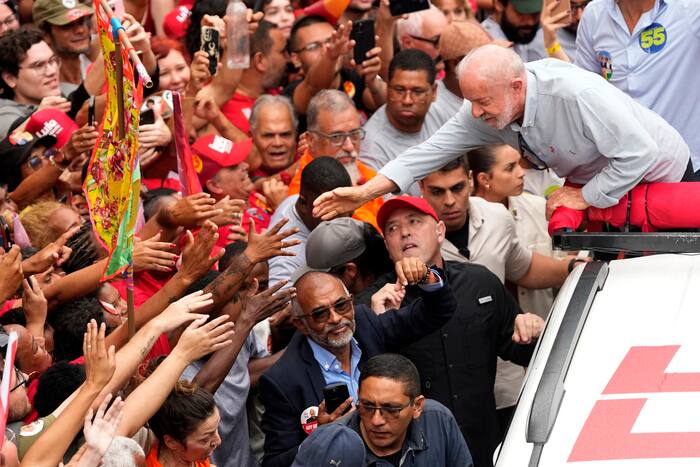
Latin America's political future is on the line right now. Nearly 159 million voters across Brazil head to the polls today in a fierce presidential showdown. The contest pits incumbent Luiz Inácio Lula da Silva against Senator Flávio Bolsonaro. It's a high-stakes clash between the left-wing veteran and a flagbearer of the far-right who proudly aligns himself with Washington.
If you are trying to understand why this election matters far beyond Brazil’s borders, you have to look at the global geopolitical chessboard. This isn't just a domestic squabble over inflation and taxes. It's a proxy battle for influence between major world powers, centered squarely on South America's economic powerhouse.
The Clash of Two Eras in Brazilian Politics
At 80 years old, Lula is running for his seventh presidential bid, chasing a fourth nonconsecutive term. He sits among the oldest heads of state globally, alongside figures like Donald Trump and Daniel Ortega. His camp relies on a seasoned, historical base, but fatigue is setting in. Years of governance, an affordability crisis, and lingering economic frustration have given the opposition an opening.
On the other side stands 45-year-old Senator Flávio Bolsonaro. He carries the torch of his father, former President Jair Bolsonaro, who is currently serving a 27-year prison sentence for attempting a coup. Flávio has anchored his entire campaign on a bold promise: freeing his father and pivoting Brazil's foreign policy hard back toward the United States.
The polarization is absolute. There is no viable third-party contender cutting through the noise. Voters are forced to choose between two heavily entrenched camps, turning the ballot box into an arena of accusations rather than policy debates.
The Washington Factor and Rare Earth Minerals
Foreign policy is taking center stage in this election like never before. Flávio Bolsonaro is openly leaning into his proximity to the White House. He insists that Brazil must forge immediate trade deals with Donald Trump’s administration, specifically pointing to the lucrative rare minerals economy.
Brazil holds an estimated 21 million tons of rare earth deposits. That is second only to China. Whoever wins this election will control access to minerals that are critical for global technology and defense supply chains.
Meanwhile, Lula has pushed back hard against Washington's overtures. His administration has openly criticized U.S. intervention, pointing to aggressive trade tariffs, visa revocations for Brazilian officials, and economic sanctions targeting local judicial figures. Lula has instead spent years strengthening trade and diplomatic ties with Beijing, pulling Brazil deeper into the BRICS sphere of influence.
What Voters Are Actually Facing
Political analysts in Rio de Janeiro note that undecided voters hold the key, and last-minute campaign gaffes could easily swing the result. Lula’s team expected a much smoother path to victory, but voters are tired.
Inflation hurts. Cost-of-living pressures are grinding families down. On top of that, fresh corruption allegations involving the incumbent administration have handed ammunition to the right-wing opposition.
At the same time, Flávio Bolsonaro faces his own hurdles. He is fighting off accusations regarding campaign financing scandals tied to movie production deals centered on his father's life. He also has to manage friction with moderate and Roman Catholic voters who worry about his pandering to radical evangelical factions.
If no candidate crosses the 50 percent threshold today, the race moves straight to a tense runoff scheduled for October 25. Alongside the presidency, voters are deciding the composition of Congress, picking 54 senators, 513 federal deputies, and 27 state governors.
Keep your eyes on the final vote tallies coming out of São Paulo and Rio de Janeiro. The outcome will redefine trade routes, alter diplomatic alliances across the Americas, and dictate how South America positions itself between Washington and Beijing for the next decade.