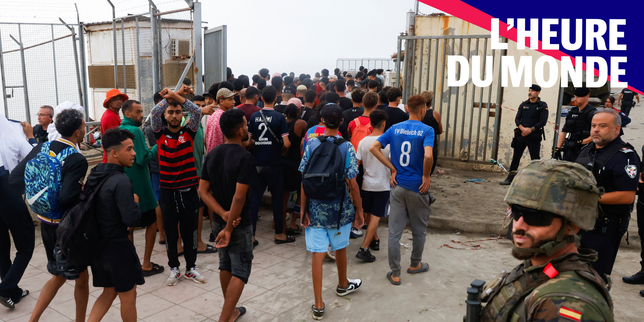
You can't just swim across a border and watch a nation unravel overnight. Yet that is precisely what happened when tens of thousands of people arrived on the shores of Ceuta in a matter of hours. Spain is caught in a vice grip, squeezed between humanitarian obligations, bitter domestic political warfare, and fragile relations with Morocco.
When a crisis hits an exclave like Ceuta, the standard European migration playbook breaks down completely. Let's look at what is actually happening behind the headlines, why Madrid's response is taking heat from all sides, and what this means for the broader European Union.
The July Surge That Shocked Madrid
Picture the scene on July 30 and 31. Roughly 72,000 people crossed from Morocco into the Spanish enclave of Ceuta by swimming around the border barriers. It is an astronomical figure for a territory with a tiny local population.
While many returned to Morocco within hours, an estimated 13,000 to 15,000 migrants remained stranded on Spanish soil. Suddenly, local infrastructure buckled. Schools converted into shelters. Medical staff worked around the clock. The city found itself underwater, figuratively speaking, trying to manage a humanitarian emergency that local authorities never budgeted for.
Madrid responded by approving a 309-million-euro emergency plan on September 1. The funds target immediate humanitarian relief and border security reinforcements. But money alone doesn't fix a geopolitical deadlock.
Domestic Politics and the Pressure on Pedro Sánchez
Prime Minister Pedro Sánchez thought an emergency cash injection would stabilize the situation. He was wrong. The Spanish political landscape reacted with immediate fury.
The conservative Partido Popular and the far-right Vox party tore into the executive's strategy. They called the government weak. They demanded military intervention to secure the perimeter. Right-wing leaders organized protests, arguing that Sánchez has lost control of Spain's southern borders.
On the other side, humanitarian organizations point out that throwing police and military at the border ignores the root causes. They argue that detention and deterrence won't stop desperate swimmers. Sánchez sits right in the middle, absorbing blows from both flanks with very little room to maneuver.
Friction With Brussels and Rabat
Spain's headaches don't stop at the Pyrenees. Brussels is watching Madrid with a skeptical eye. Twenty-two European nations recently signed an open letter expressing deep distrust toward Spanish migration management strategies. Other member states worry that Spain's handling of Ceuta opens a backdoor into the wider Schengen zone.
Meanwhile, diplomatic ties with Morocco remain a high-stakes tightrope walk. Morocco claims sovereignty over Ceuta, viewing the Spanish enclave as an anomaly on its northern coast. King Felipe VI scheduled a visit to Ceuta for October 13, a move guaranteed to infuriate Rabat and strain bilateral agreements on trade and border cooperation even further.
When you combine domestic hostility, European skepticism, and Moroccan territorial claims, Spain's diplomatic isolation becomes glaringly obvious.
What Comes Next for Ceuta
Ceuta remains a pressure cooker. The emergency funds bought some time, but they haven't solved the structural reality of Europe's southern frontier.
If you want to understand European migration policy, stop looking at Brussels conference rooms. Look at the rocky coastline of Ceuta, where local authorities are left holding the bag while politicians in Madrid and European capitals trade barbs. The impasse won't break until European leaders agree on shared responsibility rather than leaving border nations to fend for themselves.